 About
Aboriginal Art and Culture
About
Aboriginal Art and Culture |
|
please refresh the screen when you visit the next time |
|
|
|
Galeria
Aniela offers an opportunity to
purchase
original,
ethically sourced,
museum-quality works of
art
of impeccable
provenance
by some of the most important
Aboriginal artists.
Visit
gallery showrooms
or Browse
up-close
and
purchase online.
Shipping
worldwide.
We offer
secure payment
options
in a safe and secure environment
and
meet the terms of prompt professional
communication
by
internet,
telephone +612 4465 1494
messaging and WhatsApp
+61
409 980 618 |
|
|
|
An ancient tradition of 60 thousands years gave the world its
most exciting form of contemporary art.
Long
admired by worldwide collectors,
Aboriginal artists are honored by National galleries and some of
the most significant corporate and private collections in Australia and
around the world.
Galeria Aniela
sells
ethically sourced
quality
works of art of impeccable provenance,
some are museum quality paintings that are
illustrated in
important biographical books
or Encyclopedia's including
Jimmy
Robertson
(1944-2002),
Billy
Stockman
(B.1927),
Nyurapayia Nampitjinpa
aka
Mrs
Bennett
(1935-2013) and
Ningura Napurrula
(1938). |
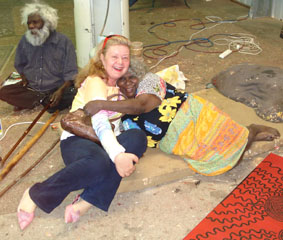
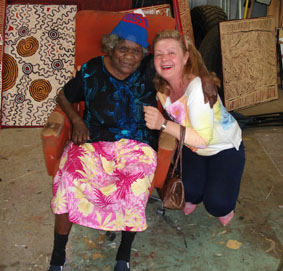
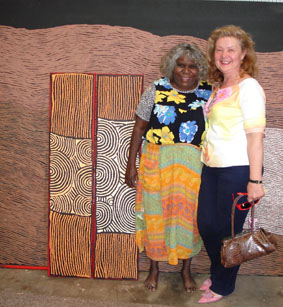
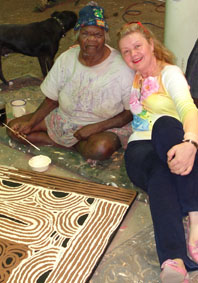 |
|
The
vision of
Galeria Aniela is to
increase awareness of the significant cultural contribution of
Australian artists and in particular Australian
Aboriginal artists.
We support Aboriginal culture and cooperate with Galleries and Art Centers
that provide their artists with guidance to enter the
prestigious
Australian
National
Aboriginal and Torres Strait Islander Art Award
and create quality
works of art.
When you
purchase artworks at
Galeria Aniela,
you make a
valuable contribution to our mission of helping artists to make a
living with their creations and together we make a difference. |
|
|
|
Aboriginal art is
the most important art that come out from this ancient
Australian land and we
Australians are proud of Aboriginal art. An ancient culture of
over 60 thousands years old gave the world its most exciting
form of contemporary art. It is also a living tradition,
having taken its current form, in an explosion of creativity, in
the second half of the Twentieth Century. |
|
|
|
Aboriginal
Artists
who started the Art Movement
are aging
or
passed away, the
younger generation is learning Western customs.
Today
Aboriginal artists
live and work around the World, from
Papunya to London, from
Arnhem Land to New York.
It
is probably the last chance that anyone on this planet can
obtain authentic
works by
the legendary artists who began the movement like
Lindsay Bird
(1935),
Barney Campbel
(1928-2007),
Long Jack
Phillipus
(1932),
Billy
Stockman
(1927),
Jimmy
Robertson
(1944-2002). |
|
|
|
The availability of
Synthetic Polymer
paint on Belgian
linen
and
canvas enabled artists to
produce works that were even more distinctive than the batik. This new
medium saw the rise of some of the most important International artists
including the late
Emily Kame Kngwarreye
who paved the way in the more contemporary art form like
Lorna Fencer
(1924 -
2006),
Nyurapayia
Nampitjinpa
aka
Mrs
Bennett
(1935-2013),
Robin Granites
(1953 ),
Audrey
Morton
(1952),
Gracie
Morton
(1956),
Lucky Morton
(1951),
Lilly Kelly
Napangardi
(1948),
Pansy Napangardi
(1947),
Wentja 2 Napaltjarri
(1923),
Colleen
Nampitjinpa
(1953),
Ningura Napurrula
(1938),
Minnie Pwerle
(1910-2006),
Anna Petyarre
(1965),
Gloria Petyarre
(1945),
Gloria Mills Petyarre
(1932),
Nancy Ross
(1935-2010),
William Sandy
(1944),
Don Tjungarrayi
(1938),
Charlie
Tjapangarti
(1949),
Ronnie Tjampitjinpa
(1944),
Bobby West
(1958) and
Peggy White
(1949).
|
|
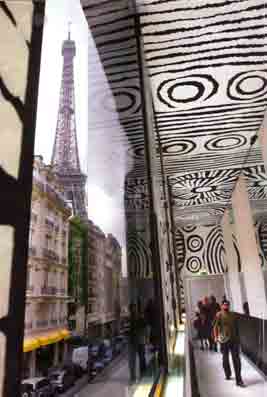
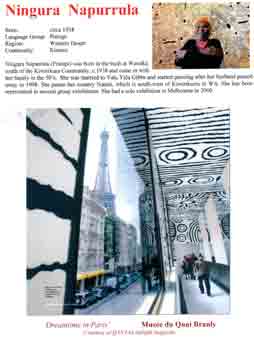 
PARIS TO SHOWCASE INDIGENOUS ART
ABC National News Online
(30/05/2006)
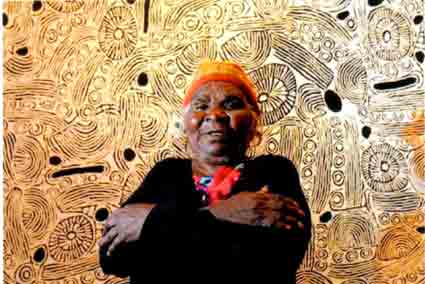
Ningura Napurrula
(1938) |
|
Aboriginal paintings have modern appeal as they tell 'living'
stories going back thousands years. Galeria Aniela works
together with the community-based Aboriginal Art Centers that
wholesale art to commercial galleries providing their artists
with quality materials. These centers coach their artists to
create fine art so the artists are able to enter the important
National Aboriginal and Torres Strait Islander Art Award.
Aboriginal Centers pay their artists a fee for completed
artwork, regardless of the quality. Galeria Aniela buys and
sells the finest quality art by prominent artists who are often
illustrated in important biographical books, the Encyclopedia of
Aboriginal Artists, dictionaries and biographies.
|
|
|
|
The significance of Aboriginal
paintings is storytelling, which renews the Aboriginal world and
verifies the power of traditional culture.
Aboriginal culture survived for centuries without a written
language and their
paintings reveal the visual language which developed over 40,000
years. The language derived from sacred objects including earth,
sacred rocks, ritual body adornments, ceremonial designs and
ground maps. This art was traditionally used in ceremonial
performances with songs and dances, in order to re-enact the
‘creation stories’ known as ‘Dreamings’. The act of ceremonial
performance meant to sustain the productive power which
originally created the world: to be in harmony with flora and
fauna and to keep the rains falling, animals produce offspring
and the yam vines flowering in the shade of the trees. |
|
|
|
Aboriginal paintings take the
place of the written language revealing to the world Aboriginal
philosophy, history, beliefs, travel maps, and stories of sacred
ceremonies as well as the importance of living in harmony with
the natural world.
Painting on canvas gave Aboriginal people the tool to document
their way of life and to secure the entrance to modern
civilization.
Aboriginal
paintings connect an ancient culture to the 21st century
sophisticated world. |
|
|
|
The Aboriginal art movement started in the 70’s
when the Pintupi tribe was taken from the
land to Papunya settlement to learn living in one place. Geoffrey
Barton, a school teacher inspired them to paint and document their
stories on canvas. First it was the business of the senior
men only to recount and live the sacred laws to ensure to continuation
and harmony of the people and their environment. Early paintings often
traditional, depicted elements of ceremonial life forbidden by
women, children and non-initiated. Aboriginal women using the
freedom of self expression and experimentation create the most
contemporary Aboriginal art. |
|
|
|
Aboriginal art is
the most important contemporary art to come out of this ancient
land. Every work of art as well as having an
imposing decorative element it
tells a story. These powerful
works of art look superb in modern buildings and they signify,
for the people who display them a connection with the present as
well as the past. You now have an opportunity to purchase the
work of the mature, established artists who have had an original
traditional aboriginal upbringing. Aboriginal art is part of a
living tradition and as the culture goes through a transition,
major changes are taking place in the aboriginal communities and
people move to the towns learning western ways. The artist’s age
thus it is probably the last chance that anyone on this planet
can buy such authentic indigenous work of art.
|
|
|
|
 Utopia is located 270km northeast of Alice
Springs on the eastern perimeter of the Western Desert next to
the traditional land of the Eastern Anmatyarre and Alyawarre people.
In 1978 the women had
learned the art of batik, introduced by school teacher Toly Sawkeno and
adult educator Jenny Green. The Batik project was to enable the women to
establish a source of income in preparation for the land claim hearing.
In 1979 a successful land claim hearing resulted in the community
gaining permanent legal title to the leasehold, and it was the Utopia
women that played a key role. By being able to demonstrate the economic viability of the outstations
through their batik, the women were justifying their legal and moral
right to their land.
The Utopia batiks were immediately distinct and featured a rawness and
vitality that was a product from both the camp conditions and the
women’s attitude to the project.
They soon captured the eyes of
international art dealers, and in 1981 Utopia
batiks were shown at the Adelaide Art Festival in a major exhibition 'Floating Forests of Silk: Utopia Batik from the Desert'.
In 1987 CAAMA (The Central Australian Aboriginal Media Association) took
over the running and finances of the Utopia artists and in 1988
commissioned a number of batiks. Eighty-eight batiks were presented
which then served as the opening exhibition at the new Tandanya
Aboriginal Cultural Institute in Adelaide in October 1988. The
exhibition later toured to Ireland, and then it was purchased by the
Robert Holmes a Court Collection. Utopia is located 270km northeast of Alice
Springs on the eastern perimeter of the Western Desert next to
the traditional land of the Eastern Anmatyarre and Alyawarre people.
In 1978 the women had
learned the art of batik, introduced by school teacher Toly Sawkeno and
adult educator Jenny Green. The Batik project was to enable the women to
establish a source of income in preparation for the land claim hearing.
In 1979 a successful land claim hearing resulted in the community
gaining permanent legal title to the leasehold, and it was the Utopia
women that played a key role. By being able to demonstrate the economic viability of the outstations
through their batik, the women were justifying their legal and moral
right to their land.
The Utopia batiks were immediately distinct and featured a rawness and
vitality that was a product from both the camp conditions and the
women’s attitude to the project.
They soon captured the eyes of
international art dealers, and in 1981 Utopia
batiks were shown at the Adelaide Art Festival in a major exhibition 'Floating Forests of Silk: Utopia Batik from the Desert'.
In 1987 CAAMA (The Central Australian Aboriginal Media Association) took
over the running and finances of the Utopia artists and in 1988
commissioned a number of batiks. Eighty-eight batiks were presented
which then served as the opening exhibition at the new Tandanya
Aboriginal Cultural Institute in Adelaide in October 1988. The
exhibition later toured to Ireland, and then it was purchased by the
Robert Holmes a Court Collection.
To this date, Utopia paintings are highly recognized
and sought after and continue to grow in richness
and variety.
|
|
|
|
In 1988-1989 the medium of canvas was introduced to the artists. An
exhibition titled 'Summer Project: Utopia Women’s Paintings' (The First
Works on Canvas) was mounted. It consisted of one hundred small
canvases of all the same size and using four basic colours, black white,
yellow, ochre and red ochre. This exhibition was held at the S.H. Ervin
Gallery in Sydney and immediately caused instant attention to the
inherent talent the Utopia artists.
The availability of
Synthetic Polymer
paint on Belgian
linen, acrylic paint, linen
and
canvas enabled artists to
produce works that were even more distinctive than the batik. This new
medium saw the rise of the late
Emily Kame Kngwarreye
who paved the way in the more contemporary art form including
Billy Stockman
(B.1927-),
Long Jack
Phillipus (B.1932-),
Minnie
Pwerle,
Lindsay Bird,
Lorna Fencer
,
Don Tjungarrayi,
Ronnie Tjampitjinpa,
Lucky
Morton,
Gloria Petyarre,
Gracie Morton,
Pansy Napangardi,
William Sandy and
others. To this date, Utopia paintings are highly recognized and sought
after and continue to grow in richness and variety.
|
|
|
|
Contemporary Aboriginal art
Contemporary Aboriginal art is a vital part of the world's
oldest continuous cultural tradition. It is also one of the
most brilliant and exciting areas of modern art. It is an
ancient tradition of over 40 thousands years, which gave
Australia and the rest of the world its most exciting form
of contemporary art. Australian Aboriginal art is beyond
doubt the one and only International art.
There are estimated to be between 5000 and 7000 Aboriginal
artists actively occupied in regular art or craft work in
Australia. Many of these Aboriginal artists have led
amazingly varied lives, often in demanding circumstances.
The growth of contemporary Aboriginal art is a remarkable
story. While the greatest flowering of modern Aboriginal art
can be traced from the rise of the central desert art
movement at Papunya, the antecedents of Aboriginal art
expression using modern materials in a mixed cultural
context can be identified much earlier. There are many
articles reviewing the emergence of contemporary Aboriginal
art;
Urban
Aboriginal Art and
Papunya Stories.
Sally
Morgan is Urban Aboriginal Artist and Writer.These
articles cover such topics as Aboriginal artists of the
nineteenth century, the relationship of Aboriginal art in
the 1920s, 1930s and 1940s to other Australian artists, the
emergence of
Albert Namatjira and associated artists, growth
in urban and political art in the 1960s and 1970s.
share
RETURN TOP
|
|
Galeria Aniela offers opportunities to
purchase
ethically sourced,
museum-quality
artworks
of impeccable
provenance |
|
Inheritance
Aboriginal people inherit
stories “Dreaming”. Each story may include
songs, ceremonial dances and rituals creating unique beliefs
that the Aboriginal people live by. All stories and beliefs
are related to the land and thus the land is great
importance to them. The land is the keeper of the stories
and must be kept safe for all time so that the stories,
which are told in paintings, can be preserved. In modern dot
representation is the sacred aspect of painting is not
always completely revealed but the meaning, transmitted
through symbols remains, and can be understood.
Art and Aboriginal Society
As with all artistic expression, Aboriginal art is shaped
and determined by its social and cultural setting. It is an
expression of knowledge and place in the social structure as
well as a means of expressing identity. Artists express this
identity and social relationship using ancestrally inherited
designs and practices. Whenever an Aboriginal artist,
working in a traditional social structure, produces a work
then the content of that work is linked back to the Dreaming
stories and responsibilities of that person. Howard Murphy
has summarized this relationship as follows: The ancestral
beings gave the rights to occupy the land to the people that
they left behind on condition that they continued to perform
the ceremonies and produce the paintings that are a record
of their creative powers.
Knowledge of the form and content of paintings helps
to establish the right to occupy land and the ability to
maintain connections with the ancestral forces in that
landscape. For
this reason knowledge of paintings and the right to produce
paintings is closely regulated, and paintings can only be
produced by those who are acknowledged to have the right to
do so. Although across Australia art is closely related to
land and to the particular journeys of
Dreamtime beings,
the details of the way in which art is related to group
identity and gender relations varies widely. In Eastern
Arnhem Land and some of the more densely populated areas of
central Australia, land, paintings and other manifestations
of the
Dreaming are the
property of clans, groups of people connected primarily by
descent, whereas in other regions the rights in paintings
and land are more widely dispersed. Howard Murphy
"Aboriginal Art" page 149.
Traditional Aboriginal society
is structured by a number of systems that organize all
aspects of life and help to give an individual their sense
of place in society and in their country. These systems vary
across the country but most include kin groups and
"moieties". An individual person is placed through birth in
a kin group (or "skin name" as it is often called in central
Australia) while people and all the features of the natural
and spiritual world belong to one or other of two moieties.
These systems (kin groups and moieties) jointly help to
determine many aspects of social or religious behaviour.
share
RETURN TOP
|
|
|
|
Dreamtime
They believe that the Universe was created by spirits
(mystical beings) setting the blueprint for all time the way
human may govern their conduct. The spirits gathered their
food, dug for water, performing ceremonies as the Aboriginal
do it today but the landscape stay unchanged. During the
Creation Time spirits shaped all the landscape; hills and
water holes and given humans all the sacred laws. That time
was known as “Dreamtime” and it came to the end and their
ancestor changed into landscape, they turn into a rock or
mountain range, an isolated hill, river or even trees arose
to mark the place. They look upon these spirits creators as
ancestors. Aboriginal believe in an existing connection to
their ancestor spirit and to the land. They are spiritual
biological beings appreciative of the fragility of the
nature and making an effort to live in harmony with the
environment. Since every Aboriginal descent of the mythical
beings of the “Dreamtime” each person is linked by myth and
tribal relationship with the landscape, the rocks and
watercourses, and everything else in his tribal country.
share
RETURN TOP
|
|
|
Dreamtime Origins
"The Aborigines learned about
the origins of the tribe through their Dreamtime creation myths,
that told of the significant actions of the creators. The myths
were the basis of Aboriginal society and were responsible for
providing certainty about existence. They contributed to their
survival and it is beyond dispute that they survived for
thousands of years. The Australian aborigines believed that the
land they occupied was once vacuous - empty. This belief was a
source of great mystery to them. It was also a great truth that
was known with absolute certainty, because the ancestors had
said this was the way things once were. Then, during what has
become known as the Dreamtime, the land, the sky above and all
they contained were formed by the actions of supernatural and
mysterious beings.
"The concept of the Dreamtime
was first researched by Spencer and Gillen in their study of the
"Arunta" (Arrernte) tribe of Central Australia. They came to
understand the words "Alchera" and "Aldjeringa" identifying
as
a 'creative period'. Other tribes had words in their language
for the same concept. As communication between the "Arunt"
people and the non-Aboriginal scientists improved, it became
apparent to them, that the aborigines understood the Dreamtime
as a beginning. Here it is pointed out that there is a
significant difference between Aboriginal thinking and that of
others. In particular the belief that the Dreamtime is a period
on a continuum of past, present and future.
"Aboriginal people understood
the Dreamtime as a beginning that never ended. In one sense it
was the past, the sacred past. But as Spencer and Gillen found,
the word
"Tjurjunga" was also associated with the Dreamtime. "Tjurjunga"
identified a category of belief and action. A concept that will
become more obvious as we proceed through this book. For the
moment, it is sufficient to say that "Tjurjunga"
identified the belief that the
Dreamtime never ended.
"The Dreamtime itself has been
explained in a number of ways. Various explanations refer to
creators who were mysterious and supernatural beings. They
include references to men and women 'just like us' who had the
ability to shape-change into animals and other fauna; creators
such as the "Rainbow Serpent" and also All-father and All-mother
figures. There have also been references to the creators as
heroes and heroines. The essential point is that each tribe had
a collection of Dreamtime creation stories. In other words there
were desert, mountain, alluvial plains and seacoast Dreamtime
stories.
"Land itself was an icon
because of the spiritual basis on which it was created and the
fact that some of the creators continued to live in the land, or
in the sky above watching over them. Broadly speaking they told
of creative actions that resulted in the formation of the earth,
the sky above and all they contain. Every hill, water hole and
tree, every animals, bird and marine life along with every other
living creature and natural phenomenon was believed to have come
into existence in the Dreamtime.
"It was during the Dreamtime that the creators made men and
women, decreed the laws which all must obey - their behavior to
one another, the customs of food distribution, the rules of
marriage, the rituals of initiation and the ceremonies of death
which must be performed so that the spirit of the dead would
travel peacefully to his or her spirit-place.
"Although the Aborigines believed that the Dreamtime was a
beginning that never ended, some of their stories told them that
the mythical creators disappeared. Here it is tempting to say
that they believed that at an inexplicable point of time the
Dreamtime ended, but this is not what they aborigines believed.
They believed that the creators disappeared from the sight of
mere mortals, but continued to live in secret places. Some lived
in the tribe's territory in rock crevices, trees and water
holes. Others went up into the sky above as heavenly bodies.
Others changed into (or perhaps became) natural forces such as
wind, rain, thunder and lightning."
E xamples of dreaming stories:
http://www.dreamtime.net.au/
set
up by the Australian Museum
share
RETURN TOP
|
|
|
|
Dreaming and the Dream-time
The Dreaming is a term used by Aborigines to describe the
relations and balance between the spiritual, natural and moral
elements of the world. It is an English word but its meaning
goes beyond any suggestion of a spiritual or dream-related
state. Rather, the Dreaming relates to a period from the origin
of the universe to a time before living memory or experience - a
time of creator ancestors and supernatural beings.
This time is also called the Dreamtime, when the
"Rainbow Serpent"
moved
across the land and the "Wandjina" land were active in the
clouds and skies. For a more information go to Dreamtime detailed
information below.
These creator ancestors formed the features of the land and all
living things and also set down the laws for social and moral
order. The Dreaming, as well as answering questions about
origins, provides a harmonious framework for human experience in
the universe - and the place of all living things within it.
Each Aboriginal person's totem and Dreaming is determined by the
place in the landscape where the mother feels her first signs of
being pregnant. At this place, the unborn person receives the
spirit of a totemic ancestor - for example honey ant, possum,
goanna or water - and the Dreaming connected with the place.
This harmony between human existence and other natural things
was expressed by Silas Roberts, first Chairman of the Northern
Land Council, in this way:
Features of the landscape are the most visible signs of the past
activities of ancestral beings. The ancestral beings led lives
much as Aboriginal people have for generations, but on a grander
scale - and with grander consequences (see
Howard Morphy's book).
Waterholes or the entrances to caves resulted where they emerged
from the earth. Where they held great battles, hills resulted
from their bodies and lakes formed from pools of their blood.
The ancestral beings also left a record of themselves and their
actions in the form of a rich variety of art. During their epic
journeys, the ancestral beings sang and performed ceremonies,
made engravings or paintings on rock and in caves and left
sacred objects. In northern Australia, these songs are handed
from generation to generation, together with the body designs
that were first painted on the chests of the ancestral beings.
Aboriginal peoples living in different parts of Australia trace
their origins directly from these great ancestral beings. When
present-day Aboriginal people walk through their country, they
are continually reminded of the presence of the creator beings.
This happens not only through the features of the landscape but
also through songs, paintings and ceremonies.
The Dreaming system of beliefs and philosophy has different
names depending on the language of the speaker. The
Pitjantjatjara and related desert peoples call it Tjukurrpa, the
Kimberley peoples call it Ngarrankrni and the Anmatyerre and
related peoples call it the Altyerre.
'Dreaming' is often used to refer to an individual's or group's
set of beliefs or spirituality. For instance, an Aboriginal
Australian might say that they have Kangaroo Dreaming or Honey
Ant Dreaming, or any combination of Dreamings pertinent to their
'country'. Many artworks are visual representations of the
symbols associated with the artist's dreaming.
share
RETURN TO P
|
|
|
|
Philosophy of life
The Aboriginal philosophy of life, known as Dreamtime
(Tjurrkurpa) is based on tradition conceived by totemic
ancestors. Men and women believe to be direct descendants in
spirit of “mythical architects” who created the land and
different totems; kangaroo, Emu, turkey, lizards and the
land in which they live. They feel special affinity with
their related totem animal species. It is believed that
sacred ceremonies have to be re-enacted on a regular basis
to maintain the animal species and ensure survival of the
humans. Each family owns a special area of land and must
protect sacred sites representing their personal totems
Dreamtime spirits. People travel long distances from all
directions to participate in the initiation ceremonies and
to educate the young. The journey could last days or several
months and women hunt and collect food during the voyage.
Artistic expression
The artistic expression is spiritual and concern with myths
and totemic beliefs of the ancestor spirits.
Aboriginal paintings are based on the myths of the Dreamtime
of their Ancestral people, the formation of the Stars and
the Universe, flora and fauna. For over 40 thousands of
years the Aboriginal people lived a nomadic lifestyle
traveling long distances living of the land and lived in a
harmony with nature, collecting bush food and hunting. They
participated in the ceremonies at different times of the
year. The well being of the community depends on women and
men demonstrating their respect for the land through the
ceremonies. It is believed that sacred ceremonies have
to be re-enacted on a regular basis to maintain the animal
species and ensure survival of the humans. This culture has
no written language and relies on storytelling as the basis
of a “formal” education. These stories which include songs
and dances are represented in their paintings. The
ceremonies are performed to teach young the sacred laws and
behavioral codes as well as to honor the prosperity of bush
food, continuation of water and people survival. They
recognize the creative nature of the ceremony activity; they
use the human body itself as a living canvas for artistic
expression.
It was only in 70’s when the Pintupi tribe was taken from
the land to Papunya settlement to learn living in one place,
Geoffrey Barton, a school teacher inspired them to paint and
document their stories on canvas. Painting gave Aboriginal
people the written language able them to document their way
of life and secure entrance to a modern society. First it
was the business of the senior men to recount and live the
sacred laws to ensure to continuation and harmony of the
people and their environment. Early paintings depicted
elements of ceremonial life forbidden by women, children and
non-initiated. Now Aboriginal women using the freedom of
self expression and experimentation create the most
contemporary Aboriginal art.
Moieties
divide society into two classes which may then be
perpetuated by patrilineal descent, matrilineal descent or
alternating generational descent. In many parts of Australia
all three moieties are important. In art, moiety can play an
important role in determining the subjects which an artist
may paint.
Across most of Arnhem Land there is a patrilineal moiety of
two classes, the Dhuwa and the Yirritja. Artists whose work
is represented on this Web site come from both moieties. For
example Charlie Matjuwi Burarrwanga is the clan leader and
elder for the Gumatj (Burarrwanga) clan - with Yirritja
moiety. Moiety affiliation determines many important matters
such as marriage - a person of the Yirritja moiety must
marry a person of the Dhuwa moiety.
Kinship
structures are also very important to many Aboriginal
societies. In his book "Papunya Tula", Geoffrey Bardon
describes how all male Aborigines in the western desert
region, after full tribal initiation, own a Dreaming and are
the custodians of its associated stories and songs. Each man
can paint or otherwise discuss his personal Dreaming as he
inherits it, or as he is permitted by custom. While the
ownership of the story is strictly demarcated by tribal skin
groups, each one can be part of a much greater story and
might overlap with other stories from other tribes. The skin
system is complex, but it is essential to a proper
appreciation of the way that custody of dreaming stories is
established - and the factors which influence the work of an
artist.
Traditional Aboriginal Art
Aboriginal Australians traditionally used art as a means of
communication or expression in different forms such as rock
engravings, cave paintings and designs cut into trees,
wooden articles such as boomerangs and on their bodies
(scarification). The symbols of their artwork were
expressions of their beliefs, the
Dreamtime and Dreaming
stories or in some cases were records of specific events.
Whatever they drew, engraved or painted onto such surfaces
as sand, earth, rock, trees or wood had significant meanings
to them.
The term art, broadly interpreted, also includes story
telling, song, music and dance. These forms of Aboriginal
art were often sacred because of their connection to the
Dreamtime and Aboriginal spiritual beliefs, or because they
were accessible only to initiated adults. Other stories were
secular (non-sacred) and included stories for children and
those that recorded major events such as great battles,
memorable hunting expeditions or the arrival of Europeans
and others into their country.
Traditionally there were large variations in the style,
symbols and materials used in the production of art in
different regions of Australia. This diversity included bark
paintings and wooden sculptures with intricate cross-hatched
designs, delicate engravings on pearl shell in the West
Kimberley, symbol-based sand and body designs of the Central
and Western Desert, engraved rock in Tasmania and rock art
in Cape York and central Queensland.
Ceremonies
The Dreamtime people marked the resting places and at the
waterholes, they camped to perform ceremonies to express
their respect for the land. To this day people travel the
desert and visit the sacred sites to perform ceremonies. The
well being of the community depends on women and men
demonstrating their respect for the land through the
ceremonies. Initiates being taught their roles as
nurturers of the land and keepers of the law by which life’s
rules and regulations are set. Women ceremonies are
conducted often to heal the sick, ensure fertility of the
land, and to secure social harmony as well as to ensure
success in love when men ceremonies educate of their sacred
laws and behavioral codes to live in harmony with the land.
Ceremonies involve songs, dances and body adornment. They
perform the ceremonies at different times of the year. Each
ceremony has to be organized, supervised and managed and the
performance of each ceremony dependents the person
ownership, their knowledge as well as their status.
While many ceremonies are public, various are secret and
strangers, young women, non initiated boys and girls would
be limited in attending the sacred ceremonies. They
main categories of ceremonies are; education of their sacred
laws and behavioral codes and to ensure continuation of
totemic species to live in harmony with the land. At this
stage due to sacred nature of the ceremonies no further
interpretation is attainable.
Body Paint
In preparation for a particular ceremony people paint their
bodies with special markings and ornate them with feathers.
Body painting carries often deep spiritual significance. The
use of a particular designs and motifs denotes social
position and the relationship of the individuals to their
family and to ancestors, totemic animals and tracts of land.
In some situations individuals are completely transform into
the ancestor spirit they portray in their dance. Patterns
must conform to the ceremony being performed. Elaborate sand
paintings are also made and their body painting depicts
similar designs. Often Ochre clay and Spinifex ashes
are mixed with kangaroo or Emu fat to make the body paint.
Body painting ranges from simply smearing clay across the
face to intrinsic full body paint. Participants often form
patters with headdresses, armbands and girdles, painted
weapons and tools. They parade mock battles and often
painted poles are exhibited on the ceremonial sites. Sacred
objects, places and positions are mostly kept secret from
young women and men.
Rock Art
Most artworks in the distant past were made with materials
that have not survived the passing of time. Rock art however
has left rich and enduring evidence of human presence in
Australia for at least 30 000 years. Aboriginal Australians
believe they have been here since the
Dreamtime.
Secret language
A concentric circle represents a waterhole and a meeting place.
An oval shape symbolize
a coolamon which is a wooden bowl used to carry food, water
and even babies.
Music sticks
comprise of a pair wooden sticks and used in ceremonies as a
common drumming instrument to keep the rhythm of the song
and dance and to accompany the didgeridoo.
Didgeridoo
originated from a northern part of Australia and it is a
musical instrument producing profound and remarkable
rhythmic sound. It is made from a hollow small tree or a
branch of a tree eaten out by termites.
Boomerang are made of mulga
wood and often used by men as a music drumming instrument
for ceremonies, there are some variation in length and
thickness. Returning boomerangs are mainly found in lake and
swamp areas used traditionally by men to scare birds from
water ways into pre-nests.
Digging sticks
are simple hardwood sticks with sharpen and fired harden
point mainly used by women for digging water, lizards,
rabbits, witchetty grubs and edible roots.
share
RETURN TOP |
Nyurapayia Nampitjinpa
aka
Mrs
Bennett
(1935-2013)
Eileen Bird
(1960)
Lindsay Bird
(1935)
Barney Campbel
(1928-2007)
Lorna Fencer
(1924 - 2006)
Robin Granites
(1953 )
Katie Kemarre
(1943)
Lily Lion
(1964)
Patsy Long
(1952)
Elizabeth Marks
(1959)
Maureen Morgan
(1970)
Audrey
Morton
(1952)
Gracie
Morton
(1956)
Lucky Morton
(1951)
Ruby
Morton
(1968)
Joy Nakamarra
(1959)
Lilly Kelly Napangardi
(1948)
Pansy Napangardi
(1947)
Wentja 2
Napaltjarri
(1923)
Colleen Nampitjinpa
(1953)
Ningura Napurrula
(1938)
Long Jack Phillipus
(1932)
Anna Petyarre
(1965)
Gloria Petyarre
(1945)
Gloria Mills Petyarre
(1932)
Ngoia Pollard
(1948)
Jeannie Mills Pwerle
(1965)
Minnie Pwerle
(1910-2006)
Judy Greeny
Purvis
(1962)
Maureen
Purvis
(1962)
Peggy Purvis
(1940)
Barbara Reid
(1962)
Jimmy
Robertson
(1944-2002)
Nancy Ross
(1935-2010)
William Sandy
(1944)
Margaret Scobie
(1948)
Billy
Stockman
(1927)
Anna Timouth
(1955)
Don Tjungarrayi
(1938)
Charlie Tjapangarti
(1949)
Ronnie Tjampitjinpa
(1944)
Bobby West
(1958)
Peggy White
(1949)
Examples of dreaming stories, excellent site
by National Australian Museum
http://www.dreamtime.net.au/
share
RETURN TOP |
|
Galeria Aniela offers an opportunity to
purchase
ethically sourced,
original museum-quality
art
of impeccable
provenance
by some of the most important
Aboriginal artists.
Visit
gallery showrooms
or Browse
up-close
and
purchase online.
Shipping
worldwide.
We offer
secure payment
options
in a safe and secure environment
and
meet the terms of prompt professional
communication
by
internet,
telephone +612 4465 1494
messaging and WhatsApp
+61
409 980 618. |
|
|
|
|
|