|
Gracie
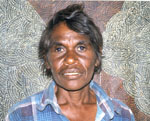
Morton Pwerle aka Gracie Morton Pwerl
Biography
.png)
Language Group: Alyawarre.
 Gracie
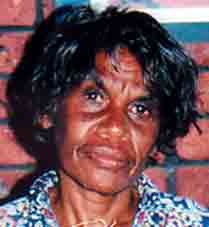
Morton Petyarre Pwerle is an accomplished well-established Australian
artist. There is a rich artistic tradition that runs through Gracie’s
family as well as the Utopia community. Born circa 1956, Gracie Morton
is the daughter of a senior artist Myrtle Petyarre. Gracie
Morton Petyarre Pwerle is an accomplished well-established Australian
artist. There is a rich artistic tradition that runs through Gracie’s
family as well as the Utopia community. Born circa 1956, Gracie Morton
is the daughter of a senior artist Myrtle Petyarre.
Gracie's mother was Myrtle Petyarre (1932-2014) who was sister to Ada
(1930-2009), Nancy (1934-2009), Kathleen (1940-2018), Gloria
(1945-2021), Violet (1945-2010) and Jean Petyarre (1956-2022). All
sisters were paiting stories of Mountain Devil Lizard - Arnkerrthe which
is one of the dreamings from Atnangkere and Alhalkere country.
Gracie Morton Petyarre Pwerle career began in the early 1970's when she
gained recognition as an artist working with the Utopia Women's Batik
group. She was exhibiting her work with the Utopia women in Australia
and overseas. Gracie earlier works are quite typical of "Utopia Art"
Much line work depicting body-paint designs, and many tradition symbols
are seen in her central desert dot paintings.
Funded by the government Arts programs and the support of CAAMA 88, the
Utopia women created a major work entitled "A picture story: This was
later acquired by the Holms a Court collection and later exhibited at
Tandanya in Adelaide in 1989.
Gracie Morton began painting in acrylics in the late 1980s during the “A
Summer Project”, where acrylic paints and canvas were introduced to the
women of Utopia.
From 1988 Gracie continue painting solely on canvas and using acrylic
paints. She prefers the greater freedom and control through the medium
of acrylic paints on canvas.
Gracie works with great strength and dynamism of the Utopian women
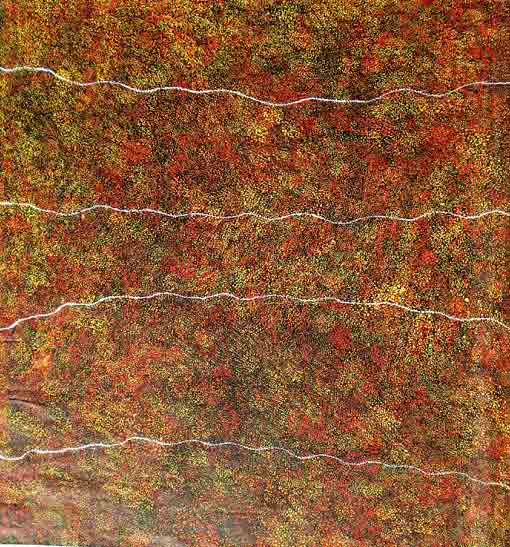
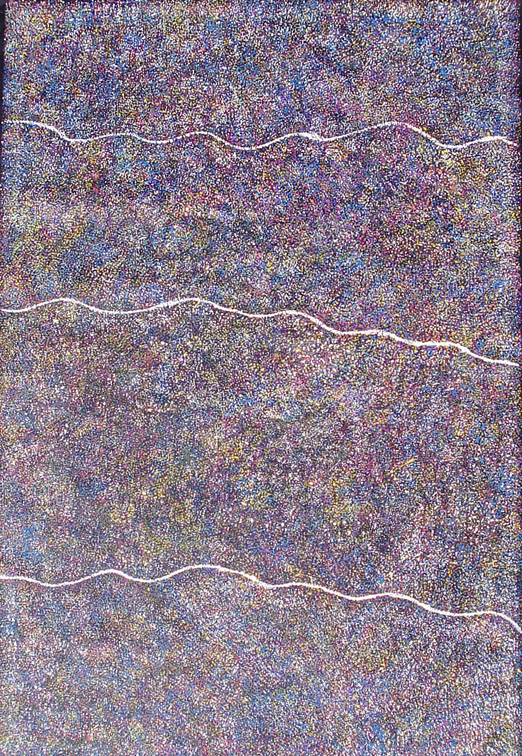
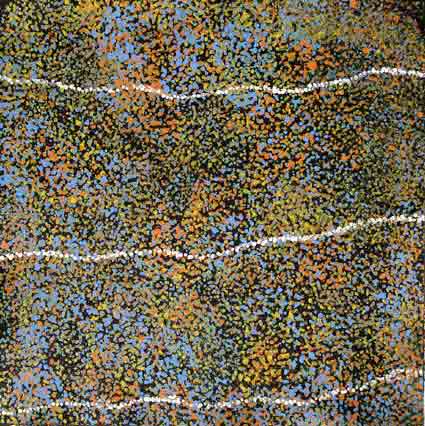
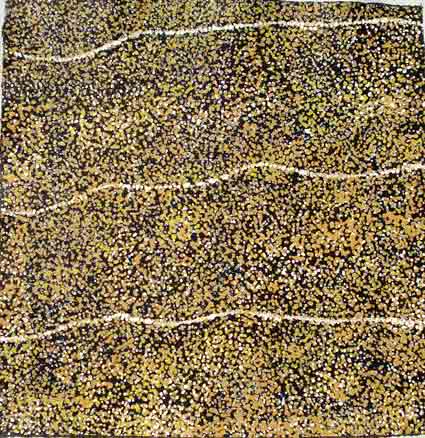
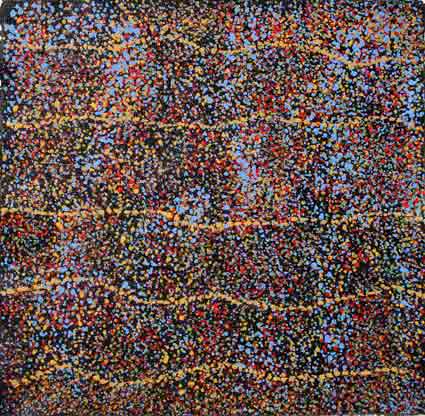
artists that continues across the generations. Gracie's delicate dotting
and colour variation uses an aerial perspective to portray the seasonal
changes of the Amwekety - the Bush Plum, a plant of great significance
to the women of Gracie's traditional country, Mosquito Bore.
Gracie Morton distinctively minimalistic style is
recognized as
one of the World’s best
modern
state-of-the-art
abstract.
Gracie uses
microscopically tiny dot technique,
creates inspiring
almost hypnotic artworks, painting with
fascinating accuracy of intricate details.
Gracie Morton
is
a
successful
artist in
the
World Art Market,
her paintings
have
the sheer physical presence of the much contemporary work of art, and
multi-dimensional space and depth.
Coming from
Kngwarreye
family,
Gracie Morton
creates inspiring, modern paintings with fascinating
accuracy of intricate details, subtle shades of colour that
moves with the viewer’s eyes and floats in air and have the
physical presence of the much contemporary work of art.
COLLECTIONS
Gracie Morton’s paintings
are exhibited regularly throughout Australia
and are sought after by collectors Worldwide.
Gracie work is represented in private collections China, Germany, Italy,
The Netherlands and held in
major
museums including:
Beher Collection, Reimers Foundation, Deidesheim, Germany
Museum Art Gallery Northern Territory Darwin,
National Gallery of Victoria Melbourne
Art Gallery of Western Australia
Perth
Art Gallery of South Australia
Adelaide
National Gallery of Australia
Canberra
Queensland Art Gallery Brisbane
Museum Kunstpalast,
Germany
Artbank Sydney
Holmes à Court Gallery and gallery
Collection Perth
Slaughter and May International Law
collection in
London
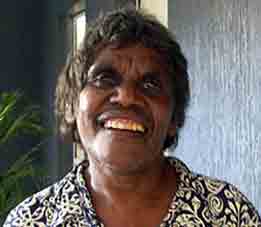 Gracie Pwerl Morton is one of the
senior traditional custodian for both the Altyerre (Dreaming)
and the vast expanse of related country, some 263kms north of Alice
Springs, Australia. Gracie Pwerl Morton is one of the
senior traditional custodian for both the Altyerre (Dreaming)
and the vast expanse of related country, some 263kms north of Alice
Springs, Australia.
In accordance to traditional law the
responsibility for the Bush Plum Dreaming has been passed
down to Gracie from her father and her aunt, who are
responsible for ensuring that she perseveres its traditions.
An Alyawarre woman from
Utopia Station, approximately 250km north-east of Alice
Springs, Gracie's works are represented in major private
collections such as The Robert Holmes a Court Collection in
Western Australia.

Selected
Exhibitions
Gracie exhibits regularly in Australia, more
recently in a solo show titled 'Mosquito Bore - The Art of
the Minimalist' at Ancient Earth Indigenous Art Gallery in
Cairns and in a group exhibition at the Alliance Francaise
de Canberra and French Embassy in Canberra.
1985
Desert Mob, Araluen Centre for the Arts, Alice Springs,
Australia
1986
Desert Mob, Araluen Centre for the Arts, Alice Springs,
Australia
1989
Utopia Women's Paintings. The First Works on Canvas. A
Summer Project, SH Ervin Gallery, Sydney, Australia
1989-91
Utopia - A Picture Story, Tandanya National
Aboriginal Cultural Institute, Adelaide, Australia; The
Royal Hibernian Academy, Dublin, Cork, Limerick,
Ireland; Meat Market Gallery, Melbourne, Australia
1991
Desert Mob, Araluen Centre for the Arts, Alice Springs,
Australia
1991
8th National Aboriginal Art Awards, Museum & Art Gallery of the Northern
Territory, Darwin, Australia
1992
Desert Mob, Araluen Centre for the Arts, Alice Springs,
Australia
1993
Desert Mob, Araluen Centre for the Arts, Alice Springs,
Australia
1994
Desert Mob, Araluen Centre for the Arts, Alice Springs,
Australia
1996
Desert Mob, Araluen Centre for the Arts, Alice Springs,
Australia
1998
Utopia und Balgo Hills, Aboriginal Art Galerie Baehr,
Speyer, Germany
1998
Culture Store, Art Gallery, Rotterdam. Netherlands
1998
Dreamings, Spazio Pitti Arte, Florenz, Italy
1999
Alliance Francaise de Canberra and French Embassy.
Australia
1999
Gallery Gondwana, Alice Springs, Australia
1999
Mbantua Gallery, Alice Springs, Australia
1999
My Country - Journey of our Ancestors, Ancient Earth Indigenous Art,
Cairns
2000
Ancient Earth Indigenous Art, Cairns, Australia
2000
Kunst der Aborigines, Leverkusen, Germany
2000
Mosquito Bore - The Art of the Minimalist, Ancient Earth
Indigenous Art, Australia
2001
alice.fitzroy@af, Alliance Francaise de Canberra ,
Canberra, Australia
2001
The Unseen in Scene, Staedtische Galerie Wolfsburg,
Germany
2001-02
Recounting the Essence of Life. Art from
Australia, Kunstforum HDZ, Bad Oeynhausen, Germany
2002
Land is Life. Art from Australia, Jagdschloss Granitz,
Binz, Ruegen, Germany
2002
Kulturnacht, Aboriginal Art Galerie Baehr, Speyer, Germany
2001-02
Recounting the Essence of Life. Art from Australia, Kunstforum HDZ, Bad
Oeynhausen, Germany
2018 Painting on Country – Utopia Artists, Japingka Gallery, Fremantle,
WA
2020 60 by 60 – Small Paintings, Japingka Gallery, Perth
2020 Cup of Joy – New Works from Rising Stars, Japingka Gallery, Perth
2021 Sounds of Summer 2, Japingka Gallery, Freemantle
Gracie Pwerle
Morton - Bush Plum
The delightfully subtle paintings of the Amwekety - the Bush
Plum, depict the changing seasonal influences on a plant that is of the
greatest significance to the Alyawrre women of the Eastern Desert region
of the Northern Territory.
Gracie Morton Pwerle (aka
Gracie Morton Pwerl)
is one of the senior traditional custodian for both
the Altyerre (Dreaming) and the vast expanse of related country, some 263kms north of Alice Springs, Australia.
In
accordance to traditional law the responsibility for the Bush Plum
Dreaming has been passed down to Gracie from her father and her aunt,
who are responsible for ensuring that she perseveres its traditions.
Bush Plum highly nutritious
are small fruit with black seeds, rich
in vitamin C, that can be eaten raw or cooked. Growing in a great
profusion of flower and fruit throughout the winter months, the women,
accompanied by the children collect the Bush Plums, while at the same
time reconfirming their connection to the land.
The flourish of colour that distinguishes the Bush Plum after the fall
of rain, is quickly transformed with the long hot summer months.
Dried
and separated, the seed and husk are scatter over the vast sunbaked
landscape by the hot summer winds.
The incredible finesse of Gracie’s
style creates a wonderful lyricism in her works, causing a
three-dimensionality that pulls at the eye guiding the viewer through
the soft, outward-reaching fields of colour, while simultaneously
transfixing one in its undulations.
Literature Source
& FURTHER REFERENCES
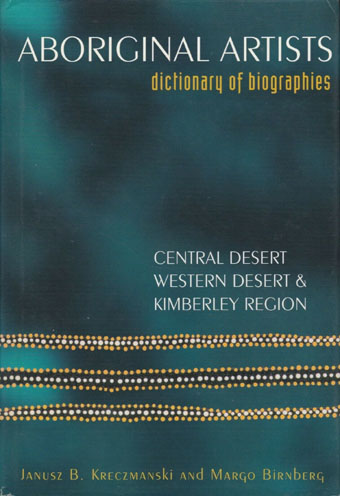
Aboriginal
Artists
dictionary of biographies Central Desert,
Western Desert &
Kimberley Rigion by
Kreczmanski, Janusz B and Birnberg, Margo JB Publishing Australia,
Marleston, 2004)
Vivien Johnson,
published by Craftsman House 1994
The Oxford Companion to Aboriginal Art and Culture"
edited by Sylvia Kleinert and Margo Neale published by OUP 2000
Bibliography and
PUBLICATIONS:
Das Verborgene im
Sichtbaren. The Unseen in Scene.
Aboriginal Art Galerie
Bähr, Speyer, ;
Utopia - A Picture Story: 88 Works on Silk.
The Robert
Holmes à Court Collection. Brody, A. (Hrsg.), Aboriginal
Cultural Institute Inc., Adelaide 1989 ; Utopia Women's Paintings: The
First Works on Canvas. A Summer Project 1988-89.
Brody, A. (Hrsg.), Heytesbury Holdings, Perth 1989.
Aboriginal
Artists of the Western Desert - A Biographical Dictionary" by Vivien
Johnson, published by Craftsman House 1994
Brody, A. 1989 Utopia women’s Paintings: the First Works on Canvas, A
summer Project, 1988-89 exhib. Cat. Heytesbury Holdings, Perth
Brody, A. 1990 Utopia, a picture Story, 88 Silk Batiks from the
Robert
Homes
a Court Gallery and gallery Collection,
Heytesbury Holdings LTD Perth NATSIVAD database.
Ancient culture of 60,000 years gave the World its most
exciting Contemporary Art
|

Founded in 1994, Galeria Aniela hosted and exhibited world-class
artists
and received celebrities such as Sir
David Attenborough, Cameron
O’Reilly,
Australian Prime Minister
Bob Hawke,
built
a strong
standing
in Australia and internationally.
Galeria Aniela provides
a professional, independent, friendly
service that others are unable to match, offers
experienced guidance,
representing clients best interest in the
art market, from
the point of the
art investment value,
impeccable provenance
and quality,
shipping worldwide..
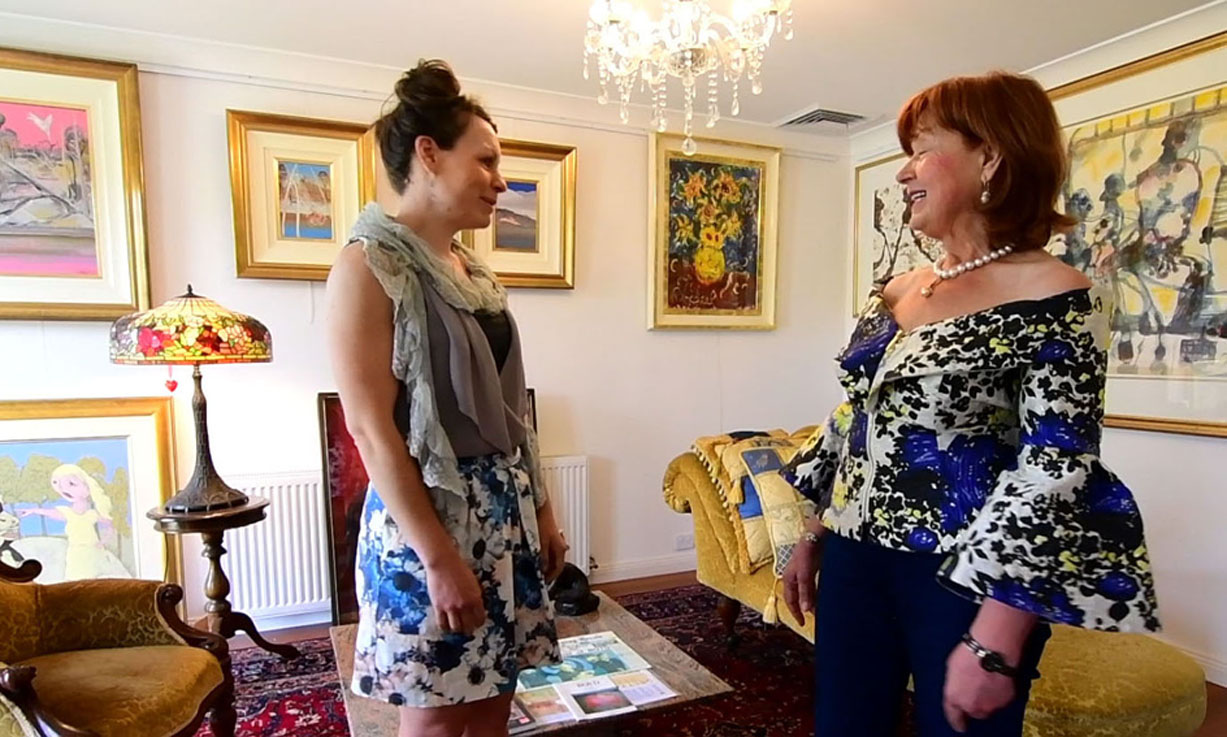
video Galeria Aniela Fine Art broker
At Galeria Aniela, Fine Art
refers to
high-quality
works by
renowned artists.
Combining a wide network of resources with the knowledge
and
expertise
in the
Australian
art and
Global
art market, Galeria
Aniela assists clients in all aspects of dealings in
fine art, helping
save time and money.
Testimonials
We welcome the opportunity to speak with you, please
feel free to
contact
us
to discuss ways in which Galeria Aniela can assist you
now and in the future.
Whether you are a first-time buyer, an astute investor
or enthusiastic collector, our people focused approach
ensures an enjoyable and rewarding experience.
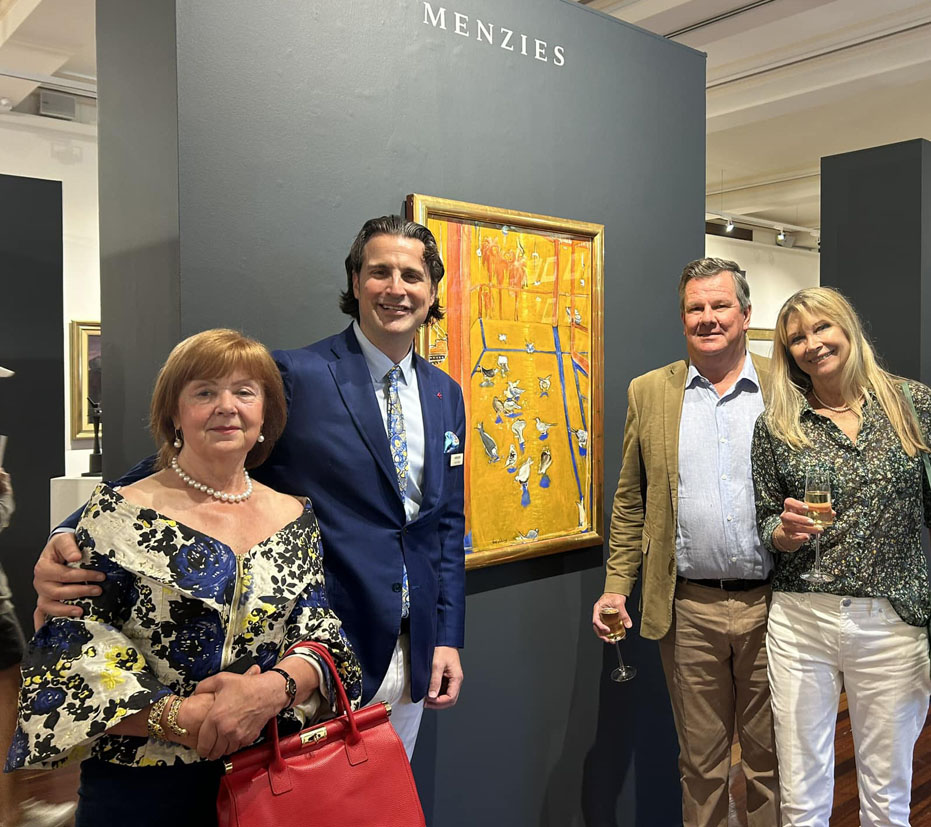
If you consider buying or selling work of
Arthur Boyd,
Brett Whiteley,
Fred Williams,
John Perceval, John Olsen,
Charles Blackman,
Garry Shead,
Arthur Streeton
or another significant work of fine art, please
contact us.
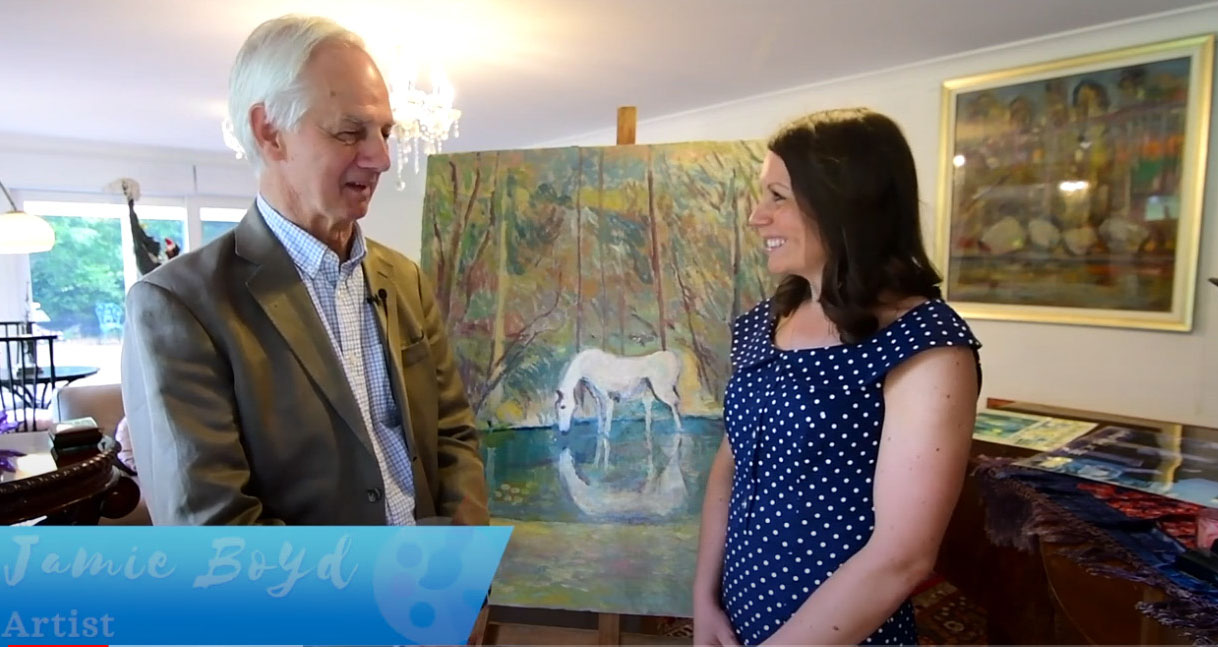
Video Jamie Boyd, the Boyd family most important LIVING
artist
The
BOYD
family
exhibition
in Galeria Aniela
coup the
front page
Sydney
Morning Herald,
Australian National NEWS the ABC TV
and
Sunday
Afternoon the ABC TV.
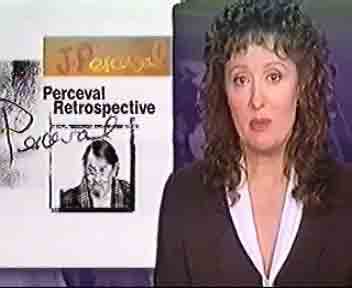
John Perceval
Retrospective conquer
the Australian
National NEWS ABC TV and
Charles Blackman
Retrospective won
Australian
Art Scream
SBS
TV.
Works of art live for generations, constantly reborn in the minds of the
beholders to bring new meanings, new dreams, new ways of seeing and experiencing
the world. Be part of this magic world of amazing fine art from the ocean of
tranquillity to
concur
the heart, mind and soul.
The vision of Galeria Aniela is to increase the awareness of Australian
artists
cultural contribution. Through hard work and dedication, in a peaceful manner,
we strive for high ideals to create a better future for the arts.
When you purchase Art from
Galeria Aniela,
you make a valuable contribution to our mission of helping artists to make a
living with their creations and together we make a difference.
|