top
Galeria
Aniela
 World’s Local Fine Art World’s Local Fine Art  HOME |
|
Galeria
Aniela specializes in selling works of fine art of
impeccable
provenance
friendly Quality service
Shipping Worldwide
|
|
|
.png)
Ronnie Tjampitjinpa 1943-2023
Ancient culture of 60 thousand years gave the
World its most exciting Contemporary Art |
|
If You
Love Fine Art
Of Impeccable Provenance, The Art You
Want Is At Galeria
Aniela |
|
 Ronnie
Tjampitjinpa
is Australia’s important Aboriginal artist. His work first appeared in Papunya
Tula exhibitions during the 1970s. In 1988
Tjampitjinpa
won the Alice Springs Art Prize, followed by major solo exhibitions at
Gallery Gabrielle Pizzi in 1989 and 1990. Ronnie
Tjampitjinpa
is Australia’s important Aboriginal artist. His work first appeared in Papunya
Tula exhibitions during the 1970s. In 1988
Tjampitjinpa
won the Alice Springs Art Prize, followed by major solo exhibitions at
Gallery Gabrielle Pizzi in 1989 and 1990.
Tjampitjinpa
work is held in museums and major
collections
around the world including Paris
Musée National des Arts d'Afrique
et d'Océanie,
Art Gallery of NSW,
National Gallery of Australia,
National Gallery of Victoria,
Art Gallery of South Australia,
Art Gallery of Western Australia,
Museum Art Gallery of the Northern Territory,
Queensland Art Gallery,
National Museum of Australia,
Artbank,
Lowe Art Museum USA,
University of Miami and
Araluen Arts Centre.
Tjampitjinpa’s
work
can
become a valuable investment, is highly valued in the
World Art market:
Kampurarrpa sold for $90,556,
Lake Mackay $151,280,
Ngarru
$213,054,
Tingari $353,169. |
|
|
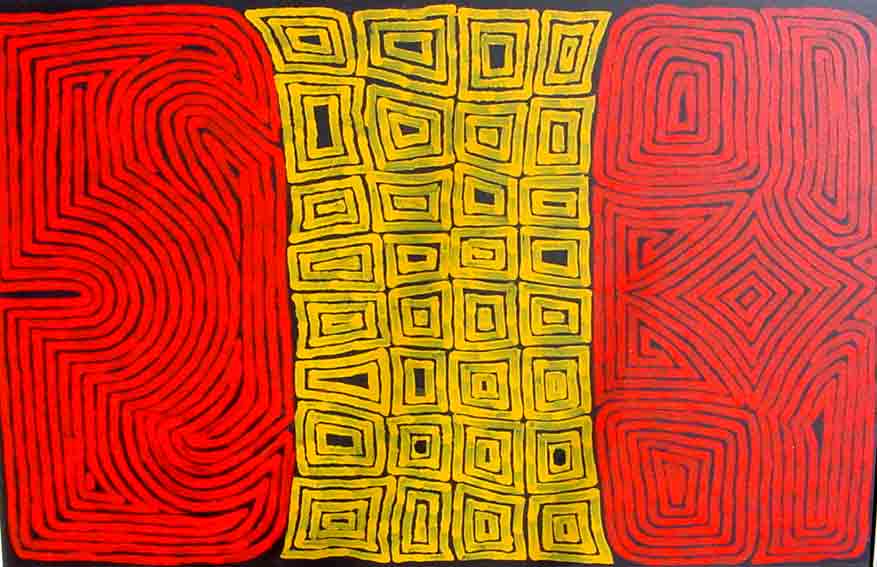
 Artist:
Ronnie
Tjampitjinpa Artist:
Ronnie
Tjampitjinpa
Title:
Tingari Creation Cycle (2002)
masterwork
Medium:
Synthetic
polymer paint on Belgian linen
Image Size:
115 cm x 72 cm
Framed
Size: 155 cm x 133 cm
Price:
Email-enquiry NO attachments please |
|
|
|
Auction Results
Ronnie Tjampitjinpa
Under the
freedom of information and extensive
research, we compiled the relevant
facts
|
Details |
Price excl. GST |
|
 |
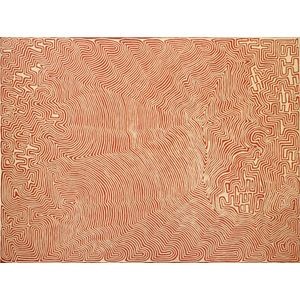
Tingari Ceremonies at the Site of Pintjun
Synthetic polymer paint on linen, bears artist’s name and Papunya Tula
Artists. catalogue no. RT890931 on the reverse, 152 x 180 cm, Est:
USD120,000-180,000, Sotheby's, Aboriginal Art, New York, 13/12/2019, Lot
No. 13 |
US$243,750
(A$353,169) |
|
 |
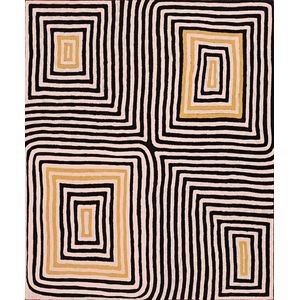
Ngarru, 2008
Synthetic polymer paint on linen, bears Papunya Tula Artists catalogue
number RT0802152 on the verso, 183 x 244 cm, Est: USD120,000-180,000,
Sotheby's, Aboriginal Art, New York, 25/05/2022, Lot No. 89 |
US$151,200
(A$213,054) |
|
 |
Wilkinkarra (Lake Mackay), 1993
Synthetic polymer paint on linen, bears inscription verso: artist's
name, size and Papunya Tula Artists cat. RT930734, 182 x 153 cm, Est:
$40,000-60,000, Deutscher and Hackett, Important Australian &
International Fine Art; Important Indigenous Art, Melbourne, 29/11/2017,
Lot No. |
A$151,280 |
|
 |
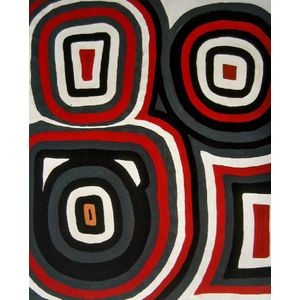
Designs Relating to the Site of Kampurarrpa
Synthetic polymer paint on linen, bears artist's name and Papunya Tula
Artists catalogue number RT 9909242 on reverse, 183 x 152 cm, Est:
USD50,000-80,000, Sotheby's, Aboriginal Art, New York, 13/12/2019, Lot
No. 21 |
US$62,500
(A$90,556) |
|
 |
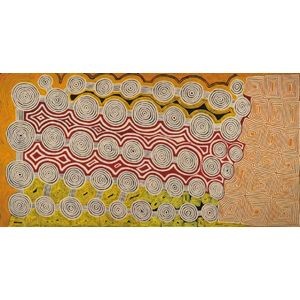
Two Boys at Wilkinkarra (Lake Mackay) 1992
Synthetic polymer paint on linen, bears artist's name and Papunya Tula
artists catalogue number RT920828 on the reverse, 152 x 122 cm, Est:
$30,000-50,000, Sotheby's, Important Aboriginal Art, Melbourne,
24/06/2002, Lot No. 40 |
A$79,812 |
|
 |
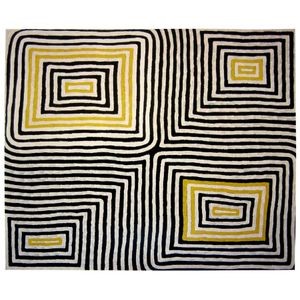
Kumpuralgna, 1996
Synthetic polymer paint on linen, inscribed verso: 'Kumpuralagna'/
Ronnies Fathers Place [sic]/ 'Kakada' East Of Kintore/ Wirly Wirly Place
Body Design/ For One Old Man He's [Sic]/ Gone To Western Australia, 187
x 360 cm, Est: $50,000-70,000, Menzies, Important Australian and
International Fine Art and Sculpture, Sydney, 10/12/2015, Lot No. 53 |
A$79,773 |
|
 |
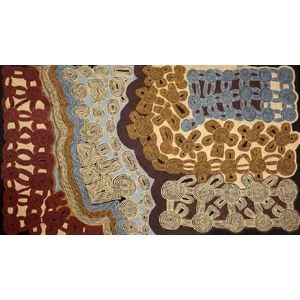
Wilkinkarra (Lake Mackay) 1993
Synthetic polymer paint on linen, bears signed artist's name and Papunya
Tula catalogue number RT 930734 on the reverse, 183 x 153 cm, Est:
$25,000-35,000, Sotheby's, Aboriginal Art, Melbourne, 26/06/2000, Lot
No. 119 |
A$63,000 |
|
 |
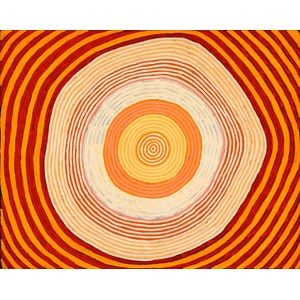
Tingari Cycle, 1997
Synthetic polymer paint on canvas, dated and inscribed verso: FW6038/
KA707/97, 212 x 374 cm, Est: $50,000-70,000, Menzies, Important
Australian and International Fine Art and Sculpture, Sydney, 10/12/2015,
Lot No. 52 |
A$61,364 |
|
 |
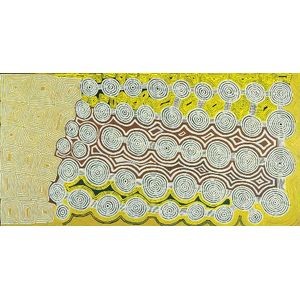
Palkarulkulnga, 2002
Synthetic polymer paint on linen, bears inscription verso: artist's
name, size, and Papunya Tula Artists cat. RT0204077, 122 x 152.5 cm, Est:
$55,000-75,000, Deutscher and Hackett, Important Australian Aboriginal
Art, Melbourne, 18/03/2020, Lot No. 17 |
A$58,560 |
|
 |
Kumpuralgna, 1996
Synthetic polymer paint on linen, 364 x 186 cm, Est: $50,000-70,000,
Lawson~Menzies (now trading as Menzies), Aboriginal Art, Sydney,
22/11/2006, Lot No. |
A$54,000 |
|
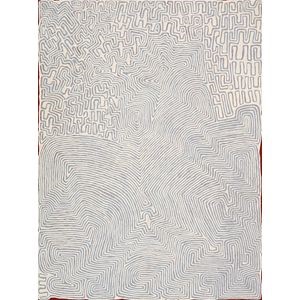 |
Tingari at Watanuma, 2006
Synthetic polymer paint on linen, bears inscription verso: artist’s
name, size and Papunya Tula Artists cat. RT0612147, 242.5 x 181 cm, Est:
$50,000-70,000, Deutscher and Hackett, Aboriginal Art from the Luczo
Family Collection, USA, Melbourne, 19/10/2016, Lot No. 32 |
A$51,240 |
|
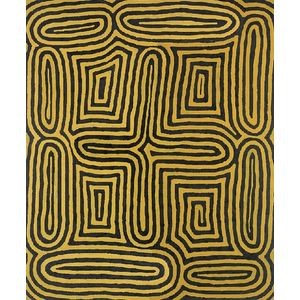 |
Wild Potato Dreaming at Muyinga, West of Kintore
Synthetic polymer paint on linen, bears artist's name, size and Papunya
Tula Artists catalogue number RT900938 on the reverse, 151.5 x 182 cm,
Est: $40,000-60,000, Sotheby's, Aboriginal Art, Melbourne, 26/07/2010,
Lot No. 52 |
A$48,000 |
|
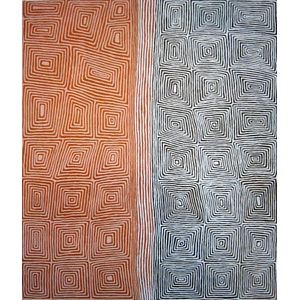 |
Untitled 1998
Synthetic polymer paint on linen, bears artists name size and Papunya
Tula catalogue number RT9805110 on the reverse, 183 x 153 cm, Est:
$40,000-60,000, Sotheby's, Aboriginal Art, Sydney, 29/07/2003, Lot No.
112 |
A$47,500 |
|
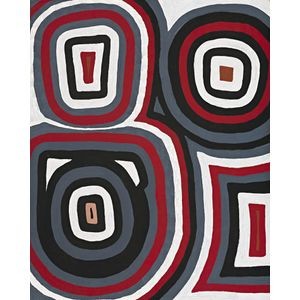 |
Two Boys at Wilkinkarra (Lake Mackay), 1992
Synthetic polymer paint on linen, inscribed verso, artist’s name, size
and Papunya Tula Artists cat. RT920828, 152 x 121.5 cm, Est:
$40,000-60,000, Deutscher and Hackett, Important Aboriginal + Oceanic
Art, Melbourne, 18/05/2011, Lot No. 18 |
A$43,200 |
|
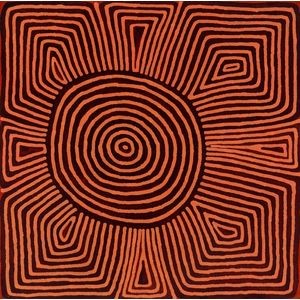 |
Moon Dreaming at Maanytja, 1996
Acrylic on linen, 121 x 121 cm, Est: USD20,000-30,000, Sotheby's,
Aboriginal Art, New York, 25/05/2022, Lot No. 57 |
A$39,060 (US$27,720) |
|
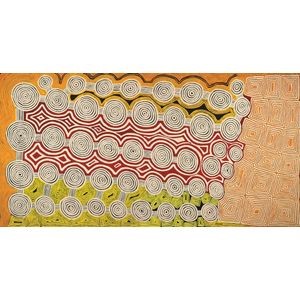 |
Kumpuralgna, 1996
Synthetic polymer paint on Belgian linen, inscribed verso: 'KUMPURALAGNA'.
Ronnies Fathers Place. KAKADA East of Kintor. Wirly Wirley Place Body
Design. For one old man he's gone to Western Australia, 187 x 360 cm,
Est: $25,000-35,000, Cooee Art Leven, The Rod Menzies Estate |
Indigenous and Oceanic Art Collection | Part I, Sydney, 08/11/2023, Lot
No. 45 |
A$38,045 |
|
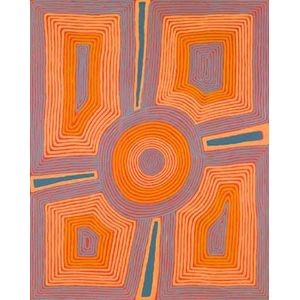 |
Kaakuratintja (Lake Macdonald) 1996
Synthetic polymer paint on linen, bears Papunya Tula artist's catalogue
number rt960429 on the reverse, 153 x 122 cm, Est: $30,000-40,000, Joel
Fine Art, Important Aboriginal Art, Melbourne, 05/06/2007, Lot No. 68 |
A$37,140 |
|
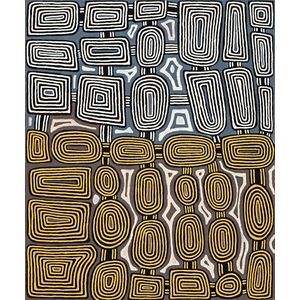 |
Tingari Ceremonies at the Waterhole Site of Pinari, 1997
Synthetic polymer paint on linen, inscribed verso, artist's name, size
and Papunya Tula Artists cat. RT970178, 183 x 152 cm, Est:
$20,000-25,000, Deutscher and Hackett, Important Aboriginal and Oceanic
Art, Melbourne, 24/03/2010, Lot No. 96 |
A$36,000 |
|
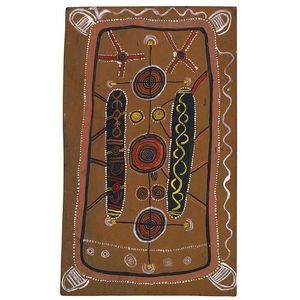 |
Ceremonial Dreaming (1972)
Natural earth pigments and bondcrete on composition board,
50.6 x 30.6 cm, Est: $30,000-40,000, Sotheby's, The Anthony & Beverly
Knight Collection of Early Papunya Art (Lots 1 – 46); Important
Aboriginal & Oceanic Art (Lots 47, Melbourne, 28/05/2013, Lot No. 14 |
A$31,720 |
|
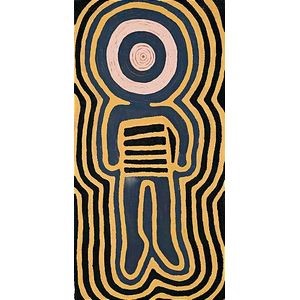 |
The Kadaitcha Man (Law Enforcer) 1993
Synthetic polymer paint on linen, bears Papunya Tula Artists catalogue
number RT930437 on the reverse,
121 x 61 cm, Est: $20,000-30,000, Sotheby's, Aboriginal Art, Melbourne,
31/07/2006, Lot No. |
A$31,200 |
|
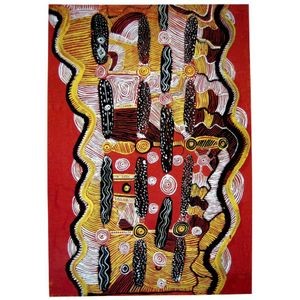 |
Untitled 1972
Natural earth pigments and synthetic polymer powder paint on composition
board, bears signed Stuart Art Centre catalogue number 11013 on the
reverse,
45.5 x 32 cm, Est: $30,000-50,000, Sotheby's, Aboriginal Art, Melbourne,
26/06/2000, Lot No. 173 |
A$27,600 |
|
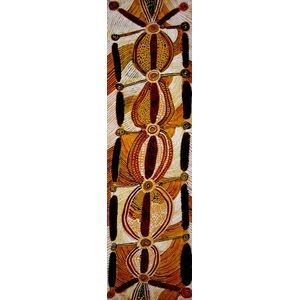 |
Untitled 1972
Synthetic polymer/powder paint on composition board, bears Stuart Art
Centre catalogue number 11014 on the reverse,
64 x 18 cm, Est: $8,000-12,000, Sotheby's, Fine Aboriginl and
Contemporary Art, Melbourne, 17/06/1996, Lot No. 199 |
A$25,300 |
|
|
|
|
|
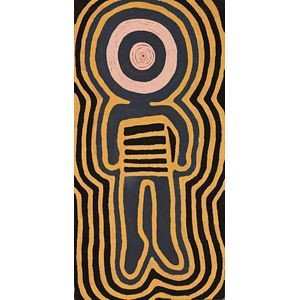 |
The Kadaitcha Man, 1993
Synthetic polymer paint on linen, bears inscription verso: Papunya Tula
Artists cat. RT930437,
121 x 61 cm, Est: $12,000-15,000, Deutscher and Hackett, Aboriginal Art
from the Luczo Family Collection, USA, Melbourne, 19/10/2016, Lot No.
31 |
A$21,960 |
|
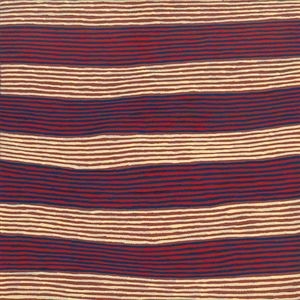 |
Wallaby and Bushfire Dreamings, 1999
Synthetic polymer paint on linen, bears Papunya Tula Artists catalogue
number RT990763 on the reverse,
91 x 91 cm, Est: USD10,000-15,000, Sotheby's, Aboriginal Art, New York,
23/05/2023, Lot No. 40 |
US$12,700 (A$19,105) |
|
|
|
|
Ronnie Tjampitjinpa
Biography:
Ronnie Tjampitjinpa is one of Australia’s
most important Aboriginal artists amongst the first wave of artists effectively linking
ancient stories with modern mediums.
Ronnie Tjampitjinpa has been a committed artist since his
earliest involvement with the Central Desert art movement and has is as one of the major painters.
Ronnie Tjampitjinpa
work is represented by
major collections throughout the world, his paintings are in very
high demand sought after by Australian and international art collectors
as well as Auction Houses.
Ronnie Tjampitjinpa
has exhibited extensively throughout the world and his work is included n
all major aboriginal art collections.
Ronnie
Tjampitjinpa (Pintupi born c.1943)
Biography
Australian Aboriginal Artists dictionary of
biographies
p.
366.
Australian National Gallery of Victoria
Ronnie Tjampitjinpa-Artists-Tjukurrtjanu
Ronnie Tjampitjinpa's
works first appeared in Papunya Tula exhibitions during the 1970s, and later in
commercial art galleries in Sydney and Melbourne throughout the 1980s. He won
the Alice Springs Art Prize in 1988 and this was followed by successive major
solo exhibitions at Gallery Gabrielle Pizzi in 1989 and 1990.
Ronnie linear works which first appeared in the mid-1990s, with their
traditional content, the overall shimmer he effects with seemingly minimal
application radiates the artist's authority and self-assuredness.
Most Ronnie Tjampitinpa paintings represents a site on the Tingari creation
songlike. Since events associated with the Tingari cycle are of a secret nature
no further details are given.
Ronnie
Tjampitjinpa
has been painting in Papunya Tula during the 1970s,
then in commercial art galleries in Sydney and Melbourne throughout the
1980s with many successful exhibitions at Gallery Gabrielle Pizzi from 1987 to 1990
and around the world.
Ronnie
Tjampitjinpa born (around 1943)
near the site of Muyinnga and was initiated at Yumari, near his
birthplace,
about 100 km west of the Kintore Ranges in Western Australia (and
approximately 500 km west of Alice Springs).
Ronnie Tjampitjinpa was initiated into
Aboriginal Law at Yumari, near his birthplace.
Ronnie Tjampitjinpa
family traveled
extensively across Pintupi territory, moving through this region and
also around Wilkinkarra (Lake Mackay) which straddles the Western
Australia - Northern Territory border.
%20and%20Ronnie%20Tjampitjinpa.jpg)
Ronnie and his younger brother Smithy Zimran came in from the bush at
Yuendumu and later joined their relatives in Papunya, where he worked
for a while as a labourer.
Ronnie Tjampitjinpa
was one of the Pintupi men who gathered on the verandah of Geoffrey
Bardon's flat before joining others in the Men's Painting Room and
producing works that sometimes disclose aspects of men's ritual.
Ronnie Tjampitjinpa
works follow the Pintupi style, which depicts dreamtime and the
landscape by joining together strong circles with connecting lines.
Ronnie has exhibited extensively throughout the world and is included in
all major Australian and international art collections.
Ronnie exhibited extensively throughout
the world and is included in all major Australian and international art
collection.
In 1983, following the establishment of Walungurru in 1981,
Ronnie returned to his ancestral lands. Over the next decade
he emerged as one of Papunya Tula's major artists,
pioneering the scaled-up, bold linear style characteristic
of Pintupi work of the 1990s. In 1988 he won the Alice Prize
and the following year his first solo exhibition was held at
Gallery Gabrielle Pizzi, Melbourne. In 1993 the artist made
a significant contribution to Perspecta at the Art Gallery
of New South Wales.
There is a mysterious,
entrancing nature to Ronnie Tjampitjinpa paintings, where time and place are
melded in the eternal stories of his Dreaming.
Ronnie
Tjampitjinpa
remains an important influence on a new generation of painters.
AWARDS
1988 -
Ronnie
Tjampitjinpa won the
Alice Springs Art Prize
and had his first solo
exhibition in Melbourne in 1989.
Ronnie Tjampitjinpa
work follow the Pintupi style, which
depicts dreamtime and the landscape by joining together strong circles with
connecting lines.
COLLECTIONS
Ronnie Tjampitjinpa's work is
held in many public collections including
Australian National Gallery of Victoria
National Gallery of Australia,
Canberra
Musée
national des
Arts d'Afrique
et d'Océanie
Paris musée
Art Gallery of New South Wales
Art
Gallery of South Australia
Art Gallery of Western Australia
Homes a Court collection
Museum and Art Gallery of the Northern Territory
Queensland Art Gallery
National Museum of Australia
Art Bank Sydney
National
Gallery of Victoria
Campbelltown
Arts Centre -
Campbelltown City Council
Donald Kahn Collection
Lowe Art Museum USA
University
of
Miami
Araluen Arts Centre
-
Northern Territory
The Supreme Court of the Northern
Territory
Michael
Hollow and countless
private and corporate collections around the world
|
|
|
|
Ronnie Tjampitjinpa was born around 1943 at
Tjiturrunya in the region near Munyinnga about 100km west of the
Kintore Ranges in Western Australia. Ronnie Tjampitjinpa’s family
travelled extensively across Pintupi territory, moving throughout
this region and also in the area around Wilkinkarra (Lake Mackay)
which straddles the Western Australia – Northern Territory border.
Ronnie Tjampitjinpa was initiated into Aboriginal Law at Yumari,
near his birthplace.
After prolonged droughts in the 1950s, Ronnie moved with his family,
first to Haasts Bluff, then to Papunya. Over the years, moving
between Aboriginal communities station, Ronnie Tjampitjinpa talked
to many people about returning to traditional lands, a move which
was made possible with the establishment of Kintore (Walungurru) in
1981. Ronnie moved there with his family in the early 1980s and has
since emerged as one of Papunya Tula Artists’ major painters. Today,
Ronnie remains an important influence on a new generation of
painters.
Ronnie Tjampijinpa’s art is a fine representation of
the characteristic Pintupi sytle: a repetition of forms, which are
geometric, simple and bold, and pigments which are often restricted
to the four basic colours of black, red, yellow and white, although
Ronnie also experiments with other colours.
The primary imagery in Ronnie Tjampitjinpa’s work are
based on the Tingari Cycle which is a secret song cycle sacred to
initiated Pintupi men. The Tingari are Ancestral Beings who, in the
Creation Era, travelled across the landscape performing ceremonies
to create and shape the country. Ronnie Tjampitjinpa’s art
consistently reflects his direct ties with his culture and he can be
considered amongst the first wave of artists effectively linking
these ancient stories with modern mediums.
Ronnie Tjampitjinpa’s works first appeared in Papunya
Tula exhibitions during the 1970s, then in commercial art galleries
in Sydney and Melbourne throughout the 1980s.
1983 Mori Gallery, Sydney NSW
1986 Roar Studios, Melbourne VIC
1987 Gallery Gabrielle Pizzi, Melbourne VIC
1998 Gallery Gabrielle Pizzi, Melbourne VIC
1990 Gallery Gabrielle Pizzi, Melbourne VIC
1990 Paintings from the Desert, Plimsoll Gallery, Hobart TAS
1990 The 7th National
Aboriginal Art Award Exhibition,, Museum & Art Gallery of the
Northern Territory, Darwin
1990 National Gallery of Modern Art, Rome Italy
1991 The 8th National
Aboriginal Art Award Exhibition,, Museum & Art Gallery of the
Northern Territory, Darwin
1991 Flash Pictures, National Gallery of Australia, Canberra ACT
1991 Australian Aboriginal Art from the Collection of Donald Kahn,
Lowe Art Museum, University of Miami USA
1991 Aboriginal Paintings from the Desert, Union of Soviet Artists
Gallery, Moscow Russia
1991 Aboriginal Paintings from the Desert, Museum of Ethnographic
Art, St Petersburg, Russia
1992 Central Australian Aboriginal Art and Craft Exhibition, Alice
Springs NT
1992 The 9th National
Aboriginal Art Award Exhibition,, Museum & Art Gallery of the
Northern Territory, Darwin
1993 Aboriginal Art Exhibition, Kung Gubunga, Oasis Gallery,
Broadbeach QLD
1993 Tjukurrpa, Desert Dreamings, Aboriginal Art from Central
Australia
1993 (1971-1993) Art Gallery of Western Australia, Perth WA
1993 Central Australian Aboriginal Art and Craft Exhibition, Alice
Springs NT
1994 Dreamings Tjukurrpa: Aboriginal Art of the Western Desert
1994 The Donald Kahn collection, Museum Villa Stuck, Munich
1994 Central Australian Aboriginal Art and Craft Exhibition, Alice
Springs NT
1994 The 11th National
Aboriginal Art Award Exhibition,, Museum & Art Gallery of the
Northern Territory, Darwin
1994 Australian heritage Commission National & Torres Strait
Islander Art Award, Old Parliament House, Canberra
1994 Power of the Land, Masterpieces of Aboriginal Art, National
Gallery of Victoria, Melbourne VIC
1994 Yiribana, Art Gallery of NSW, Sydney NSW
2001 Sand, Spinifex and Salt, Japingka Gallery, Fremantle WA
2004 Travels of the Tingari – New Pintupi Works of the Western
Desert, Japingka Gallery, Fremantle
WA
2011 In Black and White, Japingka Gallery, Fremantle WA
2013 Landmarks and Law Grounds: Men’s Painting, Japingka Gallery,
Fremantle WA
|
|
|
|
Tingari Cycle
Stories which
include songs
and sacred to initiated men, are the subject of many of
Ronnie's paintings.
The Tingari are a group of ancestral spirit or
Dreamtime beings who brought law and culture to the people of the
Western Desert, travelling over vast distances. In the course of their
many adventures and misadventures, they performed ceremonies to create
or even become the physical features of the sites they visited, such as
rocky outcrops, waterholes, trees, salt lakes, and ochre deposits.
Ronnie Tjampitjinpa's work is highly characteristic of Pintupi art,
using simple, bold, geometric designs, often made up of maze-like
circles or a central bull's-eye connected by strong lines. There is a
mysterious, entrancing nature to these paintings, where time and place
are melded in the eternal stories of Ronnie's Dreaming. Their complexity
may not always be clear to the outsider, but they reward further study.
Ronnie is considered one of the first major artists to have linked
the painting of these 'song-lines' or 'travelling Dreamings' with
the use of modern materials.
Ronnie's work has been shown in international exhibitions many times and
he is represented in major private collections such as the Donald Khan
Collection and the Kelton Foundation in the United States of America.
Ronnie Tjampitjinpa
prospered as an artist during the late 1980’s winning the Alice Springs
Art Prize in 1988. The following year
Ronnie Tjampitjinpa
travelled to Melbourne for his first one-man show at the Gallery
Gabrielle Pizzi. Subsequently he was included in ‘Australian Perspecta
1993’ at the Art Gallery of NSW. From 1993 Ronnie was Chairman of the
Kintore Outstation Council, residing at his outstation at Redbank (Ininti).
His work was displayed prominently in Sydney at the Jinta Gallery in
1998 in their ‘Pintupi Men’ exhibition.
These successes have established him as one of the masters of desert
art.
Ronnie Tjampitjinpa
was
there at the beginning and will continue to work strongly into the next
century.
Ronnie Tjampitjinpa is the personification of a linkage to the
traditional ways and beliefs that certainly will be modified by the
current generation of painters. Whilst his works may be regarded as
‘contemporary art’ in the great galleries of the world we should
remember that his beliefs and background exemplify the ancient nature of
his people. His is one of the last of the genuine desert nomads.
Consequently his art takes on a meaning and importance well beyond the
expectations aroused when we are confronted with visual art of our own
Euro-centric culture. |
It was
March 1972
that Bardon became aware of Ronnie's presence amongst the artists who were
working in the Great Painting room. Under the tutelage of Uta Uta, his father's
younger brother, Ronnie tentatively began experimenting with a raft of new
materials. Driven by a desire to express his knowledge and experience of ritual
amongst his cultural peers, Ronnie's first paintings are replete with overt
depictions of finely decorated ceremonial objects. (Luke Scholes, 2011)
|
|
Ronnie resides with his family at
Kintore, an aboriginal community that was established in 1981.
Originally Ronnie came in from
the bush at Yuendumu and later joined relatives living in Papunya, where
he worked as a labourer, helping with the fencing of the airfield. He
started painting around 1971 at the time that the desert art movement
began in Papunya and over several years he moved between Papunya,
Yuendumu and Mt Doreen Station. Ronnie's work follows the Pintupi style
of strong circles joined together by connecting lines relating to the
people, country and the Dreamtime. The primary images in Ronnie's work
are based on the Tingari Cycle which is a secret song cycle sacred to
initiated men.
|
|
The Tingari are Dreamtime
Beings who travelled across the landscape performing ceremonies to
create and shape the country associated with Dreaming sites. The Tingari
ancestors gathered at these sites for Maliera (initiation) ceremonies.
The sites take the form of, and are located at, significant rockholes,
sand hills, sacred mountains and water soakages in the western desert.
Tingari may be poetically interpreted as song-line paintings relating to
the songs (of the people) and creation stories (of places) in Pintupi
mythology.
Ronnie can be considered amongst the first wave of artists
effectively linking such ancient stories with modern mediums. During his
time at Papunya Ronnie talked of returning to his traditional country.
This became possible when Kintore was established in 1981 and Ronnie
moved there with his family shortly afterwards. He has been a committed
artist since his earliest involvement with the central desert art
movement and has since emerged as one of the region's major painters.
Today, Ronnie remains an important influence on a new generation of
painters. Ronnie's works first appeared in Papunya Tula exhibitions
during the 1970s, then in commercial art galleries in Sydney and
Melbourne throughout the 1980s, including successive exhibitions at
Gallery Gabrielle Pizzi from 1987 to 1990.
In 1988, he won the Alice
Springs Art Prize and he had his first solo exhibition in Melbourne in
1989.
Ronnie Tjampitjinpa was selected for inclusion in major
representative Aboriginal survey shows including: Flash Pictures at the
Australian National Gallery; Lowe Art Museum, University of Miami; and
other noteworthy exhibitions in Paris, Moscow, St Petersburg, Düsseldorf
and Munich. His work is held in many public galleries and private
collections, including the National Gallery of Australia and all the
state galleries. (Source: Internet and Aboriginal Artists of the
Western Desert: a biographical dictionary by Vivien Johnson 1994) |
|
|
|
|
Literature
Source
& FURTHER
REFERENCES
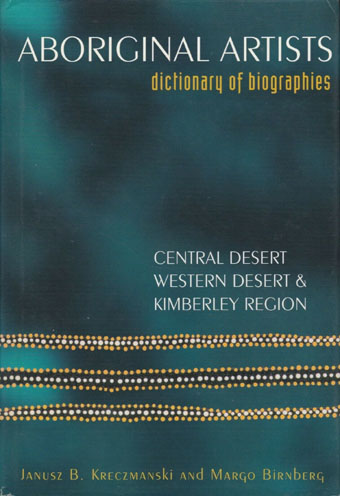
Australian Aboriginal Artist dictionary of biographies
Kreczmanski,
Janusz B and Birnberg, Margo (eds.): Aboriginal Artists: Dictionary of
Biographies: Central Desert, Western Desert and Kimberley Region JB
Publishing Australia, Marleston, 2004.
Aboriginal Artists of the Western Desert - A Biographical Dictionary by
Vivien Johnson, published by Craftsman House 1994
The Oxford Companion to Aboriginal Art and Culture edited by Sylvia
Kleinert and Margo Neale published by OUP 2000
Aboriginal
Artists: Dictionary of Biographies: Central Desert, Western Desert &
Kimberley Region JB Publishing Australia, Marleston, 2004
Brody, A.
1989 Utopia women’s Paintings: the First Works on Canvas, A summer
Project, 1988-89 exhib. Cat. Heytesbury Holdings, Perth Brody
A. 1990
Utopia, a picture Story, 88 Silk Batiks from the Robert Homes a Court
Gallery and gallery Collection, Heytesbury Holdings LTD Perth NATSIVAD
database, Latz, P. 1995, Bushfires & Bushtucker, IAD Press, Alice
Springs
Brody, A.
1989 Utopia women’s Paintings: the First Works on Canvas, A summer
Project 1988-89 exhib. Cat. Heytesbury Holdings, Perth Brody
Amadio, N. und
Kimber, R., Wildbird Dreaming. Aboriginal Art from the Central Deserts
of Australia, Greenhouse Publ., Melbourne 1988; Auckland City Art
Gallery, Auckland 1990, Ausst. Kat.; Australian Aboriginal Art from the
Collection of Donald Kahn. Lowe Art Museum, University of Miami (Hrsg.),
1991, Ausst. Kat.; Droombeelden - Tjukurrpa. Groninger Museum (Hrsg.),
Groningen 1995, Ausst. Kat.; Isaacs, J., Australia´s Living Heritage.
Arts of the Dreaming, Lansdowne Press, Sydney 1984; Isaacs, J.,
Australian Aboriginal Paintings. Lansdowne, Sydney 1989, ISBN
186302011X; Johnson, V., Aboriginal Artists of the Western Desert. A
Biographical Dictionary, Craftsman House, East Roseville 1994, ISBN
9768097817; Modern Art - Ancient Icon. The Aboriginal Gallery of
Dreamings (Hrsg.), o.O. 1992, ISBN 0646080520; Nangara. The Australian
Aboriginal Art Exhibition from the Ebes Collection. The Aboriginal
Gallery of Dreamings (Hrsg.), Melbourne 1996, Ausst. Kat.; Stourton, P.
Corbally, Songlines and Dreamings. Lund Humphries Publ., London 1996,
ISBN 0853316910; The Painted Dream. Contemporary Aboriginal Paintings.
Johnson, V. (Hrsg.), Auckland City Art Gallery, Auckland 1991, Ausst.
Kat.; Tjinytjilpa. The Dotted Design. Aboriginal Art Galleries of
Australia (Hrsg.), Melbourne 1998, Ausst. Kat.; Traumzeit - Tjukurrpa.
Kunst der Aborigines der Western Desert. Die Donald Kahn-Sammlung,
Danzker, J.B. (Hrsg.), Prestel, München und New York 1994, Ausst. Kat.;
Voices of the Earth. Paintings, Photography and Sculpture from
Aboriginal Australia. Gabrielle Pizzi (Hrsg.), Gallery Gabrielle Pizzi,
Melbourne 1996, Ausst. Kat., ISBN 0646288954. |
RETURN TOP
|
|
|
|
Galeria Aniela
Fine Art
provides an
independent
professional
consulting
and brokerage service
that others are unable to match,
representing
clients best interest in the
art market
from the point of the
quality,
investment
value
and
provenance.
Founded in 1994, Galeria Aniela Fine Art Gallery
and
Sculpture Park
has built
a strong standing in
Australia and overseas,
exhibiting world-class artists
and hosting
international
celebrities including
Sir David Attenborough, Cameron
O’Reilly
and Robert
James (Bob)
Hawke the Prime Minister
of
Australia.
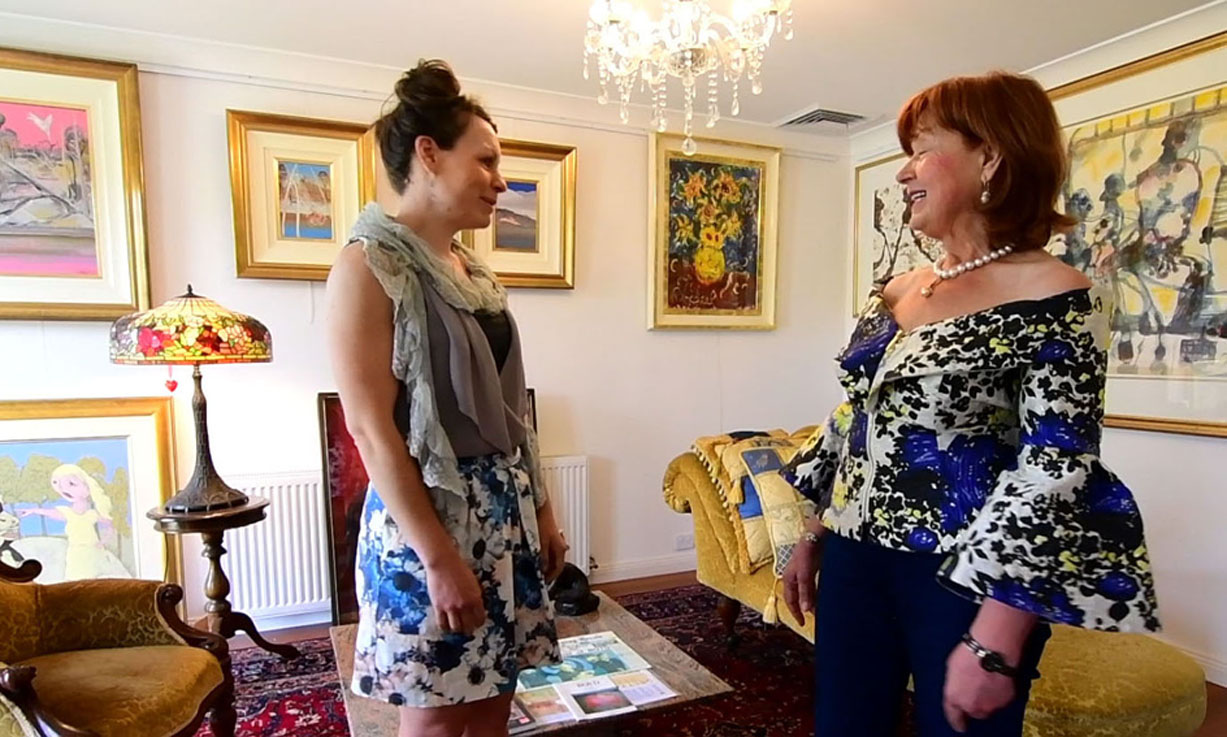
video Galeria Aniela Fine Art consulting and brokerage service
Combining a wide network of resources and
expertise in the
Australian
art and
Global
art market, we assist
our clients in all aspects of dealings in
fine art,
helping save time and money.
Whether you are a first-time buyer, an astute investor
or enthusiastic collector, our people focused approach
ensures an enjoyable and rewarding experience.
We welcome the opportunity to speak with you,
feel free to
contact
us
to discuss the ways in which Galeria Aniela can assist you
now and in the future.
Testimonials
Photo
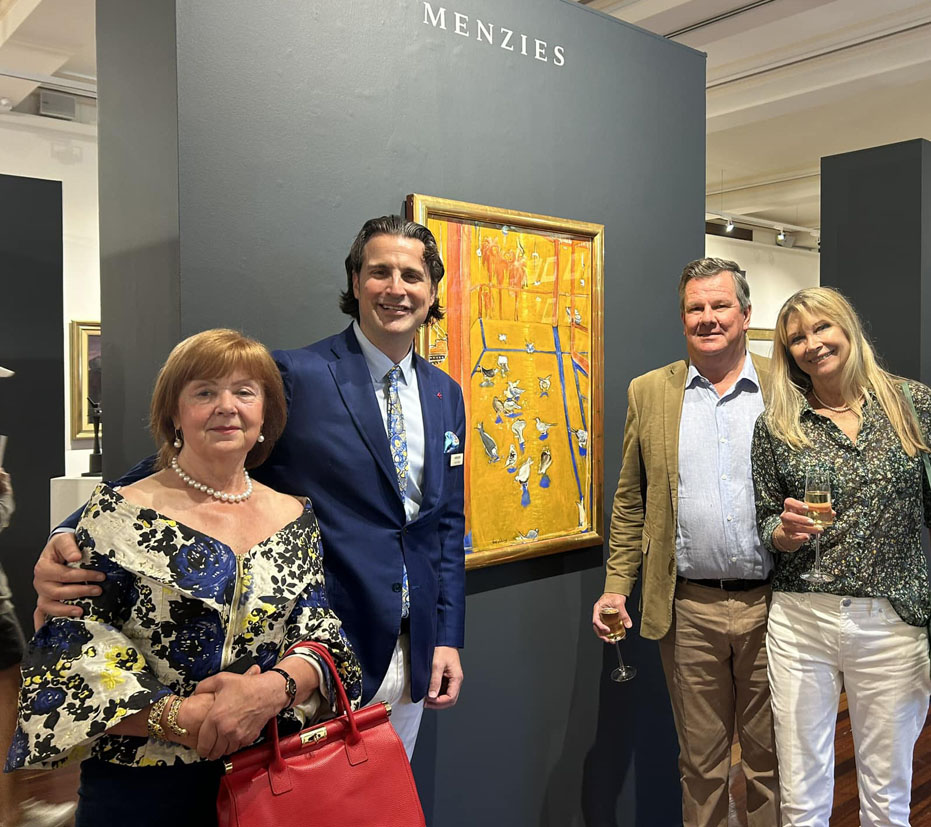
26 November 2023: (LEFT) Aniela and Cameron Menzies
at Menzies in Sydney
At Galeria Aniela, Fine Art
refers to
high-quality
works by
renowned
artists.
If you consider selling work of
Arthur Boyd,
Brett Whiteley,
Fred Williams,
Jeffrey Smart,
Arthur Streeton,
John Perceval, Charles Blackman,
Garry Shead,
Guy Boyd
or other significant work of fine art, please
contact us.
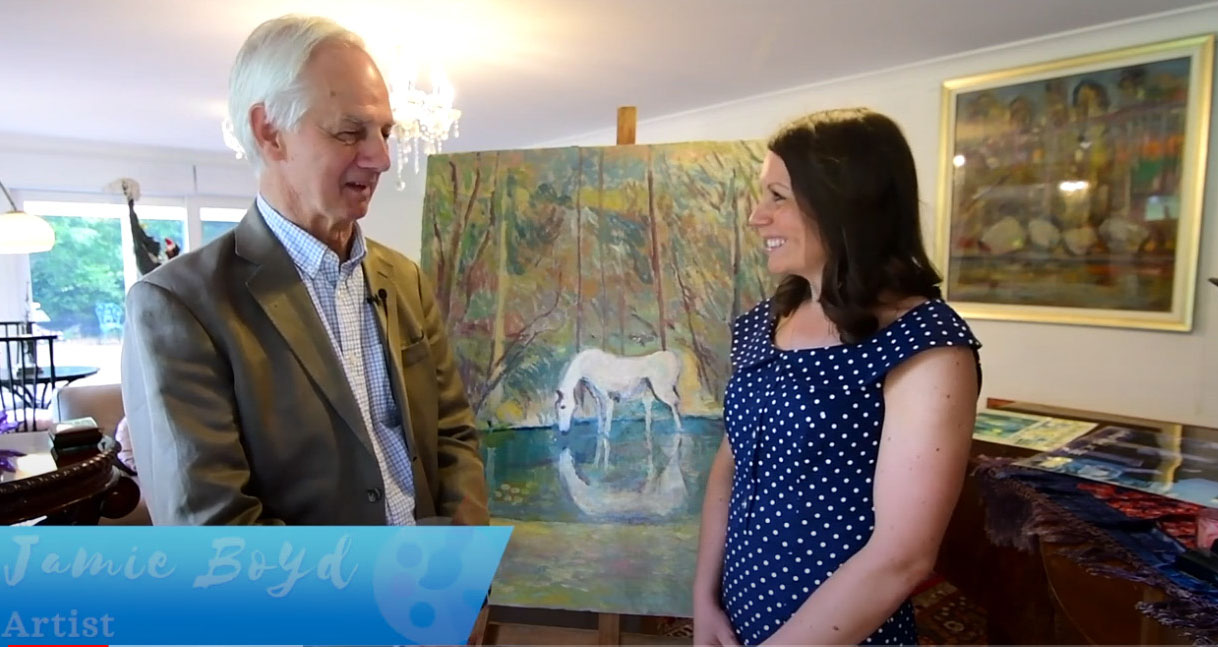
Video Jamie Boyd, the Boyd family most important LIVING
artist
The
BOYD
family
exhibition
in
Galeria Aniela Fine Art Gallery
and
Sculpture Park
coup the
front page
Sydney
Morning Herald,
Australian National NEWS the ABC TV
and
Sunday
Afternoon the ABC TV.
John Perceval
Retrospective conquer
the Australian
National NEWS ABC TV and
Charles Blackman
Retrospective won
Australian
Art Scream
SBS
TV.
Works of art live for generations, constantly reborn in the minds of the
beholders to bring new meanings, new dreams, new ways of seeing and experiencing
the world. Be part of this magic world of amazing fine art from the ocean of
tranquillity to
concur
the heart, mind and soul.
The vision of Galeria Aniela is to increase the awareness of Australian
artists
cultural contribution. With passion for art, hard work and dedication, we strive
for high ideals to create a better future for the arts.
When
you purchase Art from Galeria Aniela,
you make a valuable contribution to our mission of helping artists to make a
living with their creations and together we make a difference. |
|
|
|
|
|