top
Galeria
Aniela
World’s Local Fine Art  HOME HOME |
|
Galeria Aniela specializes in selling ART of impeccable
provenance
and
quality
friendly Quality service
Shipping Worldwide
|
|
|
.png)
Barbara
Reid Napangarti
B.1962
Ancient Culture of 60,000 years gave
the World its most exciting Contemporary art |
|
If you love
Art of
impeccable
provenance,
the
art
you want is
at
Galeria Aniela
|
|
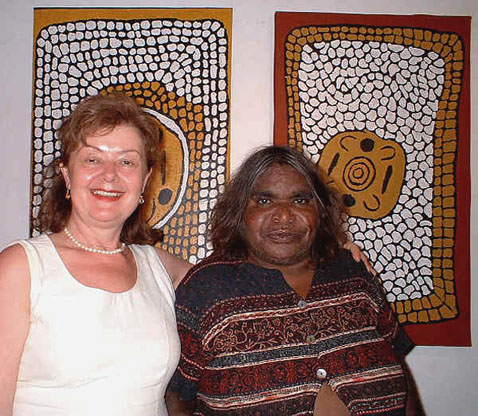
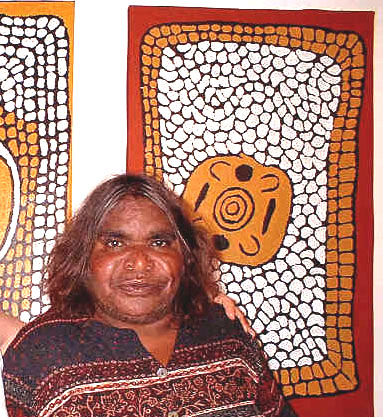 Barbara
Reid Napangarti also known as Kai Kai Reid/Napangarti
is
a
prominent
Australian Aboriginal
artist.
She is
the daughter of the late highly renowned
Australian National Gallery
artist,
Ningura Napurrula,
also
in
Musée du quai Branly
Paris.
The important women's stories that Barbara paints today were passed onto her
by her famous Aunt, the late
Emily
Kame Kngwarreye,
one of Australia's most famous artists.
Yala Yala
Gibbs Tjungurrayi (1928-1998)
a celebrated
Australian
artist, held at
National
Gallery of Victoria
was Barbara's father.
AWARD:
2000
held at
Art Award
National Aboriginal Torres Strait Islander
Museum Art Gallery of NT.
Barbara Napangarti Reid
work has the physical presence of the much contemporary work of art.
Her paintings explain beautifully the places, the
lands and the songs.
Barbara work is the depiction of puli – rock formations,
and tuli – sand hills. Barbara
Reid Napangarti also known as Kai Kai Reid/Napangarti
is
a
prominent
Australian Aboriginal
artist.
She is
the daughter of the late highly renowned
Australian National Gallery
artist,
Ningura Napurrula,
also
in
Musée du quai Branly
Paris.
The important women's stories that Barbara paints today were passed onto her
by her famous Aunt, the late
Emily
Kame Kngwarreye,
one of Australia's most famous artists.
Yala Yala
Gibbs Tjungurrayi (1928-1998)
a celebrated
Australian
artist, held at
National
Gallery of Victoria
was Barbara's father.
AWARD:
2000
held at
Art Award
National Aboriginal Torres Strait Islander
Museum Art Gallery of NT.
Barbara Napangarti Reid
work has the physical presence of the much contemporary work of art.
Her paintings explain beautifully the places, the
lands and the songs.
Barbara work is the depiction of puli – rock formations,
and tuli – sand hills. |
|
|
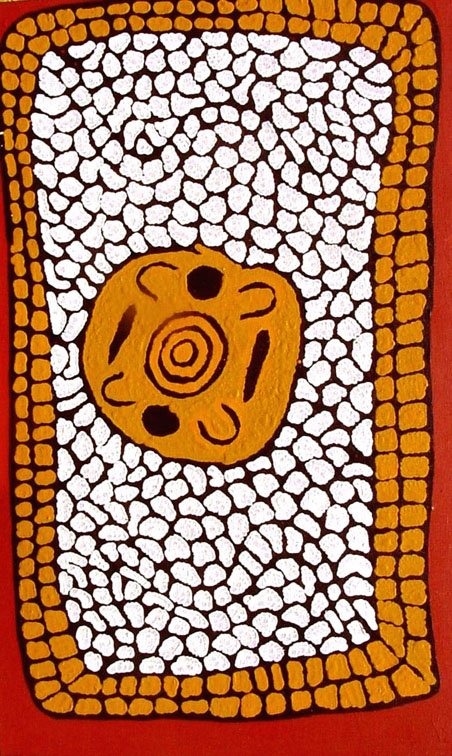
Barbara
Reid Napangarti
Minyma
Women Healing Ceremony illus.p.256
Synthetic polymer paint on
Belgian linen
Image size:
120 cm x 75 cm
Framed size: 160 cm x 115 cm
Price:
Enquire
Ilust.
Aboriginal
Artists
page 256 |
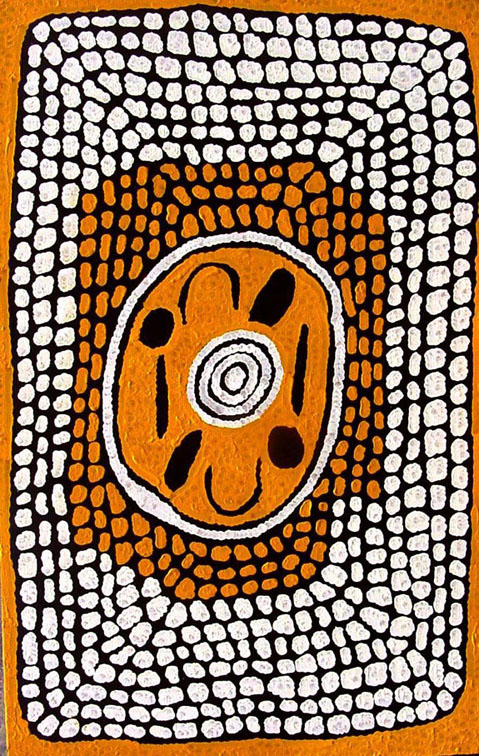
Barbara
Reid Napangardi
Minyma
Women Healing Ceremony
illus.p.256
Synthetic polymer paint on
Belgian linen
Image sizes:
120 cm x 75 cm
Framed Size: 160 cm x 115 cmn
Price:
Enquire
Ilust.
Aboriginal
Artists
page 256 |
|
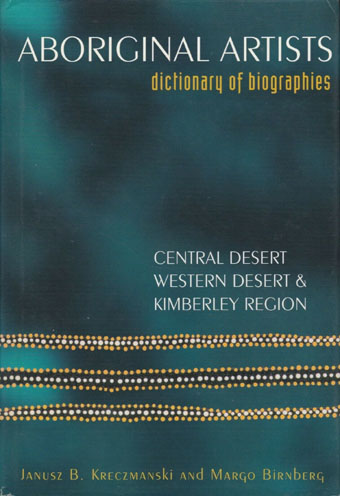
Illustrated
Aboriginal
Artists
page 256
 |
|
|
Prices subject to change without a prior notice
|
|
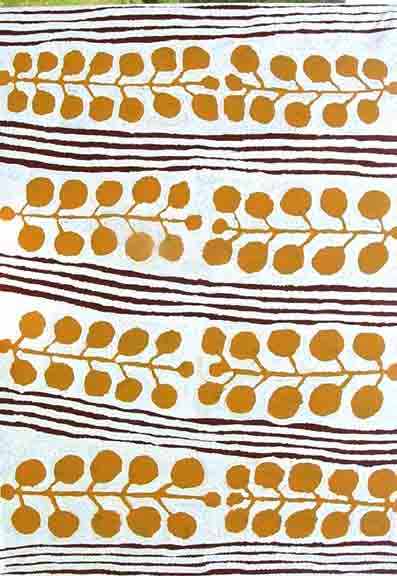
Barbara Reid
Apple
Ceremony
Acrylic in linen
172 x 122 cm
Price: SOLD |
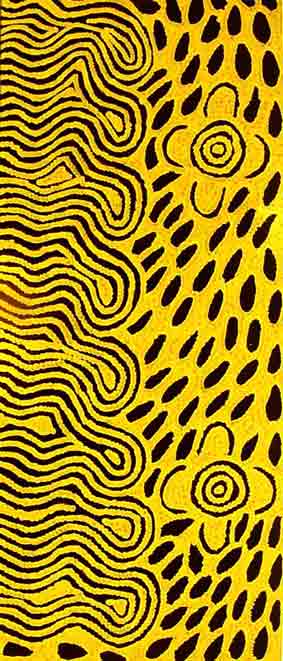
Barbara Reid
Rocks Sand Hills
Acrylic on
linen
180 x 75 cm
Price: SOLD |
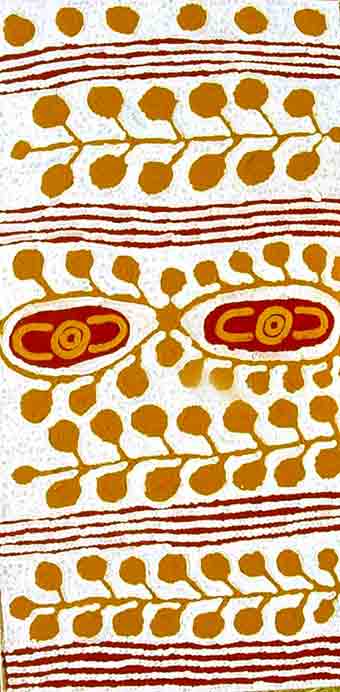
Barbara Reid
Apple
Ceremony
Acrylic on linen
120
x 60 cm
Price: SOLD |
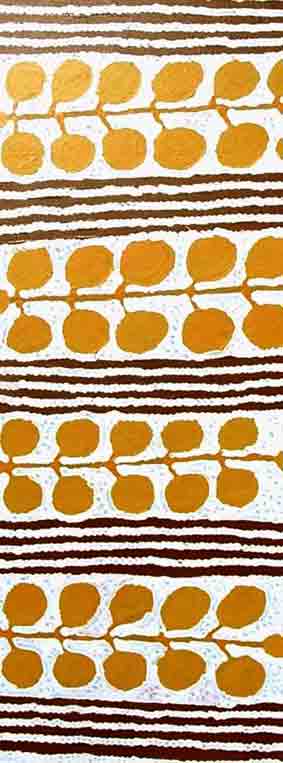
Barbara Reid
Apple Ceremony
Acrylic on linen
120 x
50 cm
Price: SOLD |
|
|
|
Barbara Napangarti Reid
Biography
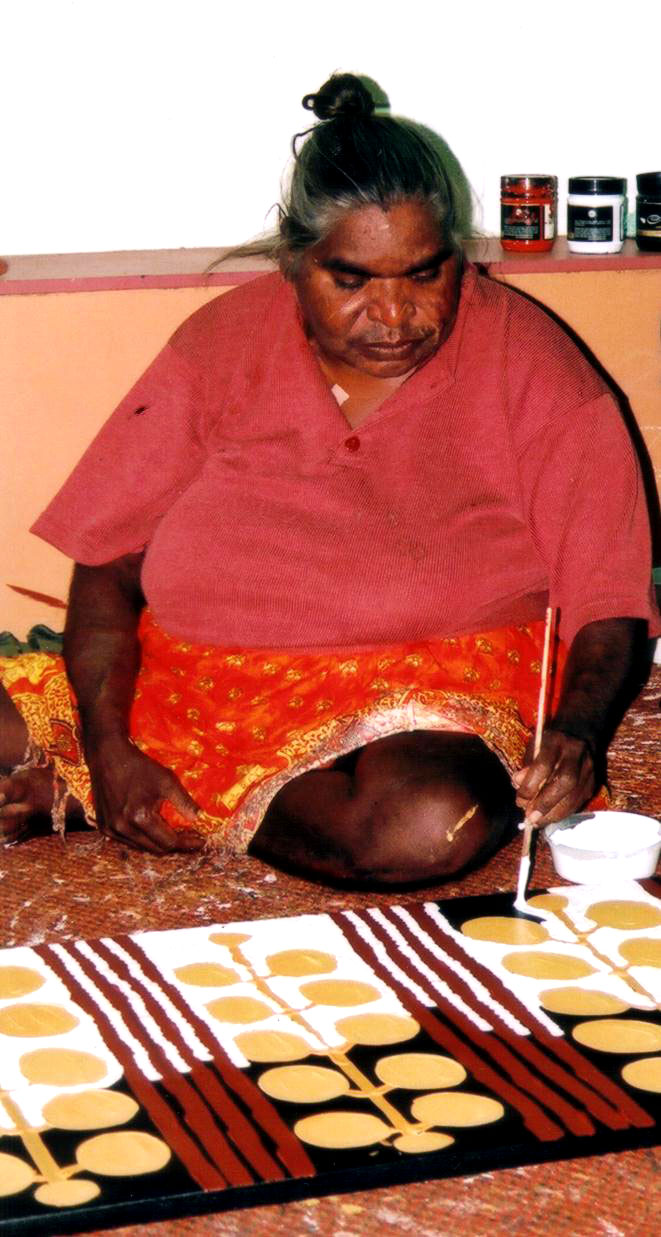 Barbara Napangarti Reid (Barbara Napangarti Rei) was born around 1962 at
Paaya near Tjukurla region of the Gibson Desert in the Ngannyatjarra lands
of Western Australia. Barbara is a highly respected Papunya Tula artist who
speaks 3 languages. Barbara Napangarti Reid (Barbara Napangarti Rei) was born around 1962 at
Paaya near Tjukurla region of the Gibson Desert in the Ngannyatjarra lands
of Western Australia. Barbara is a highly respected Papunya Tula artist who
speaks 3 languages.
Barbara
Reid Napangarti also known as Kai Kai Reid/Napangarti
is
a
prominent
Australian Aboriginal
artist.
She is
the daughter of the late highly renowned
Australian National Gallery
artist,
Ningura Napurrula,
also
in
Musée du quai Branly
Paris.
The important women's stories that Barbara paints today were passed onto her
by her famous Aunt, the late
Emily
Kame Kngwarreye,
one of Australia's most famous artists.
Yala Yala
Gibbs Tjungurrayi (1928-1998)
a celebrated
Australian
artist, held at
National
Gallery of Victoria
was Barbara's father.
AWARD:
2000
held at
Art Award
National Aboriginal Torres Strait Islander
Museum Art Gallery of NT.
Barbara Napangarti Reid
work has the physical presence of the much contemporary work of art.
Her paintings explain beautifully the places, the
lands and the songs to which she is custodian.
Characteristic for Barbara is the depiction of puli – rock formations,
and tuli – sand hills.
Barbara's
father,
Yala Yala Gibbs Tjungurrayi
(1928-1998) work is held in
National Gallery of Victoria
and mother
Ningura Napurrula
(1938-2013)
Australia's most renowned artist is represented in the Europe’s most
important public museum
Musée du
quai Branly
in Paris.
Barbara
inherited the artistic gene from her creative family.
Barbara
work has strong links with the
Papunya Tula Movement
her family left Kintore and Kiwirrkurra to return to their homelands in
the mid 1980s.
As a small child Barbara, her mother
Ningura Napurrula
and her father
Yala Yala Gibbs Tjungurrayi
and also
Barbara's
father other wife, left Mungurry on foot to journey through Tjukurla on
to Lupul and then on to see Uluru. It was a very long journey to the
settlement at Papunya they lived there until Barbara was about sixteen,
then she left Papunya and came into Alice Springs.
In 1987 Barbara
Reid began working for Alice Springs Centre for Aboriginal Artists,
represented by the Alice Springs Centre.
She then moved to Adelaide where she met her partner Robert and had her
first child, Suzie. Barbara and family have now moved back to Alice
Springs where she paints in the studio of Gallery Gondwana.
In 2000 Barbara
Reid
Napangarti
painting was selected for
one of the most
prestigious art awards in Australia,
the 17th
NATSIAA National
Aboriginal and Torres Strait Islander Art Award.
Barbara Reid
Napangardi
beautiful paintings of of
the land and songs,
have
the
physical presence
of the much contemporary work of art.
Barbara
Reid
Napangarti
artistic Style
Barbara
Reid
work is
highly
sought after by collectors worldwide.
Barbara Reid
is
working in a individualistic style
vividly
depicting the country of Tjukurla in the
Gibson Desert.
Barbara’s use of bold, bright colours and flowing lines,
coupled with thick layers of
paint,
is one of her trademarks.
Barbara style is an good example of the
multivalent nature of Aboriginal paintings, her designs in the paintings have
a number of interrelated symbolic meanings.
Barbara
paintings explore
Tjukurla
area
the side of unique country dominated by
expansive
Rock formation
call
' Puli'
and Sand Hills
'Tuli'.
'Puli'
is the Rock Formation related to the formation of the natural environment
around
Tjukurla
'Tuli'
is related to Sand Hills
of the
natural environment around
Tjukurla
in the Gibson Desert.
Minyma

Barbara
Napangarti
Reid
also paints
'Women
of the Tingari
Dreaming'
they are particularly important
Sacred Women
business stories of
Minyma.
Minyma
Tingari
represents aspects of the secret and sacred Tingari Cycle, a
spiritual amalgam that incorporates story, song and ceremony.
Minyma
narratives revolve
around the role of the woman as healer and provider within Ngaanyatjarra
society.
All women go through ‘rites of passage’ and learn their own gender
specific obligations.
Barbara Reid also
paints the 'Pintalpa' dreaming, a story about a native
bush apple and she
depicts ‘Puli’ Rock Formations,
and ‘Tuli’ Sand Hills, those features that are so much a
part of the land from that she comes from.
The stories
revolve around the role of the woman as healer and provider within
traditional
Ngaanyatjarra
society.
The bold designs of
Barbara Reid 'Women Ceremony'
is depicting women that are performing
a healing ceremony.
Patterns must conform
to the ceremony being performed. Women are not at liberty to
adorn themselves with designs of free will but
with
'body painting' that depicts the linear designs as those illustrated
in the ground paintings.
Women are surrounded by protective windbreaks symbolized by oval shapes.
Elaborate ground
constructions (sand paintings) are also made.
Barbara Reid
paintings
describes the role of women as healers and providers within the society.
Barbara Reid use of bold strong colours and flowing lines
is the artist trademark, often coupled with thick layeres of
paint and a
number of interrelated symbolic meanings.
Aboriginal paintings are based on myths
of the Dreamtime. In modern representation, the sacred aspect of the
painting is not always revealed, but the meaning remains, transmitted
through symbols which are easily understood.
Barbara Reid paintings
explain the
'women's business'
story, an initiation ceremony for
women. The women may be past initiates, or young women
awaiting instruction from older women. Initiates are
taught their roles as nurturers of the land and keepers
of the law by which life's rules and regulations are
set. This particular ceremonial site is near Utopia.
The women are sitting at a ceremonial site,
painting their bodies with markings in preparation for the ceremony.
Ochres and Spinifex ashes are mixed with Kangaroo or Emu fat to make the
body paint. Body painting ranges from simply smearing clay across the
face, to intrinsic full body patterning. The half circular, shell like
shapes depict the women, fully prepared and painted performing the
ceremony.
Each person has
particular 'Dreaming' (a story) to which they belong and they have
special ceremonial dances and songs that combine
together to form a unique spiritual ceremony that makes
up the lives of the Aboriginal people.
All things
related to the land and thus the land is of great
importance.
The land is the keeper
of the 'Dreamings' and must be kept safe for all time so
that the Dreaming stories, which are told in the
paintings, can be preserved.
While many ceremonies are
open or public, many are secret to varying degrees.
The categories of
people who can be present are restricted.
Groups such as
women, girls and uninitiated men and strangers would all
have limitations placed on them in relation to men’s
ceremonies.
Men, boys and uninitiated girls would have
similar restrictions placed on them in relation to
women's ceremonies. Ceremonies always involve song, dance and body decoration.
The
ownership, management and performance is dependent upon knowledge and
status.
Body painting carries deep spiritual significance for the
Aboriginal people. They recognize the creative nature of this activity,
which uses the human body itself as a living canvas for artistic
expression.
The use of particular designs and motifs denotes social
position and the relationship of the individuals to their family group
and to particular ancestors, totemic animals and tracts of land.
In many
situations individuals are completely transformed so they 'become' the
spirit ancestor they are portraying in the dance.
COLLECTIONS
Barbara Reid work
acquired by major public and private collections in Australia and abroad,
commands the attention of discerning international collectors as well as
Australian buyers.
University of Miami Florida
Richard Kelton Foundation
Donald Kahn Collection
Lowe Art Museum
Florida
Homes a Court Collection Perth
Art Gallery of Western
Australia
National Art Gallery of New
Zealand
Art Gallery of South Australia
Queensland National Art Gallery
Museum and Art Gallery of the Northern Territory
Art Bank Sydney
Australian
National University
Art Museum and city
Gallery
Flinders
University
Regional Galleries in America, Indonesia
and Europe.
AWARDS
2000
selected
17th
NATSIAA
Art Award
Museum and Art Gallery of the Northern Territory
NATSIAA
is the National
Aboriginal and Torres Strait Islander Art Award, one of the most prestigious art awards in Australia.
Established
in 1984 by the Museum
and Art Gallery of the Northern Territory,
awards annually, it
is sponsored by Telstra,
so is commonly known as the Telstra
Award.
The competition aim
is to showcase the best Indigenous
art from
around the country, it
is open to all adult Aboriginal
and Torres Strait Islander artists.
The first prize is awarded to the work considered the most
outstanding in the exhibition.
|
|
SELECTED
Major
Exhibitions
2001 Alliance Francaise de Canberra;
Sand Spinifex & Salt
Leading Central Desert Painters Japingka Gallery
2000
17th National Aboriginal & Torres Strait Islander Art Award
Darwin, North Territory
2000 Japinka Gallery Perth
2000 Vivian Anderson Gallery Melbourne
2000 Museum and Art Gallery of the Northern Territory
Darwin
2000 Gallery Gondwana,
Alice Springs NT -
SOURCING
THE BEST IN CONTEMPORARY ABORIGINAL PAINTINGS, AUSTRALIAN DESIGN, AND
ARTS FROM THE PACIFIC REGION)
1998
Museum and Art Gallery of the Northern Territory
Darwin
touring exhibitions in America and Indonesia Australian
Regional Galleries
Source
& FURTHER
REFERENCES
Australian Aboriginal Artist dictionary of biographies
Kreczmanski, Janusz B and Birnberg, Margo (eds.): Aboriginal
Artists: Dictionary of Biographies: Central Desert, Western
Desert and Kimberley Region JB Publishing Australia, Marleston,
2004.
Aboriginal Artists of the Western Desert - A Biographical
Dictionary by Vivien Johnson, published by Craftsman House 1994
The Oxford Companion to Aboriginal Art and Culture edited by
Sylvia Kleinert and Margo Neale published by OUP 2000
Aboriginal Artists: Dictionary of Biographies: Central Desert,
Western Desert & Kimberley Region JB Publishing Australia,
Marleston, 2004
Brody, A. 1989 Utopia women’s Paintings: the First Works on
Canvas, A summer Project, 1988-89 exhib. Cat. Heytesbury
Holdings, Perth Brody
A. 1990 Utopia, a picture Story, 88 Silk Batiks from the Robert
Homes a Court Gallery and gallery Collection, Heytesbury
Holdings LTD Perth NATSIVAD database, Latz, P. 1995, Bushfires &
Bushtucker, IAD Press, Alice Springs
Brody, A. 1989 Utopia women’s Paintings: the First Works on
Canvas, A summer Project 1988-89 exhib. Cat. Heytesbury
Holdings, Perth Brody
RETURN TOP |
|
|
National Art Award
List
of winners
2016:
Harold Thomas
– Tribal Abductions, Acrylic on linen
2015:
Jukuja
Dolly Snell
– Kurtal, Acrylic on linen
2014:
Tony Albert
- We Can Be Heroes, photograph
2013:
Jenni
Kemarre Martiniello
- Golden Brown Reeds Fish Trap, hot blown
glass, canes
2012:
Timothy Cook
- Kulama, natural ochres on canvas
2011:
Dickie Minyintiri
- Kanyalakutjina (Euro tracks), synthetic
polymer paint on canvas
2010:
Jimmy Donegan
- Papa Tjukurpa, Pukara, synthetic polymer
paint on canvas
2009:
Danie
Mellor
- From Rite to Ritual, mixed media on paper
2008:
Makinti
Napanangka
- no title, synthetic polymer paint on linen
2007:
Dennis Nona
- Ubirikubiri, bronze
2006:
Ngoia Napaltjarri Pollard
-
23rd Telstra NATSIAA
Telstra National Aboriginal & Torres Strait Islander Art Award
-
the 1st Prize $40,00
-
Swamps west of Nyirripi, acrylic on Belgian linen
2005:
Blackstone Tjanpi Weavers: Kantjupayi
Benson, N. Donegan, Angaliya Mitchell,
Margaret Donegan, Melissa Donegan, Mary
Smith, Freda Lane, Diedre Lane, Elaine Lane,
Wendy Lane, Janet Lane, Janet Forbes,
Shirley Bennet, Gail Nelson, Angela Lyon, Sarkaway Lyon, Ruby Forbes and Jean Lane -
Tjanpi Grass Toyota, desert grass, jute
string and mixed media
2004:
Gulumbu Yunupingu
- Garak, The Universe, natural pigments on
wood (three hollow logs)
2003:
Richard Bell
- Scientia E Metaphysica (Bell's Theorem),
synthetic polymer paint on canvas
2002:
Gawirrin Gumana
- Birrkuda ringgitj (Wild honey design),
natural pigments on wood
2001:
Dorothy Napangardi - Salt
on Mina Mina, synthetic polymer paint on
linen
2000:
Kenny
Williams Tjampitjinpa - Snake Tjukurrpa, synthetic polymer
paint on linen
1999:
Long Tom
Tjapanangka - Ulampuwarru (Haasts Bluff Mountain),
synthetic polymer paint on linen
1998:
Jody
Broun - White Fellas Come Talk About the Land, synthetic
polymer paint on canvas
1997:
Yanggarriny Wunungmurra - Gangan, natural pigments on bark
1996:
Kathleen
Petyarre - Storm in Atnangker country II, synthetic
polymer paint on linen
1995:
Pantjiti
Mary McLean - Ngura walkumunu (Being in a good camp)
synthetic polymer paint on canvas
1994:
Daisy
Andrews - Lumpu lumpu (wet time) landscape, synthetic
polymer paint on paper
1993:
Paddy
Fordham Wainburranga - Eagle Hawk and Crow, natural
pigments on paper
1992:
Les
Midikuria - Borlong the rainbow serpent, natural pigments
on bark
1991:
Mick
Namarari Tjapaltjarri - Bandicoot Dreaming, synthetic
polymer paint on canvas
1990:
Mutitjpuy
Mununggurr - The Djang'kawu at Balana, natural pigments on
bark
1989:
Pansy
Napangardi
- Yipala bush bananas, synthetic polymer paint
on canvas
1988:
Pauleen
Woods Nakamarra - Yarla, Yam Dreaming, synthetic polymer
paint on canvas
1987:
Djardi
Ashley Wodalpa - Blue tongue lizard, natural pigments on
bark
1986:
Frank
Jakamarra Nelson - Living together, working together,
synthetic polymer paint on canvas
1985:
Djawida
Nadjongorle - Nawurra, natural pigments on bark (joint
winner)
1985:
Uta Uta
Tjangala - Tjanangkamurramurra, synthetic polymer paint on
canvas (joint winner)
1985:
Kaye
Haywood - Untitled, batik on silk (joint winner)
1984:
Michael
Nelson Tjakamarra - Three ceremonies, synthetic polymer
paint on canvas
RETURN TOP |
|
|
|
Galeria Aniela provides an independent professional service
and experienced guidance
representing clients best interest in the art market.
We welcome the opportunity to speak with you, please feel free to
contact us
to discuss ways in which Galeria Aniela can assist you now and in the
future.
Whether you are a first-time buyer, an astute investor or enthusiastic
collector, our people focused approach ensures an enjoyable and rewarding
experience.
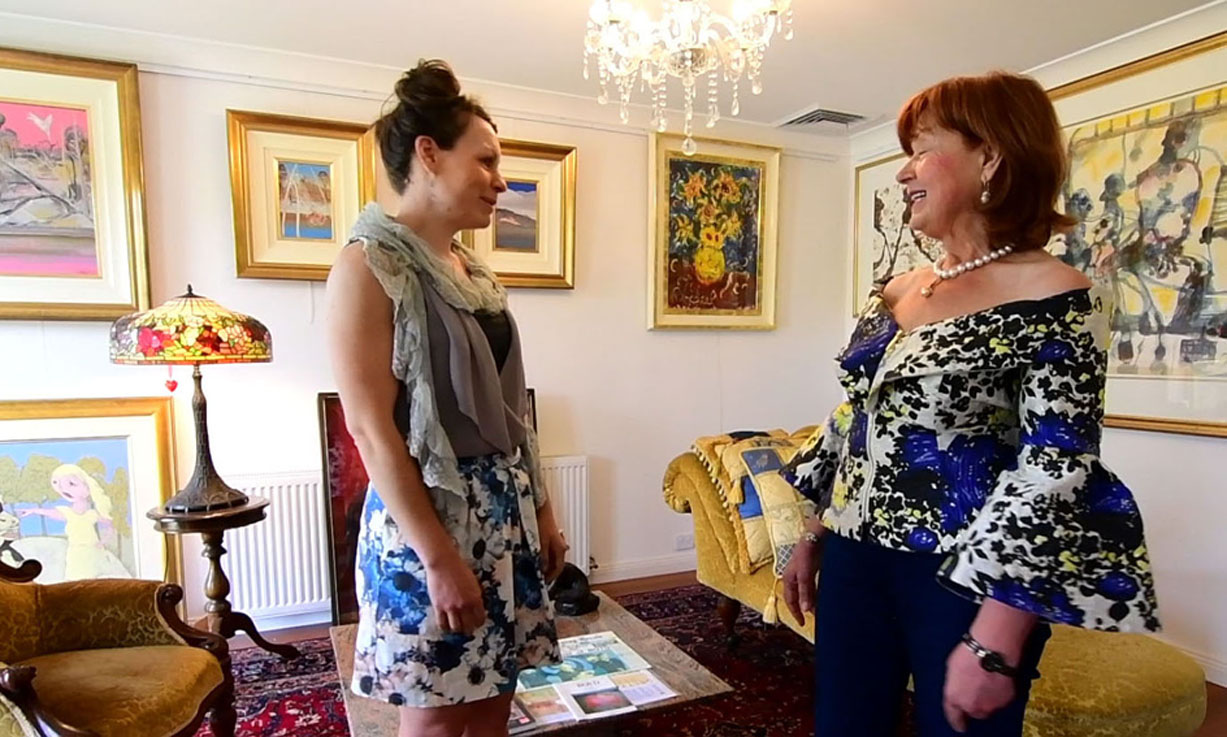
video | Galeria Aniela Fine Art broker
Combining a wide network of resources with
expertise in Australian fine art, we
assist clients in all aspects of
acquisitions of fine art objects,
shipping worldwide,
ensuring impeccable
provenance
and quality,
helping save
time and
money.
Testimonials
Founded in 1994, Galeria Aniela exhibited world-class artists
and received celebrities including Sir David
Attenborough, Cameron
O’Reilly
and
Hon Bob Hawke,
Australian Prime Minister.
Galeria Aniela
built
a strong
standing
in Australia and internationally.
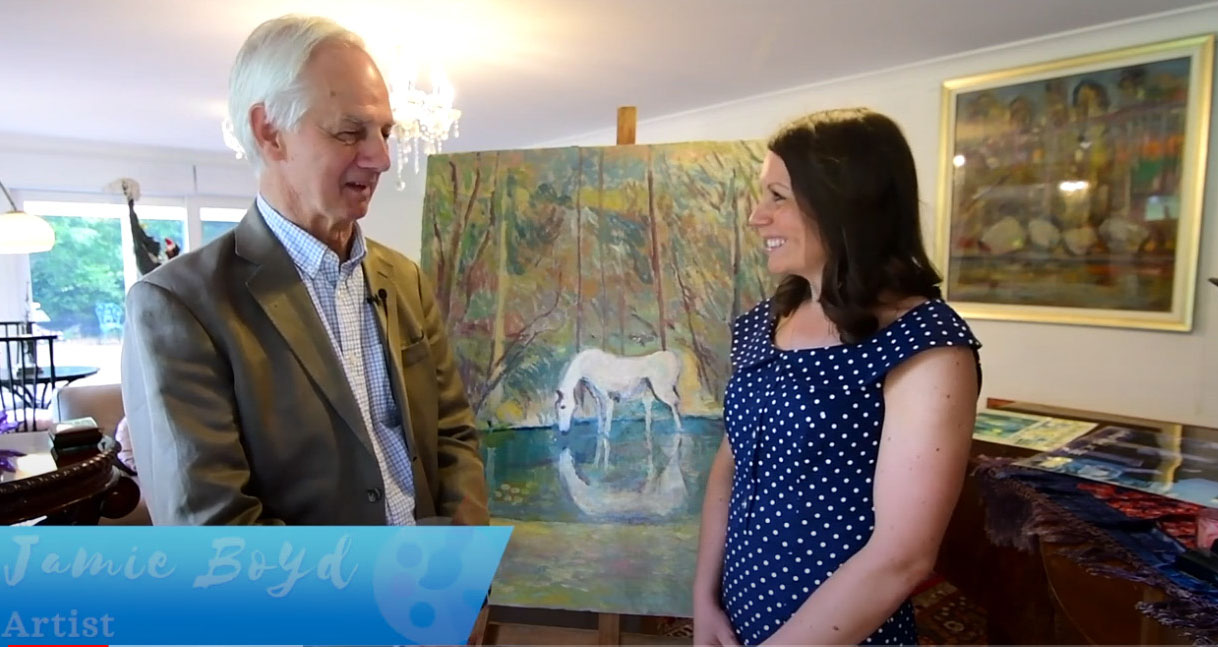
Video |Jamie Boyd, the Boyd family most
important LIVING artist
The
BOYD family
exhibition
in Galeria Aniela coup the
front page
Sydney Morning Herald,
Australian National NEWS ABC TV
and
Sunday Afternoon ABC TV.
John Perceval Retrospective won
the Australian
National NEWS |ABC TV and
Charles Blackman Retrospective conquer
Australian
Art Scream |SBS
TV.
Works of art live for generations, constantly reborn in the minds of the
beholders to bring new meanings, new dreams, new ways of seeing and
experiencing the world. Be part of this magic world of amazing fine art from
the ocean of tranquillity to
concur
the heart, mind and soul.
The vision of Galeria Aniela is to increase the awareness of Australian
artists
cultural contribution. Through hard work and
dedication, in a peaceful manner, we strive for high ideals to create a
better future for the arts.
When you purchase Art from
Galeria Aniela,
you make a valuable contribution to our mission of helping artists to make a
living with their creations and together we make a difference.
|
|
|
|
|
|