|
.png)
Billy
Stockman Tjapaltjarri
1925-2015
Ancient Culture of
60,000 years
gave the World its most exciting Contemporary art
|
If you LOVE quality
Art of
impeccable
provenance,
the
art
you want is at
Galeria Aniela
|
|
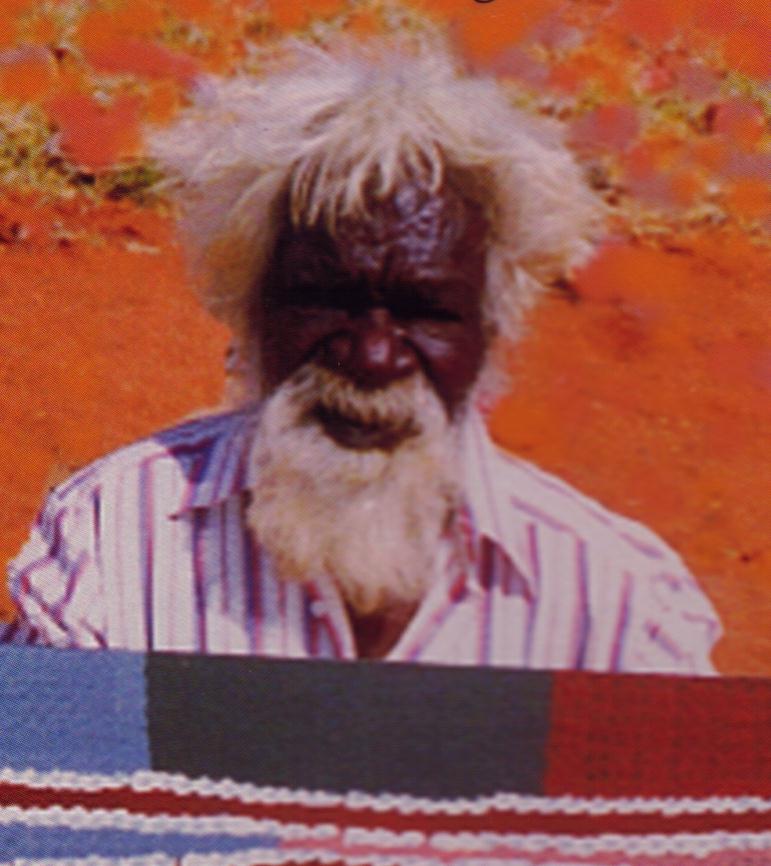 Billy
Stockman Tjapaltjarri is one of Australia's most exceptional artists,
he was
one of the original founders of
Papunya Tula Artists cooperative and
the
Chairman (1976–77)
on the Arts Board (1975–79). Billy
Stockman Tjapaltjarri is one of Australia's most exceptional artists,
he was
one of the original founders of
Papunya Tula Artists cooperative and
the
Chairman (1976–77)
on the Arts Board (1975–79).
Billy Stockman work is held
in
the important
public
museums
collections
including
National Art Gallery of New
Zealand,
Museum and Art Gallery of
the Northern Territory,
Art Gallery of South
Australia, Lowe Art
Museum, University of Miami.
National Gallery of Victoria
paid
$200,500
for
Wild Potato.
National Museum of Australia
acquired
Boomerang
Dreaming
and
Budgerigars in the
Sand-hills.
Art Gallery of NSW
obtained
Ilpitirry
1985.
|
|
|
.jpg)
Billy Stockman Tjapaltjarri
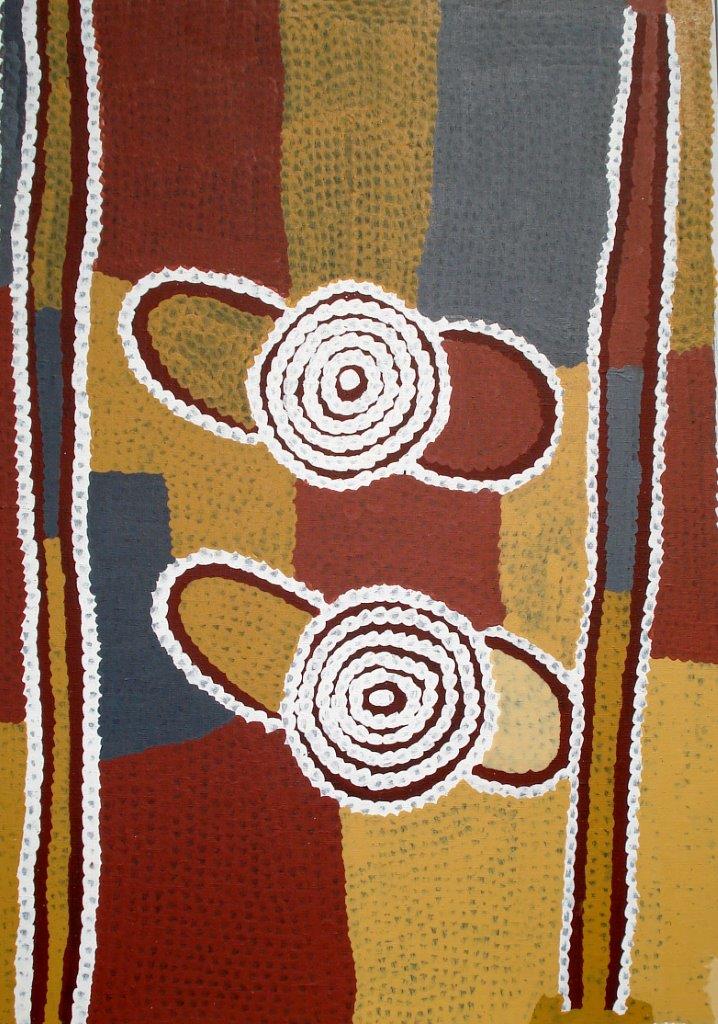
Hunting 1992
Synthetic polymer paint on Belgian
linen
Image Size:
98 x 69 cm
Framed size: 128 x 100 cm
Enlarge
Price:
enquire
|
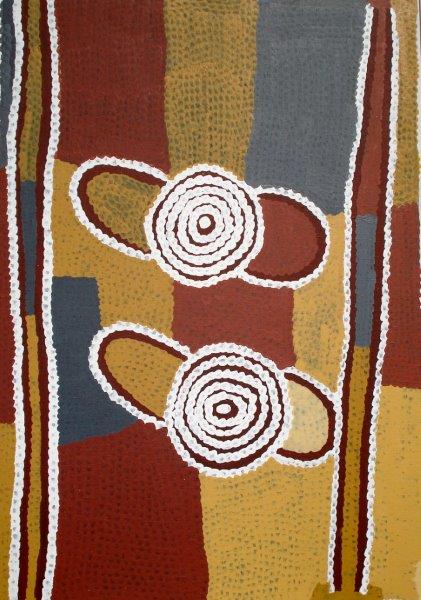
Billy Stockman Tjapaltjarri
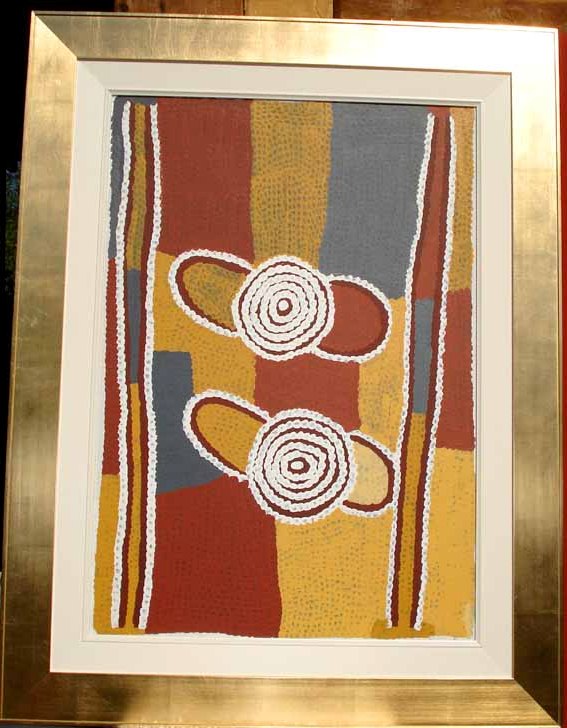
Hunting 1995
IIlust.
Synthetic polymer paint
on
linen
Image size:
92 x 63 cm
Framed size: 123
x 95 cm
Enlarge
Price:
enquire
|
|
|
Hunting-1992
.jpg)
Billy
Stockman Tjapaltjarri 1925-2015
Hunting 1992
Synthetic
polymer paint on Belgian linen
Image size:
98 cm x 69 cm
Framed size: 128 cm x
100 cm
Price:
enquire
Related works
Hunting Ceremony 1992
Framed
Size:
FRAMED in the
quality timber frame
.jpg) |
|
|
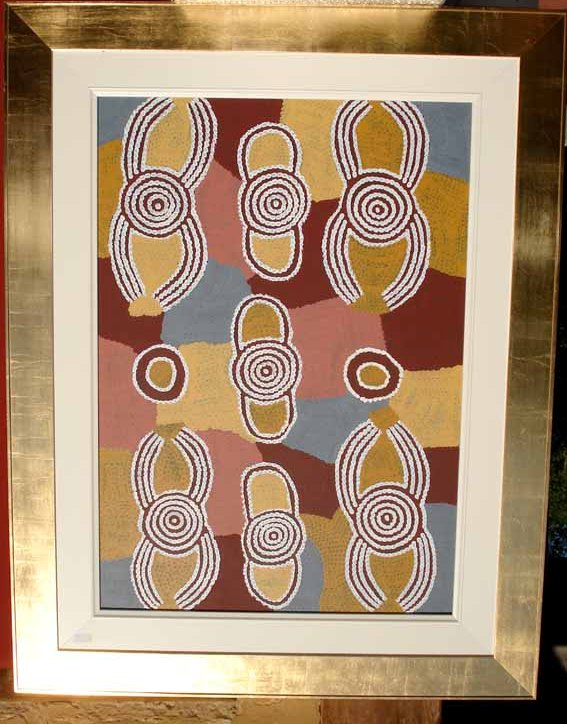
Hunting-1995
Billy
Stockman Tjapaltjarri 1925-2015
Hunting 1995
IIlustrated
Synthetic polymer
paint on Belgian linen
Image size:
92 cm x 63 cm
Framed size: 123 cm x 95 cm
Illustrated
page 30,
'The Tjulkurra'
Billy Stockman Tjapaltjarri
ISBN 1-876622-37-7
Price:
enquire
Related works
Hunting 1995
Framed size:
FRAMED in quality
timber frame
.jpg)
Hunting 1995
illust. page 30
'The
Tjulkurra'
Billy Stockman Tjapaltjarri,
ISBN 1-876622-37-7
.jpg)
The
concentric circle design depict the ceremonial ground designs
celebrating The mythology of Hunting at a place in the artist's homeland
called Tjikarri Mt Liebig.
Mount Liebig is a mountain with an
altitude of 1524 m (5,000 ft) in the southern part of the
Australian Northern Territory.
It is one of the highest peaks of the
MacDonnell Ranges
and was named by the explorer
Ernest Giles
after the German chemist
Justus von Liebig.
Nearby settlements include
Haasts Bluff.
Notable artists
who have lived in the region include
Ngoia Pollard
and
Nora
Andy Napaltjarri
(Ngoia Pollard Napaltjarri biography)
|
|
|
|
Related works
Auction Results
Under freedom of information we compiled the relevant information.
Billy
Stockman Tjapaltjarri 1925-2015
Billy
Stockman
is
one of
Australia's most exceptional artists. His
paintings
provide an important link to 60
thousand years of Aboriginal Dreamings and the historic moment at Papunya.
He was
the great Master and the original founder
of the seminal ‘art mob’
responsible for the Aboriginal Art Movement
at Papunya from the 1970’s.
|
Image |
Details
-
Billy
Stockman Tjapaltjarri 1925-2015 |
Price excl. GST |
|
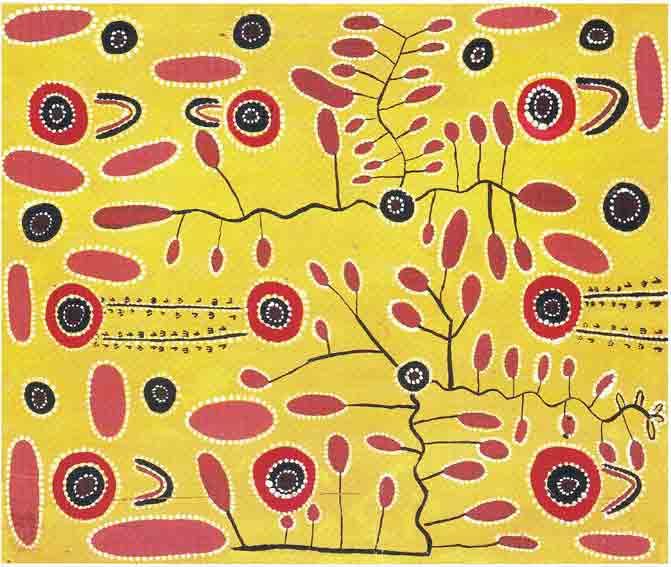 |
Wild Potato (Yala) Dreaming 1971
Synthetic polymer paint on composition board, bears number 2 CON 49 on reverse
54.5 x
46 cm
Est: $20,000-30,000, Sotheby's, Important Aboriginal Art, Melbourne,
29/06/1998, Lot No. 25;
purchased by
National Gallery of Victoria
Provenance: Consignment 2, painting no. 49 to the
Stuart Art Centre, Alice Springs. Private collection, Queensland.
Reference: Featured Architectural Digest, May 1998, full page colour
illustration There is another painting on the reverse by an unknown artist,
probably by one of the eleven artists listed as having painted for consignment 2
This painting is to be sold with an accompanying hand drawn diagram of the work
with identifying annotations
|
$201,500 |
|
|
|
|
|
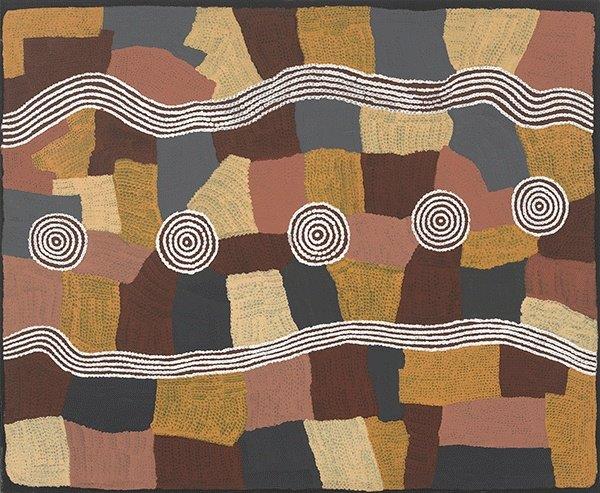 |
Travels of the Spider Ancestors 1991
Synthetic polymer paint on linen, inscribed verso: SN 80,
180 x 148 cm, Est:
$35,000-45,000, Lawson~Menzies (now trading as Menzies), Contemporary, Modern
Australian and Important Abor, Sydney, 19/06/2008, Lot No. 262
Provenance: Jinta Desert Art Gallery, Sydney
(accompanied by certificate of authenticity, cat.SN-80). Private collection,
Sydney |
$36,000 |
|
|
|
|
|
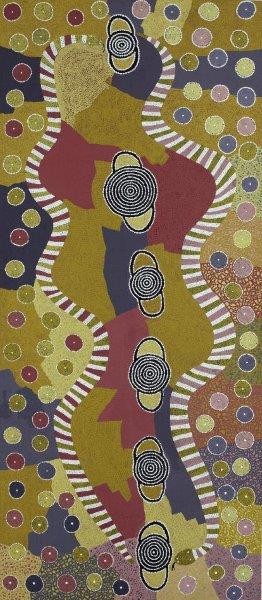 |
Carpet Snakes at Ilpitteri,
1988
Acrylic on cotton canvas, Cornette de Saint Cyr,
Contemporary Australian Aboriginal Art,
Lot No. 80
Painted in 1988 for Rosemary Penrose
in Alice Springs
Ancient Earth Indigenous Art, Hahndorf, South Australia
The Austcorp Group Limited Art Collection
Sotheby's Aboriginal and Oceanic Art auction
23/11/2009
The Collection of Arnaud
Serval, Paris France
|
€22,669 /
$30,292 |
|
|
|
|
|
%20(1973)-30K.jpg) |
Untitled (Ngatitjirri Dreaming at Ilpitirri) 1973
Synthetic polymer paint on composition board,
Est: $15,000-20,000, Sotheby's, Important
Aboriginal Art, Melbourne, 05/06/2012, Lot No.
22
|
$30,000 |
|
|
|
|
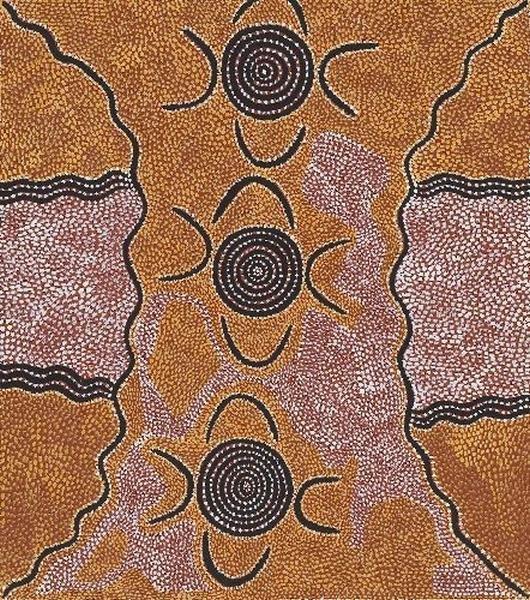 |
Woman's Bush Tucker Story 1972
Synthetic polymer paint on board,
69 cm x 61 cm
Lawson~Menzies (trading as Menzies),
Aboriginal Fine Art, Sydney, 23/05/2007, Lot No.
132 |
$30,000 |
|
|
|
|
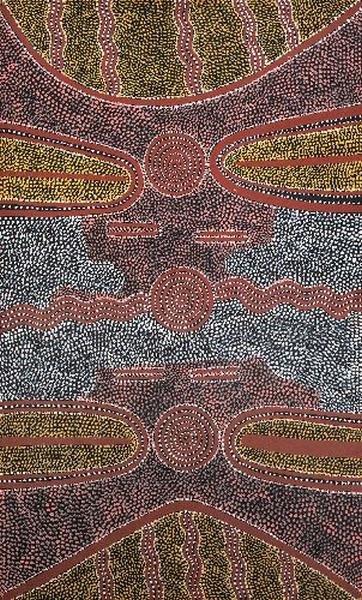 |
Water Dreaming with Rainbows and Rain, 1972
Synthetic polymer powder paint on composition
board,
86.5 cm x 53 cm
Lawson~Menzies (now trading as Menzies),
Aboriginal Fine Art, Sydney, Lot No. 90 |
$30,000 |
|
|
|
|
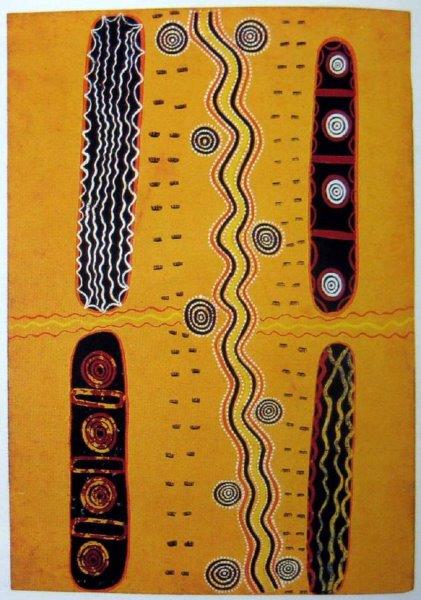 |
Totemic Possum Dreaming 1973
Synthetic polymer powder paint on board,
92 cm x 64 cm
Deutscher~Menzies, 19th and 20th Century
Australian & International Paintings, Sculpture
and Works on Paper, Melbourne, Lot No. 4
|
$28,750 |
|
|
|
|
Biography
Billy
Stockman Tjapaltjarri
Biography
Aboriginal Artists dictionary of biographies
page
376
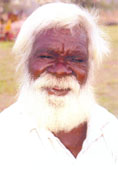
Billy Stockman Tjapaltjarri's
was raised on Napperby Station by his auntie, the mother
of
Clifford Possum
Tjapaltjarri.
Billy
Stockman
is
one of
Australia's most exceptional artists. His
paintings
provide an important link to 60
thousand years of Aboriginal Dreamings and the historic moment at Papunya.
He was
the great Master and the original founder
of the seminal ‘art mob’
responsible for the Aboriginal Art Movement at Papunya from the 1970’s.
In 1971 Geoffrey Bardon a white school teacher assigned to the Papunya School
began a project of painting a mural using the aboriginal colours and traditional
iconography.
Papunya Tula Artists cooperative was founded in November 1972
began
the famous
Aboriginal art
movement of Papunya-Tula artists.
Papunya Tula Artists
was
fully owned and operated by
Aboriginal
people from the
Western Desert
of
Australia.
Billy Stockman Tjapaltjarri
was one of the
original founders
of
Papunya Tula Artists cooperative and
served as a chairman (1976–1977),
Kaapa Tjampitjinpa was the first chairman.
Kaapa Tjampitjinpa ,
Billy Stockman Tjapaltjarri
and
Long Jack Tjakamarra
created a mural
Honey Ant Dreaming.
Billy Stockman took
over the project which became the first piece of Central Desert Art to be
exhibited.
Billy Stockman is credited with being the man who
painted the 'Honey Ant Dreaming' on the wall of the Papunya School
at
Geoff
Bardon's request.
These three artists (Billy Stockman Tjapaltjarri,
Kaapa Tjampitjinpa
and
Long Jack Tjakamarra) held vitally important tribal positions and used
the existing system of desert culture symbols to depict their Dreamings and
their relationship with the land.
Billy Stockman
Tjapaltjarri
emerged as one of the most important artists.
Billy paintings
provide a link with the historic moment at Papunya and 60
thousand years sacred Aboriginal Dreamings.
The powerful and heroic dreaming symbols of
Billy Stockman
paintings are charged with authority and religious knowledge.
The ebullient texture of his work is anchored by a metaphysical core and a deep
affinity with the land.
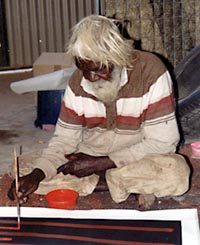 Billy's work has been seen around the world in several travelling exhibitions,
as well as being featured in many Galleries and Collections throughout
Australia. Billy's work has been seen around the world in several travelling exhibitions,
as well as being featured in many Galleries and Collections throughout
Australia.
In 1988 he was involved with the opening and exhibited in New York
for the Dreaming: Art of Aboriginal Australia'. This exhibition travelled to
Papua New Guinea, New Zealand and the 'All Black Festival' in South Africa.
National Gallery of Australia in Canberra has acquired his
painting as well as the New South Wales Art Gallery, Art Gallery of South
Australia, University of WA Anthropology Museum.
In 1977 Billy Stockman attended the World Black and African Festival of Arts and Culture in
Nigeria, which featured Papunya Tula art. He continued to paint until the late
1990s.
Billy
Stockman
represented Papunya Tula Artists on
several international cultural exchange
projects and also travelled to New York
in 1988 for the opening of
Dreamings: The Art of Aboriginal
Australia.
Billy Stockman travelled to
New
York in 1988 for the
opening of the "Dreaming" show at the Asia Society and along
with
Michael Nelson Jagamarra,
created "Sand" painting.
Collections
National Gallery of Victoria
bought
Billy Stockman
Tjapaltjarri's
Wild Potato Dreaming
%20Dreaming%201971-AU201500.jpg)
National Museum of Australia acquired
Billy Stockman's
Budgerigars in the
Sand-hills.
The painting represents the travels of a group of Budgerigar ancestors
during the Dreaming. On their journey, they stopped to camp in sandhill country
near Mount Denison. The camps are depicted as concentric circles superimposed on
a background mosaic of sand dunes, broken by patches of desert plants.
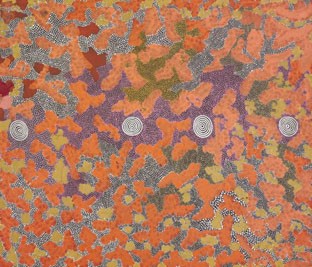
Art Gallery of NSW
acquired
Billy Stockman Tjapaltjarri
Ilpitirri
1985
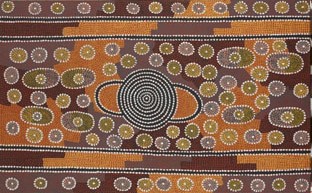
National Gallery of Australia
purchased
Stockman
Boomerang Dreaming
painting
in 2013.
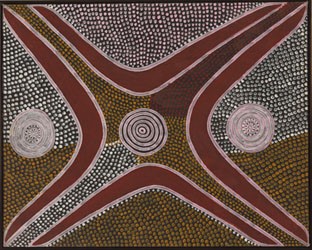
National Art Gallery of New Zealand
Australian National Gallery of Victoria
Art Gallery of Western
Australia Perth
National Gallery of Victoria
Melbourne
Artbank
Sydney
National Gallery of Australia
Canberra
Museum and Art Gallery of the Northern Territory
Art
Gallery of South Australia Adelaide
Lowe
Art Museum, University of Miami
Christensen Collection
Museum of Victoria Melbourne
Flinders
University
Art Museum Adelaide
Australian Department of
Archaeology and Anthropology
National University, Canberra
Australian Qantas Collection ,
Donald Kahn collection Museum of Victoria Melbourne
Campbelltown City Art Gallery
South Australian
Museum Adelaide
The Kelton
Foundation Santa Monica USA
Holmes
a' Court Collection Perth
Billy
Stockman Tjapaltjarri focus on the spiritual
content of Aboriginal society. Billy is able to incorporate this strong
foundation with a modern definition for all to understand and benefit
from.
It is important to the artist that the spirit of Jukurrpa is revived to
aid in the healing of the entire planet.
A
proud family man
Billy
Stockman Tjapaltjarri is
from the Anmatyerre people in Central Australia.
Billy
Stockman was an infant survivor of the
1928 Coniston Massacre. His mother and a
brother were shot by Constable Murray's
revenge party: 'All the people were
running. I was a little one in a coolamon. My mother put me under a bush… (Vivien Johnson,
2008)
Billy Stockman was
born at Ilpitirri near Mt Dennison,
north-west of Yuendumu, the year before
the Coniston Massacre savaged his
family. He was rescued as an infant and
raised by Clifford Possum Tjapaltjarri's
parents and grew up on Napperby Station,
where as his name clearly states, he
worked as a stockman. In about 1955 he
moved to Haasts Bluff where he married a
daughter of Uta Uta Tjangala's brother.
Like
Kaapa
Tjampitjinpa and Clifford Possum, Billy
Stockman was a wood carver before he
became a leading figure in the first few
years of the painting movement.
Together
with Kaapa, Long Jack Phillipus and
others, he participated in the painting
of the Honey Ant Mural and he was one of
the most enthusiastic artists in the
Men's Painting Room. He painted Yam,
Wallaby, Budgerigar, Spider, Rainbow and
Water Dreamings and was one of the first
to begin painting large-scale canvases.
AWARDS
Billy Stockman Tjapaltjarri is
one of
Australia's most exceptional artists and one of the legendary
founders responsible for of Aboriginal Art Movement from 1972 is
renowned
internationally.
Billy Stockman Japaltjarri
was able to promote Aboriginal
culture throughout the world
through his paintings helping to develop the resurgence of the
Dreaming as well as a healthy economic base for the Aboriginal
communities.
Billy Stockman work sprung from the world's
oldest continuous culture, that still stands alone and its very essence is
one of intrinsic spirituality. The powerful and heroic dreaming symbols
of his paintings are charged with authority and religious knowledge. The
ebullient texture of his work is anchored by a metaphysical core and a
deep affinity with the land.
It is important that the spirit of Jukurrpa is revived to aid in the healing of the entire planet. Focusing
on the spiritual content of Aboriginal society Billy is able to
incorporate this strong foundation with a modern definition for all to
understand and benefit from.
As a founder of the Contemporary Art
Movement and as a senior custodian of his land and dreaming stories,
Billy has been active in communicating his traditional beliefs to the
outside world.
Billy's work has been seen around the world
in many traveling exhibitions, as well as being featured in many Galleries and
Collections through out Australia.
In 1988 he was involved with the
opening and exhibited in New York for the "Dreamings: Art of Aboriginal
Australia'. This exhibition traveled to Papua New Guinea, New Zealand
and the 'All Black Festival' in South Africa.
National Gallery of Australia in Canberra has acquired
Billy Stockman Tjapaltjarri
painting as
well as the New South Wales Art Gallery, Art Gallery of South Australia,
University of WA Anthropology Museum.
Exhibitions:
1971, Art Gallery of Western Australia,
Perth Western Australia
1974, Anvil Art Gallery, Albury, New South
Wales
1977, Nigerian Festival, Lagos, Nigeria
1977, Christ College, Oakleigh, Victoria
1982, Georges Exhibition, Melbourne, Victoria
1983, Mori Gallery, Sydney
1984, Anvil Art Gallery, Albury, New South
Wales
1985, Dot and Circle, a retrospective survey
of the Aboriginal paintings of Central Australia, Royal Melbourne Institute of
Technology Melbourne
1985, The Face of the Centre: Papunya Tula
Paintings
1971-1984, National Gallery of Victoria,
Melbourne
1987 A selection of Aboriginal
Art owned by the ANU, Drill Hall Gallery, Australian Capital Territory
1988 The Inspired Dream, Life as art in Aboriginal Australia, Museum and
Art Gallery of the Northern Territory and touring internationally
1989 A selection of Aboriginal Art owned by the ANU, Drill Hall Gallery,
Australian Capital Territory
1991 Alice to Penzance, The Mall Galleries, The Mall, London
1991 Australian Aboriginal Art from the Collection of Donald Kahn, Lowe
Art Museum, University of Miami, USA
1991 Canvas and Bark, South Australian Museum, Adelaide
1991 The Painted Dream: Contemporary Aboriginal Paintings from the Tim
and Vivien Johnson Collection, Auckland City Art Gallery
1991 Te Whare Taonga o
Aoteroa National Art Gallery, New Zealand
1992 Tjukurrpa, Museum fur
Volkerkunde, Basel
1993 Tjukurrpa, Desert Dreamings, Aboriginal
Art from Central Australia
1993 Art Gallery of Western Australia, Perth Western Australia
1994 Dreamings - Tjukurrpa: Aboriginal Art of the Western
Desert; The Donald Kahn collection, Museum Villa Stuck, Munich
.jpg) As a
founder of the Contemporary Art Movement and as a senior custodian of
his land and dreaming stories, Billy has been active in communicating
his traditional beliefs to the outside world. Billy's work has been seen
around the world in several travelling exhibitions, as well as being
featured in many Galleries and Collections through out Australia. As a
founder of the Contemporary Art Movement and as a senior custodian of
his land and dreaming stories, Billy has been active in communicating
his traditional beliefs to the outside world. Billy's work has been seen
around the world in several travelling exhibitions, as well as being
featured in many Galleries and Collections through out Australia.
Billy Stockman Tjapaltjarri, a proud man from the Anmatyerre people in Central Australia.
Billy Stockman Tjapaltjarri
- Wikipedia,
encyclopaedia
In
1988
Billy Stockman
was involved with the opening and exhibited in New York for the
"Dreamings: Art of Aboriginal Australia'. This exhibition traveled to
Papua New Guinea, New Zealand and the 'All Black Festival' in South
Africa.
National Gallery of Australia in Canberra
acquired
Billy Stockman
painting as well as the New South Wales Art Gallery,
Art Gallery of South Australia, University of Western Australia Anthropology Museum.
Billy
Stockman
was one of the original founders of the
Papunya community in the Central Desert. His role in this community varied
he has been
helping the Pintupi people settle in to community life, then as one of
the founders of the aboriginal art movement in 1971.
In 1971 Geoffrey
Bardon a white school teacher assigned to the Papunya School began a
project of painting a mural using the aboriginal colors and traditional
iconography.
Along with
Long Jack
Phillipus
and two other artists, Billy Stockman, took over
the project which became the first piece of Central Desert Art to be
exhibited. This painting represented the "Honey Ant Dreaming". These
artists held vitally important tribal positions and were instrumental in
the instruction of young Aboriginal men. Instead of imposing European
notions of perspective on their paintings, the men used the existing
system of desert culture symbols to depict their Dreamings and their
relationship with the land. This was an experiment which had staggering
results. This genesis of the contemporary art movement empowered a
renewed sense of pride and cultural identity among the Aboriginal people
of the region. Billy Stockman soon emerged as one of the most prolific
and important artists of his time.
Along
with
Long
Jack Phillipus,
Billy Stockman assisted Kaapa
Mbitjana painting the Honey Ant Mural Dreaming on the
school walls in 1971.
It was the culmination of a project
initiated by art teacher Geoff Bardon and being a design of
great power and relevance to all of the tribes of the
Western Desert it generated much excitement and discussion
through-out the settlement.
The Honey Ant is the image of
the ancestors, emerging from the ground, creating landforms
while moving across it and finally returning underground,
ever afterwards to be celebrated in story and ceremony.
Because different tribal groups were crammed together at
Papunya, it was a volatile environment and so it was
important to produce designs that would not aggravate the
reactive atmosphere. As the painting project continued to
grow, Bardon says it was Billy Stockman in particular who
understood the necessity of choosing un-controversial
subjects such as food gathering or children’s stories.
He
communicated Bardon’s concerns to the steadily growing group
of painting men who nevertheless had to regularly restrain a
wish to paint more momentous subjects. As paintings began to
sell in Alice Springs the demarcation between sacred and
secular became clearer to the men and strategies were
devised to avoid infringing tribal laws.
The rules of
production and reception in such intercultural transactions
however continue to pose difficulties, as they still do for
many indigenous cultures.
Billy Stockman’s work was
among the first to stir the purchasing public’s interest. He made a point of
thanking Bardon personally and began to apply himself with great enthusiasm to
painting. All of the men were greatly encouraged by the money received from the
sale of their paintings. It was a way of improving the life of their families
but also re-kindled a sense of self and community esteem among the men who had,
to a degree, been estranged from their once important tribal positions. Senior
men were instrumental in advising on symbols, stories and meanings during the
creative process.
Billy Stockman had a way of focusing on simple, self-contained
vignettes. They often contained stylised, naturalistic plants and animals and a
symmetry and decorative quality that appealed to buyers. This talent followed
from his skill as an accomplished wood-carver. Like many stockmen, he had
learned to whittle wood and as Bardon commented 'could turn a beanwood branch
into two or three snakes in a complex inter-twining design' (2004: 31).
As the
art movement gathered momentum, his life as a stockman had also prepared him for
negotiating with the world of the ‘whitefella’.
Billy Stockman held many
official positions, playing a critical role in the newly established Aboriginal
Arts Board during the 1970’s and a stint as chairman of Papunya Tula Artists. He
became a campaigner for the outstation movement and was one of the first to move
to his own station at Illili, West of Papunya.
Here, he continued painting his
Dreamings and instructed younger artists on the ancient knowledge, in particular
the Budgerigar, Water, Snake and Wild Potatoe Dreamings of his own country. He
and his wife Intinika have two sons and two daughters, of whom one, Gillian, has
also become a painter.
Declining health brought about his retirement to the Hetti Perkins Hostel in Alice Springs. He remained an inspiring figure and
authority for the Western Desert people until his death in 2015, a reliable,
responsible and caring man who Bardon described as 'embodying all that was
loving and trusting in traditional family life' (Bardon 2004: 85).
|
Bibliography Literature
Source
& FURTHER
REFERENCES\
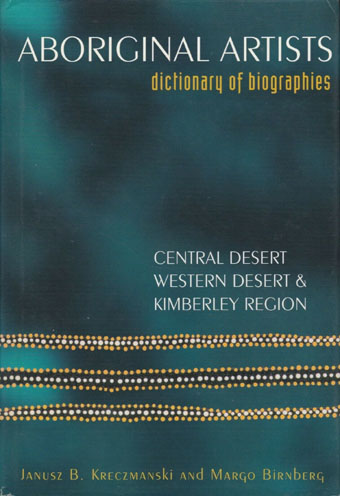
Billy Stockman Tjapaltjarri
biography page
376
Australian Aboriginal Artist dictionary of biographies,
Central
Desert, Western Desert and Kimberley Region. Authors:
Janusz
Kreczmanski & Birnberg,
Margo: JB
Publishing Australia, Marleston, 2004.
Billy Stockman Tjapaltjarri, Hunting 1995
Illustrated
page 30,
'The Tjulkurra'
Billy Stockman Tjapaltjarri
ISBN 1-876622-37-7
.jpg)
Billy Stockman Tjapaltjarri
biography page
376
Australian Aboriginal Artist dictionary of biographies
Kreczmanski,
Janusz B and Birnberg, Margo (eds.): Aboriginal Artists: Dictionary of
Biographies: Central Desert, Western Desert and Kimberley Region JB
Publishing Australia, Marleston, 2004.
.jpg)
Aboriginal Artists of the Western Desert - A Biographical Dictionary by
Vivien Johnson, published by Craftsman House 1994
The Oxford Companion to Aboriginal Art and Culture edited by Sylvia
Kleinert and Margo Neale published by OUP 2000
Aboriginal
Artists: Dictionary of Biographies: Central Desert, Western Desert &
Kimberley Region JB Publishing Australia, Marleston, 2004
Brody, A.
1989 Utopia women’s Paintings: the First Works on Canvas, A summer
Project, 1988-89 exhib. Cat. Heytesbury Holdings, Perth Brody
A. 1990
Utopia, a picture Story, 88 Silk Batiks from the Robert Homes a Court
Gallery and gallery Collection, Heytesbury Holdings LTD Perth NATSIVAD
database, Latz, P. 1995, Bushfires & Bushtucker, IAD Press, Alice
Springs
Brody, A.
1989 Utopia women’s Paintings: the First Works on Canvas, A summer
Project 1988-89 exhib. Cat. Heytesbury Holdings, Perth Brody
Bardon, G. 2004.
Papunya: A Place Made After the Story: The Beginnings of
Western Desert Painting Movement. Victoria. Melbourne
University Publishing.
Perkins, H & Fink, H.
2000. Papunya Tula, Genesis and Genius. Sydney. Art Gallery
of New South Wales.
Kleinert, Sylvia & Neale,
Margo . 2000. The Oxford Companion to Aboriginal
Art and Culture. Melbourne. Oxford
Australian Aboriginal Art from the Collection of Donald Kahn; 1991
Lowe
Art Museum, University of Miami, USA
Bardon, G., 1979, Aboriginal Art
of the Western Desert, Rigby, Adelaide. (C)
Berndt, R. M. and Berndt,
C. H. with Stanton, J., 1982
Aboriginal Australian Art, a Visual
Perspective, Methuen Australia Pty Ltd, Sydney
Brody, A., 1985, The
face of the centre: Papunya Tula paintings
1971-1984, National Gallery
of Victoria, Melbourne
Bardon, G., 1991, Papunya Tula Art of the Western Desert
McPhee Gribble, Ringwood, Victoria. (C)
Caruana, W., 1993, Aboriginal Art,
Thames and Hudson, London. (C)
Isaacs, J., 1989, Australian Aboriginal
Paintings, Weldon Publishing, New South Wales
Johnson, V., 1994, The
Dictionary of Western Desert Artists
Craftsman House, East Roseville, New South Wales. (C)
Maughan, J., and Zimmer, J., (eds), 1986, Dot and
Circle, a Retrospective Survey of the Aboriginal Acrylic Paintings of
Central Australia, exhib. cat., Communication Services Unit
Royal
Melbourne Institute of Technology, Melbourne. (C)
Schulz, D., 1994,
Lines from the Dreamtime, The Australian Way, Qantas in flight magazine,
May 1994
West, M.K.C., (ed.), 1988, The Inspired Dream, Life as art in
Aboriginal Australia, exhib. cat., Queensland Art Gallery, Brisbane
1993, Tjukurrpa Desert Dreamings, Aboriginal Art from Central Australia
(1971-1993), exhibition cat., Art Gallery of Western Australia, Perth
Amadio, N. und
Kimber, R., Wildbird Dreaming. Aboriginal Art from the Central Deserts
of Australia, Greenhouse Publ., Melbourne 1988; Auckland City Art
Gallery, Auckland 1990, Ausst. Kat.; Australian Aboriginal Art from the
Collection of Donald Kahn. Lowe Art Museum, University of Miami (Hrsg.),
1991, Ausst. Kat.; Droombeelden - Tjukurrpa. Groninger Museum (Hrsg.),
Groningen 1995, Ausst. Kat.; Isaacs, J., Australia´s Living Heritage.
Arts of the Dreaming, Lansdowne Press, Sydney 1984; Isaacs, J.,
Australian Aboriginal Paintings. Lansdowne, Sydney 1989, ISBN
186302011X; Johnson, V., Aboriginal Artists of the Western Desert. A
Biographical Dictionary, Craftsman House, East Roseville 1994, ISBN
9768097817; Modern Art - Ancient Icon. The Aboriginal Gallery of
Dreamings (Hrsg.), o.O. 1992, ISBN 0646080520; Nangara. The Australian
Aboriginal Art Exhibition from the Ebes Collection. The Aboriginal
Gallery of Dreamings (Hrsg.), Melbourne 1996, Ausst. Kat.; Stourton, P.
Corbally, Songlines and Dreamings. Lund Humphries Publ., London 1996,
ISBN 0853316910; The Painted Dream. Contemporary Aboriginal Paintings.
Johnson, V. (Hrsg.), Auckland City Art Gallery, Auckland 1991, Ausst.
Kat.; Tjinytjilpa. The Dotted Design. Aboriginal Art Galleries of
Australia (Hrsg.), Melbourne 1998, Ausst. Kat.; Traumzeit - Tjukurrpa.
Kunst der Aborigines der Western Desert. Die Donald Kahn-Sammlung,
Danzker, J.B. (Hrsg.), Prestel, München und New York 1994, Ausst. Kat.;
Voices of the Earth. Paintings, Photography and Sculpture from
Aboriginal Australia. Gabrielle Pizzi (Hrsg.), Gallery Gabrielle Pizzi,
Melbourne 1996, Ausst. Kat., ISBN 0646288954.
|
|
|
|

Galeria Aniela
provides an independent professional service
and experienced
guidance representing clients best interest
in the art market.
We welcome the opportunity to speak with you, please
feel free to
contact
us to discuss ways in which Galeria Aniela
can assist you now and in the future.
Whether you are a first-time buyer, an astute investor
or enthusiastic collector, our people focused approach
ensures an enjoyable and rewarding experience.
video | Galeria Aniela Fine Art broker
Combining a wide network of resources with
expertise in Australian fine art, we
assist clients in all
aspects of acquisitions of fine art objects,
shipping worldwide,
ensuring impeccable
provenance
and quality,
helping save
time and
money.
Testimonials
Founded in 1994, Galeria Aniela exhibited
world-class artists
and received celebrities
including Sir David
Attenborough, Cameron
O’Reilly and
Hon Bob
Hawke,
Australian Prime Minister.
Galeria Aniela
built
a strong
standing
in Australia and
internationally.
.
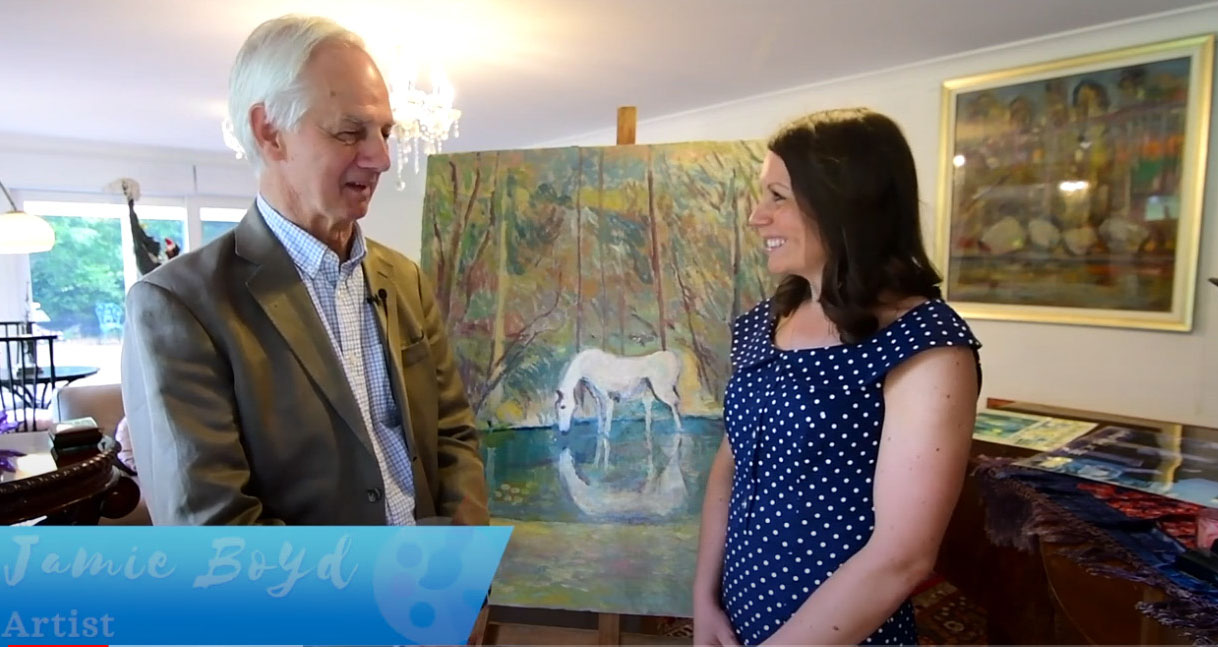
Video
|Jamie Boyd, the Boyd family most important LIVING
artist
The
BOYD family
exhibition
in Galeria Aniela coup the
front page
Sydney Morning Herald,
Australian National NEWS|
ABC TV
and
Sunday Afternoon |ABC TV.
John Perceval Retrospective won
the Australian
National NEWS |ABC TV and
Charles Blackman
Retrospective conquer
Australian Art Scream |SBS
TV.
Works of art live for generations, constantly reborn in
the minds of the beholders to bring new meanings, new
dreams, new ways of seeing and experiencing the world.
Be part of this magic world of amazing fine art from the
ocean of tranquillity to
concur
the heart, mind and soul.
The vision of Galeria Aniela is to increase the
awareness of Australian
artists
cultural contribution. Through hard work and dedication,
in a peaceful manner, we strive for high ideals to
create a better future for the arts.
When you purchase Art from
Galeria Aniela,
you make a valuable contribution to our mission of
helping artists to make a living with their creations
and together we make a difference. |
|
|
|
|
|