|
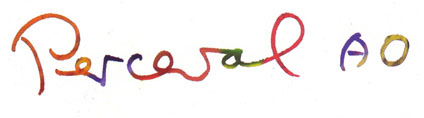
John
de Burgh
Perceval
1923-2000 |
If you love
Fine Art of
impeccable
provenance,
the
art
you want is at
Galeria Aniela
|
|
John de
Burgh Perceval
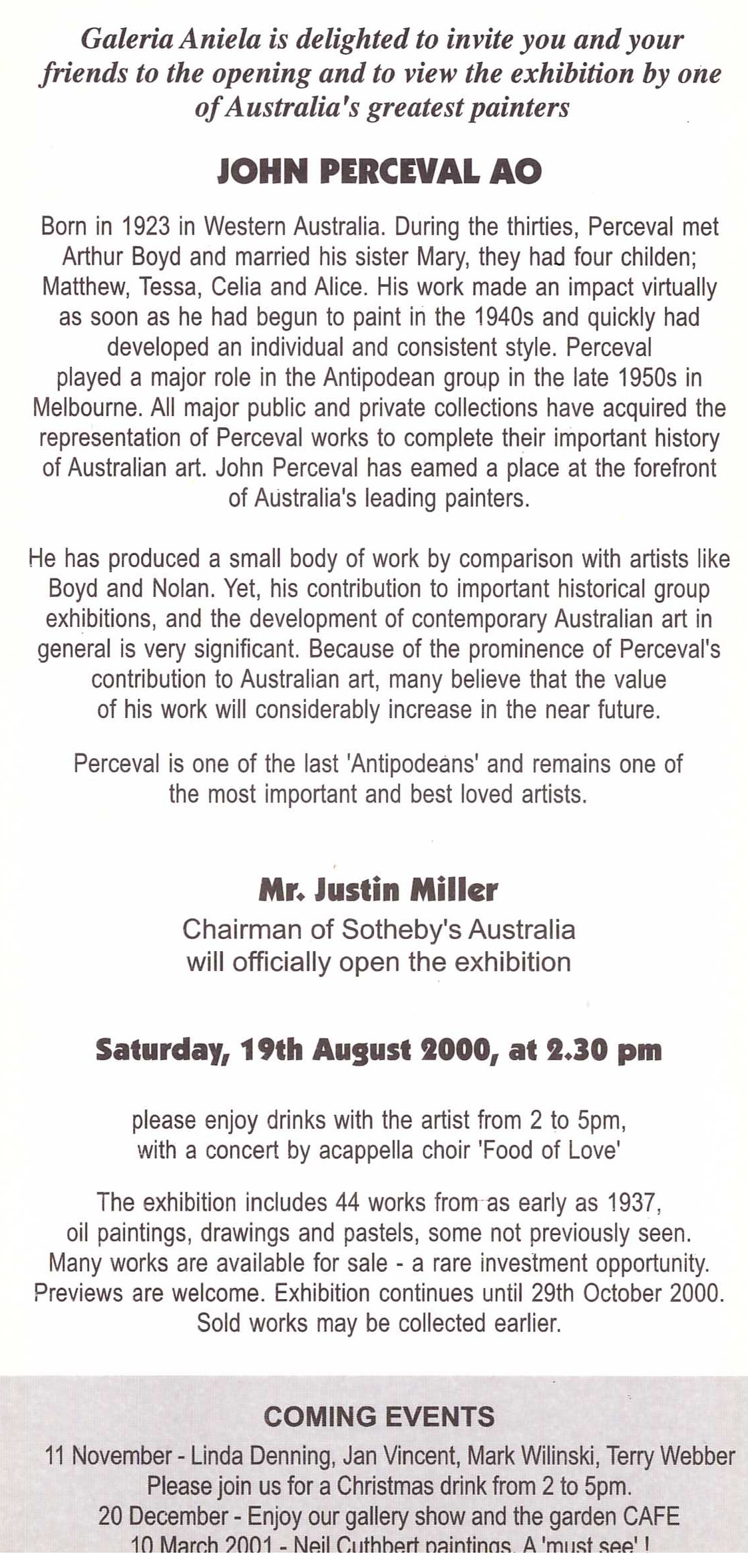
AO (1923-2000) is recognized as one of the most talented and one of
Australia's
most important 20th century artists.
John Perceval made
a strong impact in
Melbourne at the Contemporary
Art Society of
Victoria from
the 1940's. By the 1960's John
Perceval achieved great
artistic recognition and success.
Perceval holds the Office of the Order of Australia (AO) and has
won the John McCaughey, Vizard Wholohan and the Wynn with Dairy Farm.
With a contribution spanning six decades, Perceval created a relatively small
body of work by
comparison to Arthur
Boyd, David
Boyd, Charles
Blackman or Sidney
Nolan, Perceval
produced fewer than 600 original oil paintings.
John
Perceval input to important historical groups and development of
contemporary Australian art is major
and he remains the best-loved Australian artist.
Perceval
work is held by all major public galleries, museums and important
private collections.
John Perceval is
recognized as
a blue-chip artist with
a solid reputation for creating art that increases in value over time, offering
an alternative investment. Blue-chip
art usually sells for the high price at auctions Sulphur Smoke
$589,000, Scudding Swans $690,000.
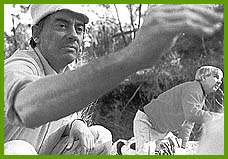
PHOTO
(1968): John Perceval and
Arthur
Boyd
'en plein air' |
|
|
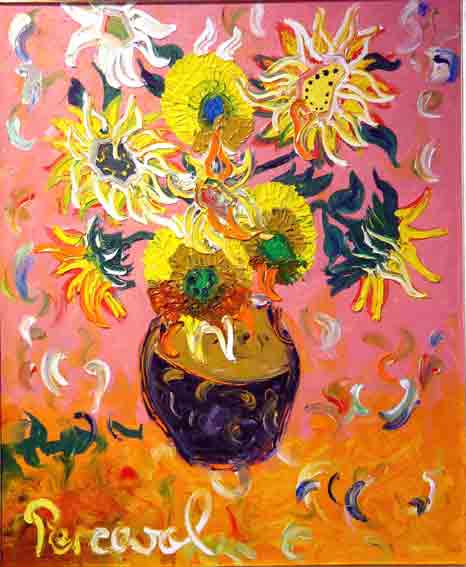
John Perceval AO 1923-2000
Sunflowers on Crimson
Oil on Canvas
Image Size: 60 cm x 52 cm
Framed Size: 75 x 67 cm
Price:
ENQUIRE
ENLARGE
|
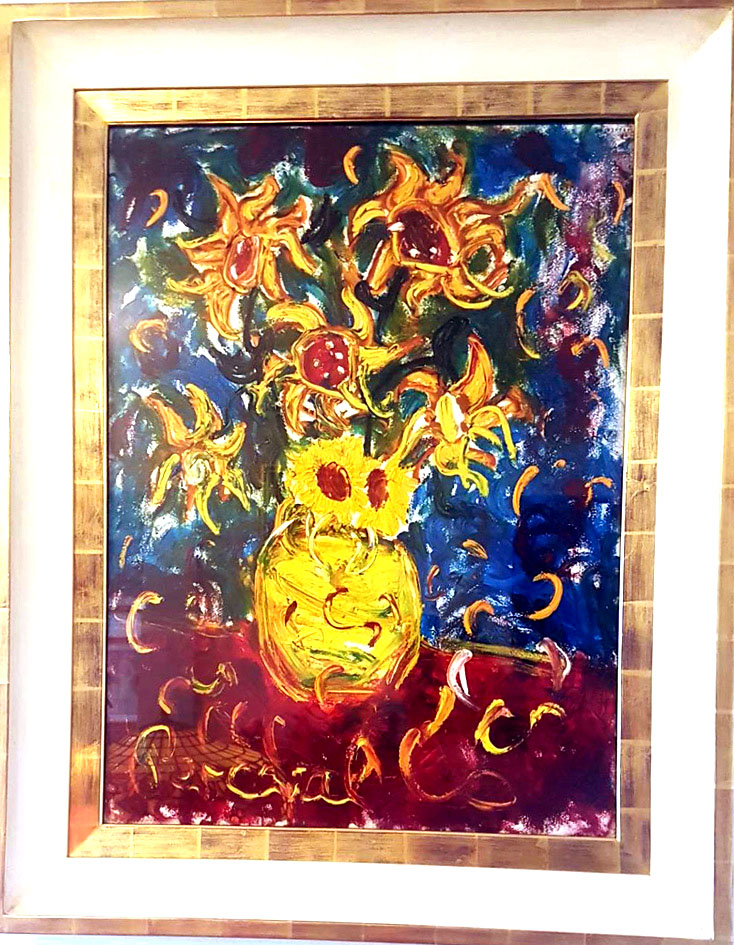
John Perceval AO 1923-2000
Free Sunflowers
1989
Oil on Cotton Paper-Board
Image
Size: 75 x 56 cm
Framed size: 90 x 72 cm
Price:
ENQUIRE
ENLARGE
|
|
|
|
title-Sunflowers
Auction Results
John
De Burgh Perceval Australia, 1923-2000
Title: Sunflowers Medium: Paintings
|
Details |
Price excl. GST |
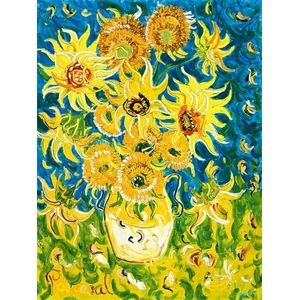 |
Sunflowers for Vincent, 1994
Oil on canvas, signed lower left Perceval. inscribed
verso Percevals / Sunflowers, 120 x 90 cm, Est: $30,000-40,000,
Deutscher and Hackett, Important Australian and International Fine Art,
Melbourne, 06/05/2015, Lot No. 62 |
$45,600 |
|
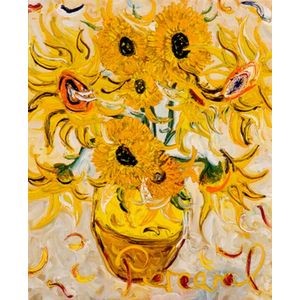 |
Sunflowers in a Clay Pot
Oil on canvas, signed lower right and bears title on the
reverse, 60.5 x 50 cm, Est: $28,000-36,000, Joel Fine Art, Australian &
International Art, Melbourne, 14/08/2007, Lot No. 35 |
$44,908 |
|
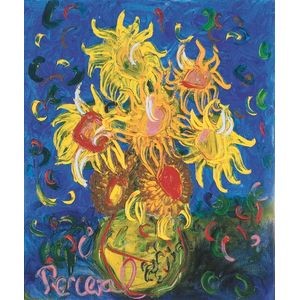 |
Sunflowers
Oil on canvas, signed 'Perceval' lower left, 60.3 x 50
cm, Est: $38,000-48,000, Christies, Australian & International
Paintings, Melbourne, 02/05/2002, Lot No. 58 |
$44,650 |
|
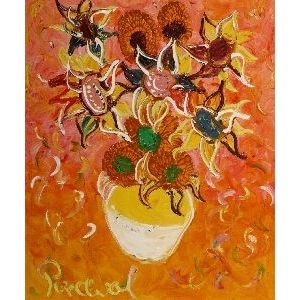 |
Sunflowers
Oil on canvas, signed lower left: Perceval; signed and
inscribed with title verso; Perceval Sunflowers, 61 x 50.5 cm, Est:
$15,000-25,000, Lawson~Menzies (trading as Menzies), Fine Australian &
International Art, Sydney, 22/07/2003, Lot No. 3 |
$35,250 |
|
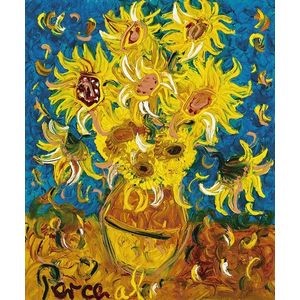 |
Sunflowers
Oil on canvas, signed lower left: Perceval, signed and
inscribed verso: sunflowers/ Perceval, 61 x 51 cm, Est: $30,000-40,000,
Deutscher~Menzies, Australian and International Fine Art, Sydney,
05/12/2007, Lot No. 46 |
$33,600 |
|
|
|
|
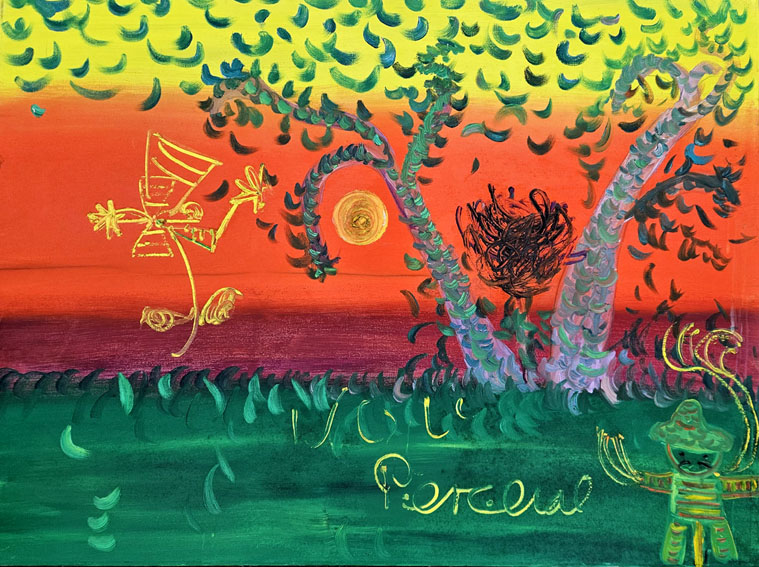
John Perceval AO 1923-2000
Happy Farmer
1989
Oil on Canvas 1989
92
x 122 cm
Price:
SOLD |
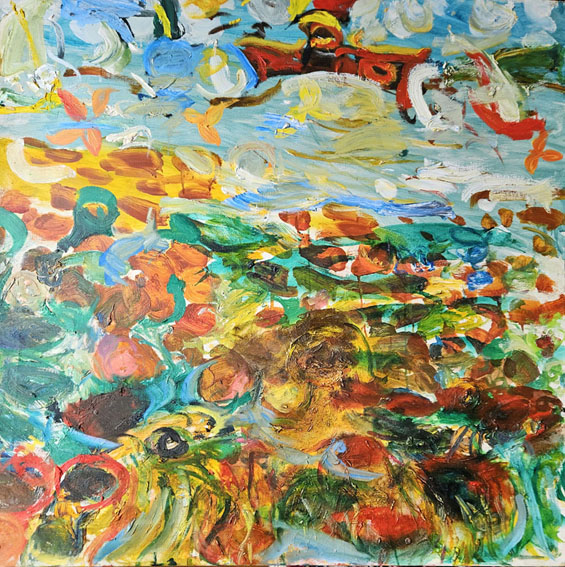
John Perceval AO 1923-2000
Sea Angel
Oil on Canvas
91
cm x 92 cm
Price: SOLD |
|
|
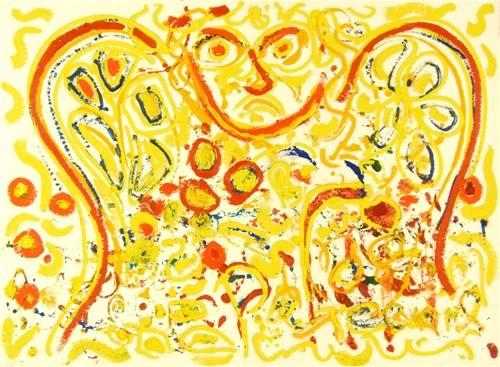
John Perceval AO 1923-2000
Angel with Flowers
Oil on
Paper
Image size: 54
x 74 cm
Framed Size: 74 x 94 cm
Price: SOLD
|
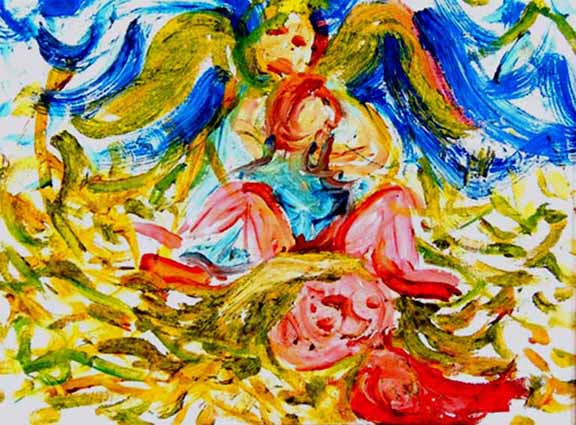
John Perceval AO 1923-2000
Love Angel
Oil on Canvas
Image Size: 31
x 41 cm
Framed size: 41 x 51 cm
Price: SOLD
|
|
|
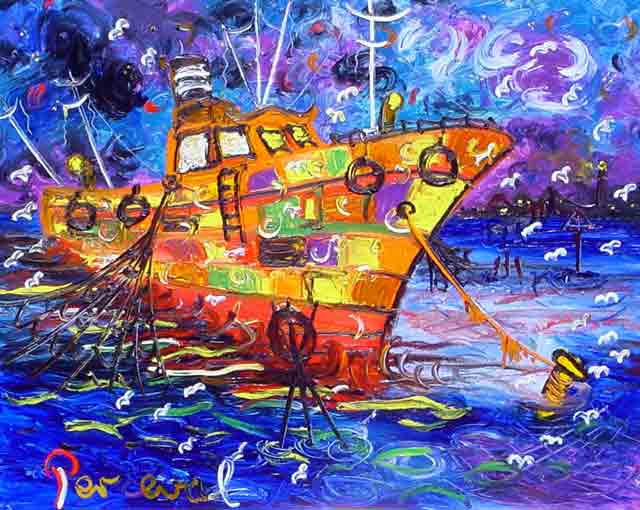
JOHN PERCEVAL 1923-2000
Old
Fishing Boat
Oil on Canvas
82
x102
cm
Price:
SOLD |
.jpg)
JOHN PERCEVAL 1923-2000
Sunflowers in Black vase on Purple
Oil on canvas
60 cm x 52 cm
Price:
SOLD |
|
|
.jpg)
JOHN PERCEVAL 1923-2000
Williamstown
Fishing
1988
Oil on Canvas
82
x 102 cm
Price: SOLD |
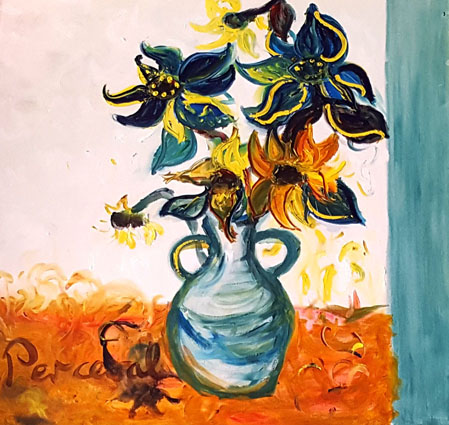
John Perceval AO 1923-2000
Sapphire Blue Sunflowers
Oil on Canvas
89 x 89 cm
108 x 108 cm
Price: SOLD |
|
|
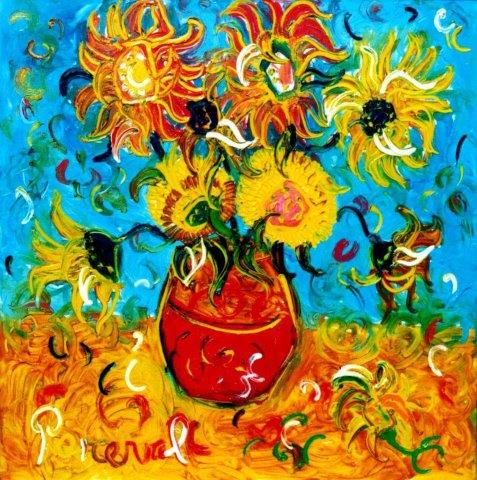
JOHN PERCEVAL 1923-2000
Brilliant
Sunflowers
Oil on Canvas
82
x 82 cm
Price:
SOLD |
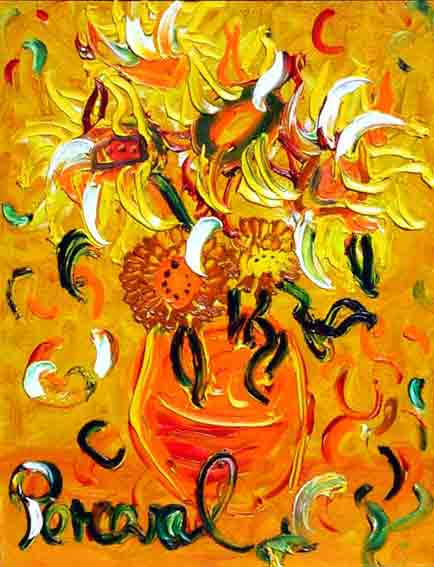
John Perceval AO 1923-2000
Gold Sunflowers
Oil on Canvas
46 x 36 cm
61 x 51 cm
Price:
SOLD
|
|
|
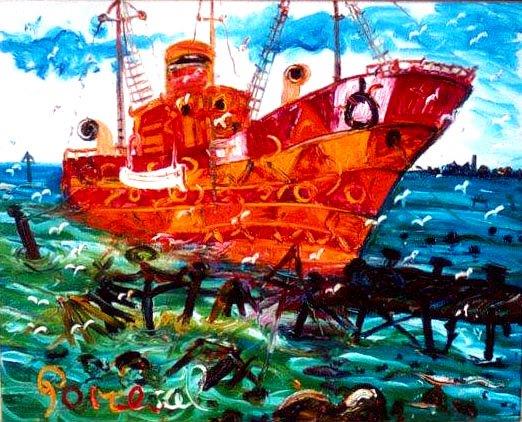
JOHN PERCEVAL 1923-2000
The Big Boat
Oil on Canvas
82
x 102 cm
Price:
SOLD |
.jpg)
JOHN PERCEVAL 1923-2000
Sun in the Wheatfield
Oil on canvas
80
cm x 80 cm
Price: SOLD |
|
|
.jpg)
JOHN PERCEVAL
1923-2000
Ships at Williamstown 1988
Oil on Canvas
94 x 124 cm
Price:
SOLD |
.jpg)
JOHN
PERCEVAL 1923-2000
Sunflowers in Red vase on Purple
Oil on canvas
60 cm x 50 cm
Price:
SOLD |
|
|
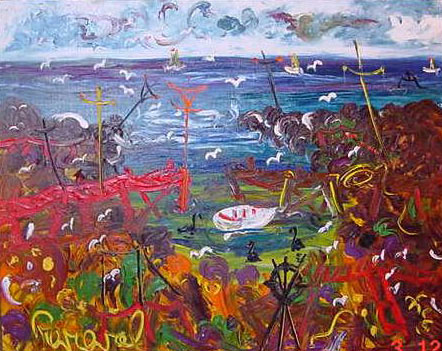
JOHN PERCEVAL 1923-2000
Small
Boats
Oil on canvas
82
x 102 cm
Price:
SOLD |
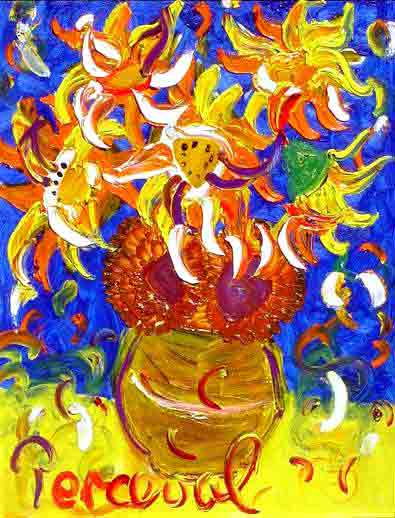
JOHN PERCEVAL 1923-2000
Sunflowers on Blue
Oil on Canvas
45 cm x 35 cm
Price: SOLD |
|
|
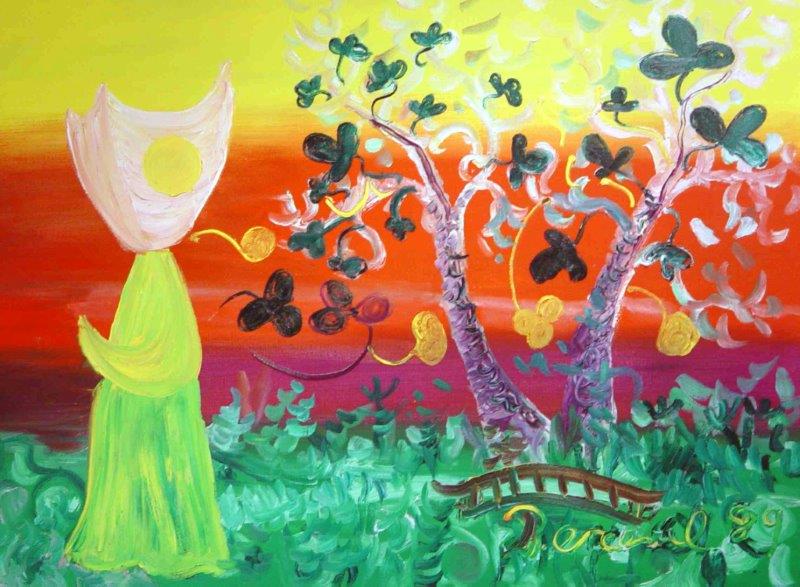
JOHN PERCEVAL 1923-2000
Nuns in Jeopardy
1990
Oil on canvas
92
cm x 122 cm
Price: SOLD |
.jpg)
JOHN PERCEVAL 1923-2000
Title:
Sunflowers
Oil on canvas
46
cm x 36 cm
Price: SOLD |
|
|
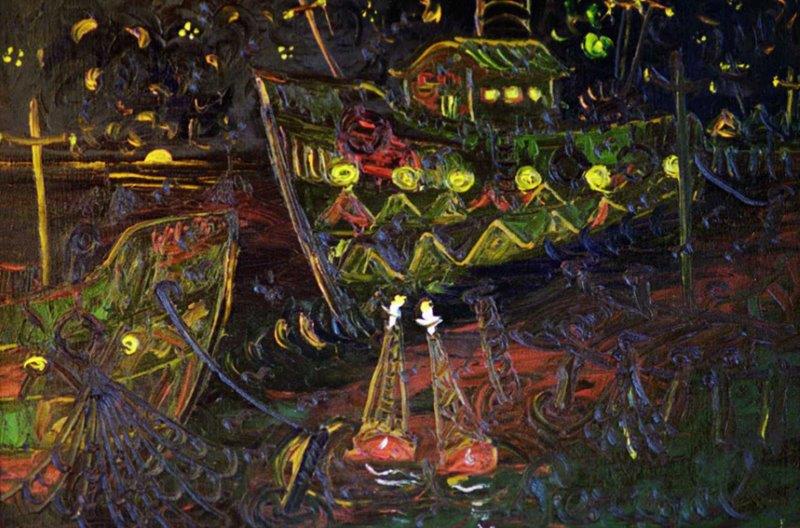
JOHN PERCEVAL 1923-2000
Williamstown Night Ship
Oil on canvas
60
x 92cm
Price: SOLD |
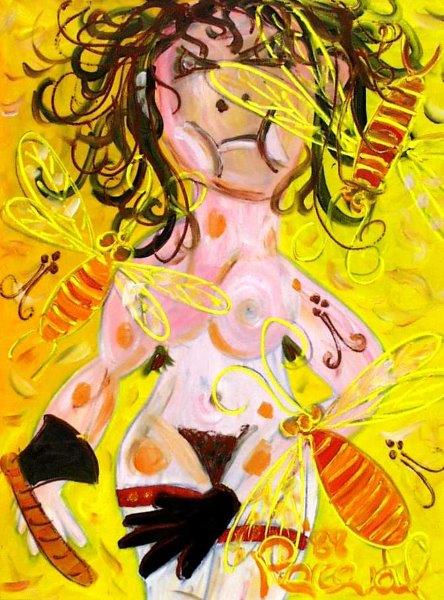
JOHN PERCEVAL 1923-2000
Queen Bee
1988
Oil on canvas
100
x 75 cm
Price: SOLD |
|
|
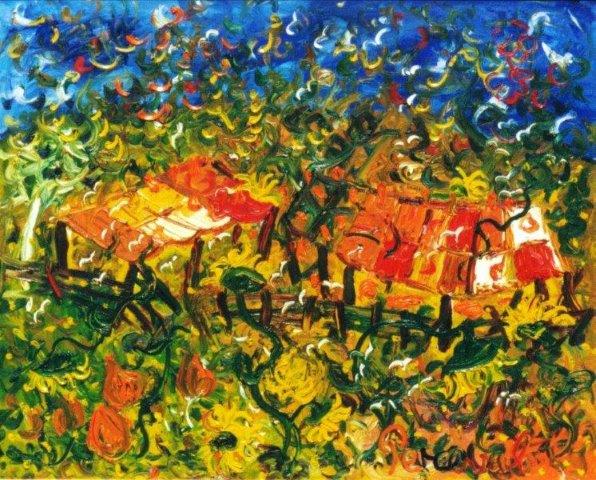
JOHN PERCEVAL 1923-2000
Pumpkin House
Oil on canvas
82
x 102 cm
Price: SOLD |
.jpg)
JOHN PERCEVAL
1923-2000
The Farmer 1988
Oil on canvas
61
cm x 71 cm
Price:
SOLD |
|
|
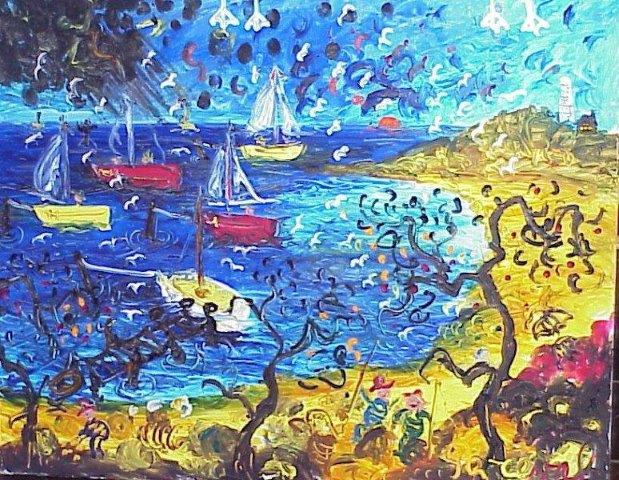
JOHN PERCEVAL 1923-2000
Light
House, Small Boats
Oil on canvas
82
x 102 cm
Price:
SOLD |
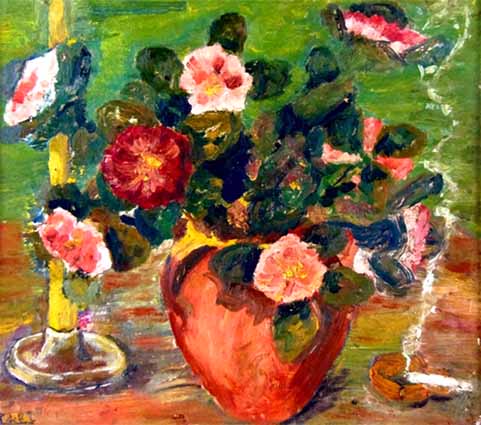
JOHN PERCEVAL
1923-2000
Flowers
circa
1948
Oil on Board
38 x 42 cm
rice:
SOLD |
|
|
.jpg)
JOHN
PERCEVAL 1923-2000
Floating Mask
1990
Oil on canvas
71
x 81 cm
Price: SOLD |
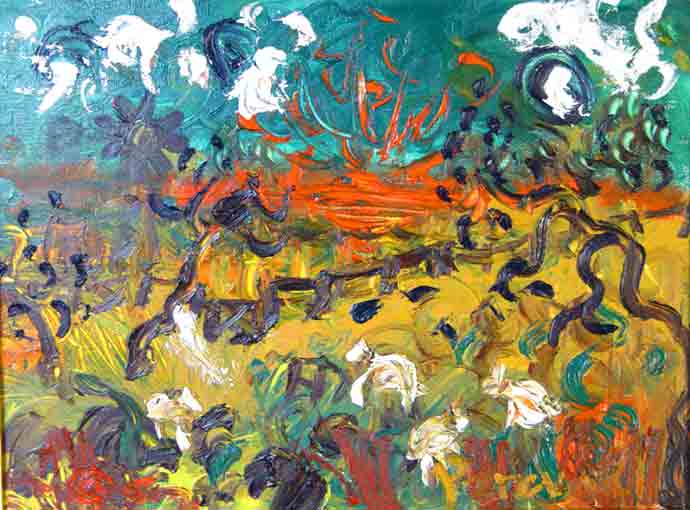
JOHN
PERCEVAL 1923-2000
Country Sun
Oil on canvas
32
x 41 cm
Price: SOLD |
|
|
|
auction results
John De Burgh Perceval 1923-2000
U nder
the freedom of information we have compiled for you relevant details |
|
Details |
Price excl. GST
|
|
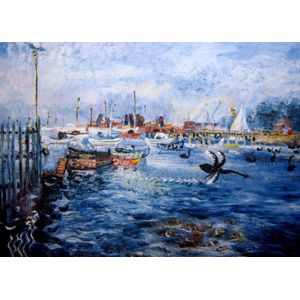 |
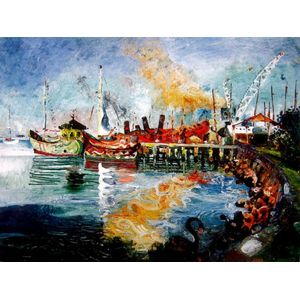
Scudding Swans 1959
Oil & tempera on board, 91 x 122 cm, Menzies, Australian &
International Fine Art, Sydney, 25/03/2010, Lot No. 53
|
$690,000 |
|
 |
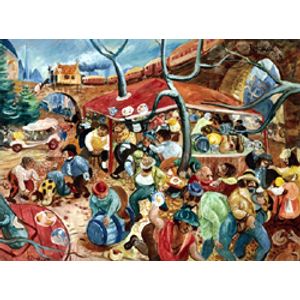
Sulphur Smoke 1959
Oil & tempera on composition board,
91 x 121.5 cm, Deutscher~Menzies, Australian & International
Paintings, Sydney, 05/03/2002, Lot No. 37 |
$589,000 |
|
 |
The Revellers 1947-48
Oil on canvas,
78.5 x 105 cm, Deutscher~Menzies, Australian & International
Fine Art, Sydney, 14/06/2006, Lot No. 17
|
$540,000 |
|
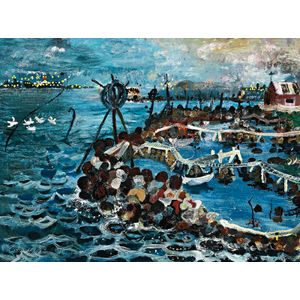 |
Fisherman's Sights, Williamstown, 1956
Oil on composition board,
91.5 x 121 cm, Deutscher and Hackett, The Gould Collection of
Important Australian Art, Sydney, 15/03/2017, Lot No. 6 |
$488,000 |
|
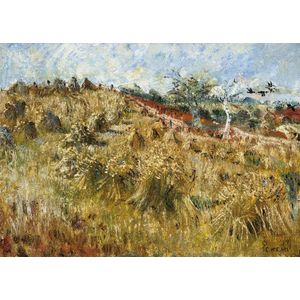 |
The Cornfield 1959
Oil on composition board,
84 x 117 cm, Menzies, Australian & International Fine Art,
Sydney, 25/03/2010,
Lot No. 48 |
$456,000 |
|
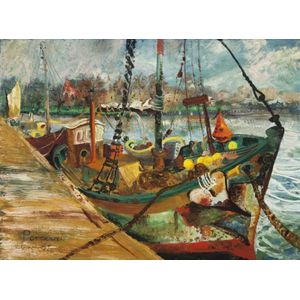 |
The Moored Shark Boat, 1959
Oil on canvas on board,
84.5 x 115 cm, Menzies, Important Australian and International
Fine Art and Sculpture, Melbourne, 24/09/2015, Lot No. 39 |
$454,091 |
|
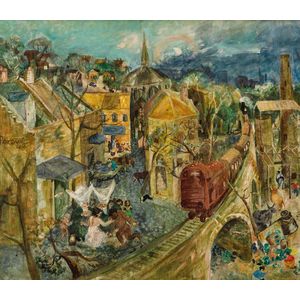 |
French Nuns 1948
Oil, tempera, resin on canvas,
82.5 x 98 cm, Sotheby's, Important Australian Art, Sydney,
16/08/2017, Lot No. 10
|
$451,400 |
|
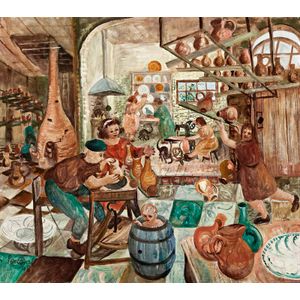 |
The Pottery, 1948
Oil, resin, tempera on canvas,
81 x 91.5 cm, Deutscher and Hackett, Important Australian +
International Fine Art, Melbourne, 04/05/2016, Lot No. 10 |
$427,000 |
|
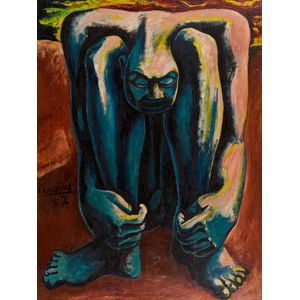 |
The Man 1942
Oil & tempera on board,
122 x 91 cm, Sotheby's, Important Australian & New Zealand Art
(lots 1-98) | Important Australian Art from The J.G.L.
Collection (lots 99-137), Sydney, 16/05/2018, Lot No. 103 |
$353,800 |
|
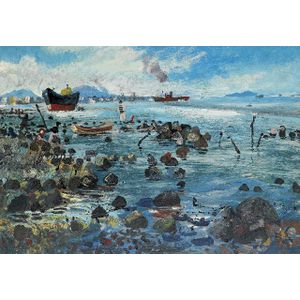 |
Old Hulk, Williamstown 1956
Enamel & tempera on composition board,
78.5 x 114 cm, Bonhams & Goodman, Australian, International &
Aboriginal Fine Art, Melbourne, 25/11/2008, Lot No. 21 |
$348,000 |
|
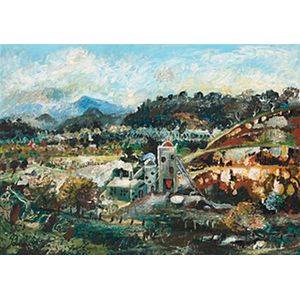 |
Lime Quarry, Lilydale, 1956
Oil on canvas,
80 x 113.5 cm, Deutscher and Hackett, 100 Important Australian
Paintings, Melbourne, 16/04/2008, Lot No. 41 |
$312,000 |
|
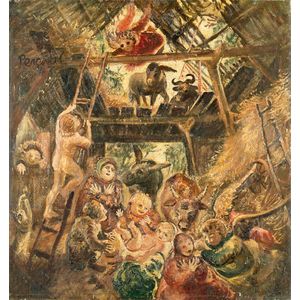 |
Nativity I
Oil on canvas on board,
84 x 79 cm, Christies, Australian & International Paintings,
Melbourne, 19/04/2005, Lot No. 35
|
$295,000 |
|
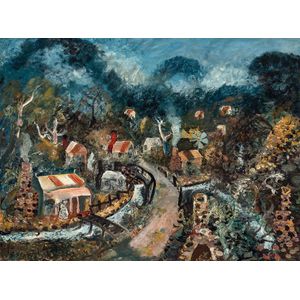 |
Windmill and the Rapids
Oil & tempera on board,
91.5 x 122 cm, Smith & Singer, former Sotheby's Australia,
Important Australian & International Art, Sydney,
20/04/2021,
Lot No. 14 |
$294,545 |
|
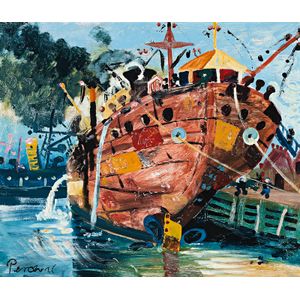 |
The Hull, Williamstown, 1956
Oil on composition board,
61 x 71 cm, Deutscher and Hackett, The Gould Collection of
Important Australian Art, Sydney, 15/03/2017, Lot No. 5 |
$292,800 |
|
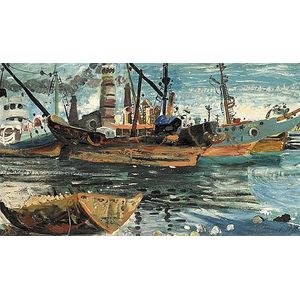 |
Ship's Graveyard 1956
Oil & tempera on board,
72 x 121 cm, Sotheby's, Important Australian Art, Sydney,
08/05/2012, Lot No. 6 |
$264,000 |
|
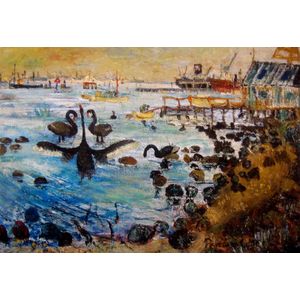 |
Black Swans at Williamstown 1956
Oil on composition board,
76.5 x 110 cm, Deutscher~Menzies, Australian & International
Paintings, Sculpture and Works on Paper, Melbourne, 25/04/1999,
Lot No. 63 |
$244,500 |
|
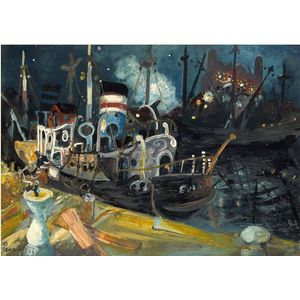 |
Night Watch 1957
Oil on board,
76 x 105.5 cm, Bonhams, The Grundy Collection, Sydney,
26/06/2013, Lot No. 15 |
$219,600 |
|
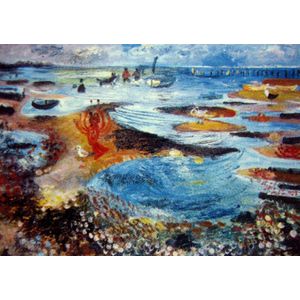 |
Low Tide
Oil on canvas on board,
76 x 106.5 cm, Christies, Australian & International Paintings,
Melbourne, 01/05/2000, Lot No. 222
|
$211,500 |
|
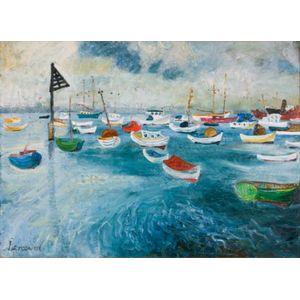 |
Pleasure Craft
Oil on composition board,
87 x 121 cm, Sotheby's, Important Australian Art, Melbourne,
24/11/2008, Lot No. 44 |
$198,000 |
|
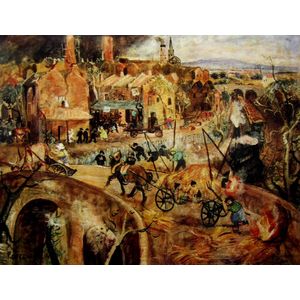 |
Breaking of the Strike
Oil on canvas,
72 x 93 cm, Sotheby's, Fine Australian Paintings, Melbourne,
14/08/1989, Lot No. 345 |
$198,000 |
|
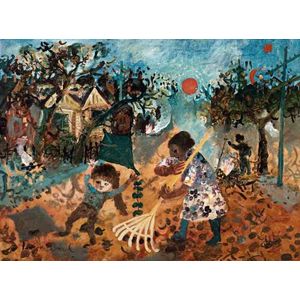 |
Autumn Leaves
Tempera & oil on board,
89 x 120 cm, Sotheby's, Australian and International Art,
Melbourne, 21/11/2006, Lot No. 7 |
$168,000 |
|
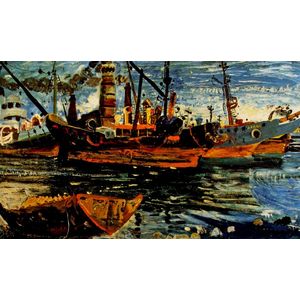 |
Boats at Williamstown - Akuna
Oil on board,
72 x 121 cm, Sotheby's, Fine Australian Paintings, Melbourne,
24/07/1988, Lot No. 349 |
$165,000 |
|
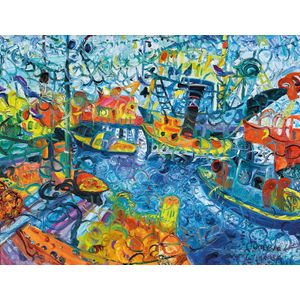 |
Harbour Trust, Williamstown 1967-1968
Oil on canvas,
91.7 x 122.5 cm, Sotheby's, The David Newby Collection of
Australian Art; Important Australian Art, Sydney, 03/05/2017,
Lot No. 34 |
$164,700 |
|
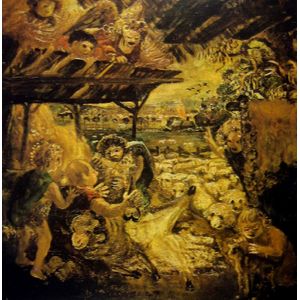 |
Scourge of Job
Oil on board,
73.5 x 69 cm, Sotheby's, Fine Australian Paintings and Drawings,
Melbourne, 30/07/1986, Lot No. 30 |
$154,000 |
|
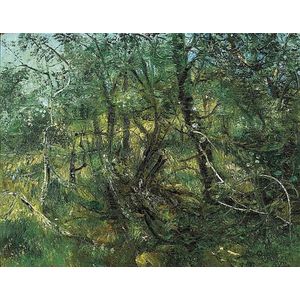 |
River Forest 1959
Oil on composition board,
86 x 108 cm, Sotheby's, Important Australian Art, Melbourne,
14/05/2013, Lot No. 11 |
$146,400 |
|
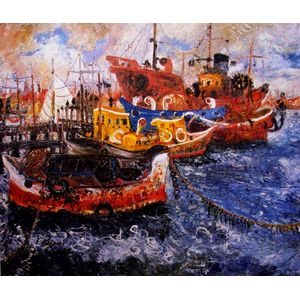 |
Boats at Williamstown
Oil on canvas on board,
86.5 x 102 cm, Sotheby's, Fine Australian Paintings, Melbourne,
24/07/1988, Lot No. 408
|
$143,000 |
|
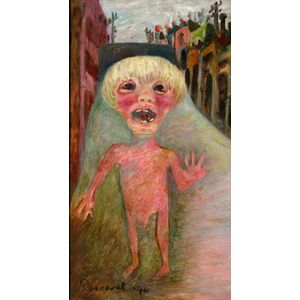 |
Boy Crying in a Carlton Street 1944
Oil on board,
70 x 39 cm, Joel Fine Art, Important Australian & International
Art, Melbourne, 30/10/2007, Lot No. 39
|
$137,346 |
|
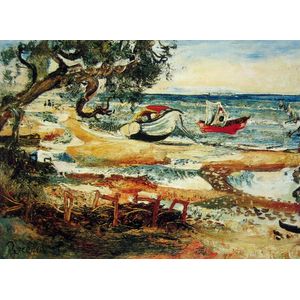 |
Boats at Williamstown, c. 1947
Oil on composition board,
74.3 x 101 cm, Sotheby's, Fine Australian Paintings, Melbourne,
18/11/1996, Lot No. 134
|
$134,500 |
|
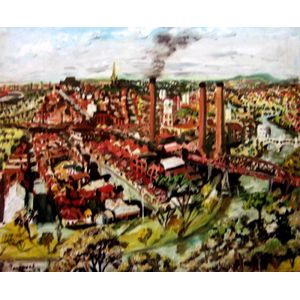 |
Richmond Landscape 1944
Oil on canvas,
74.5 x 91 cm, Deutscher~Menzies, Australian & International
Paintings, Sculpture and Works on Paper, Melbourne, 24/11/1999,
Lot No. 53 |
$123,500 |
|
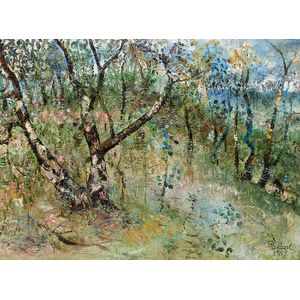 |
Bush Scene 1959
Oil on board,
85.5 x 115.5 cm, Mossgreen Auctions, The Collection of Warren &
Bunty Bonython (Art lots only), Adelaide, 04/05/2014, Lot No.
201 |
$117,120 |
|
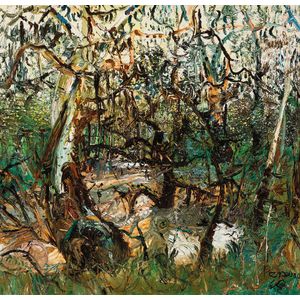 |
Flooded Creek 1960
Oil on composition board,
91.8 x 95.5 cm, Smith & Singer, Important Australian &
International Art, Sydney, 24/06/2020, Lot No. 4 |
$116,591 |
|
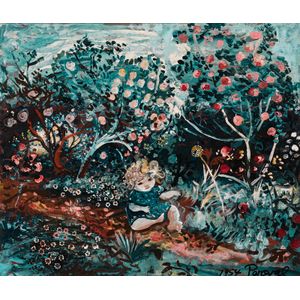 |
Fabian in the Garden, 1954
Oil on composition board,
81 x 96 cm, Deutscher and Hackett, Important Australian &
International Fine Art; Important Indigenous Art, Melbourne,
29/11/2017, Lot No. 7 |
$115,900 |
|
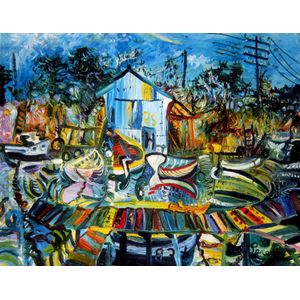 |
Boats on a Changing Tide, Mordialloc 1968
Oil on canvas,
91.4 x 122 cm, Smith & Singer, Important Australian &
International Art, Sydney, 18/11/2020, Lot No. 5 |
$110,455 |
|
%201968.jpg) |
Tug Boat in the Floating Dock (Williamstown) 1968
Oil on canvas,
91.4 x 122.3 cm, Sotheby's, Important Australian & International
Art, Sydney, 11/05/2016, Lot No. 140
|
$109,800 |
|
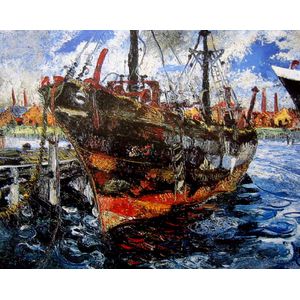 |
Ship in the River
Oil on canvas on board,
81 x 100 cm, Sotheby's, Fine Australian Paintings, Melbourne,
22/08/1994, Lot No. 109 |
$107,000 |
|
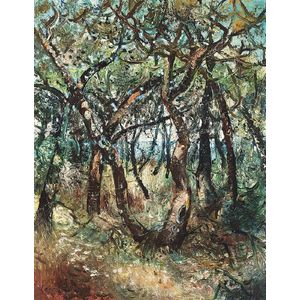 |
Banksias at Rye 1959
Oil on board,
99 x 76.5 cm, Deutscher~Menzies, Fine Art Auction, Melbourne,
01/05/2002, Lot No. 46 |
$105,750 |
|
|
|
|
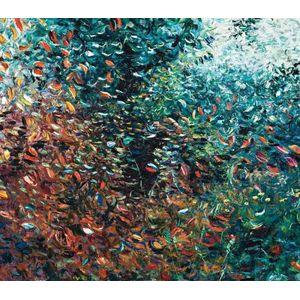 |
Summer Into Autumn
Oil on canvas on board,
70 x 80 cm,
Est: $28,000-35,000, Sotheby's, Australian and International
Art, Melbourne, 21/11/2006, Lot No. 2 |
$102,000 |
|
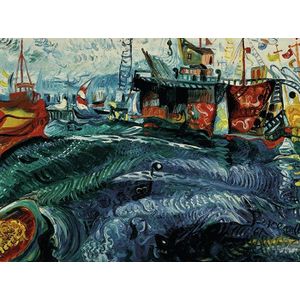 |
Arrival of the Lively Lady and The Floating Dock, Williamstown
1967
Oil on canvas,
91.5 x 122 cm, Deutscher~Menzies, Australian and International
Fine Art, Sydney, 06/12/2006, Lot No. 29
|
$102,000 |
|
.jpg) |
The Old Hulk (Williamstown)
Oil on board,
91 x 121 cm, Christies, Australian and European Pictures,
Melbourne, 18/04/1994, Lot No. 103 |
$101,500 |
|
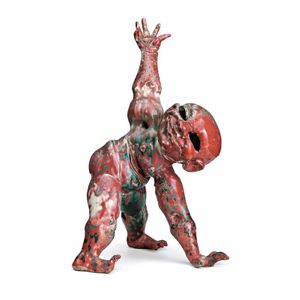 |
Acrobat Angel, C.1958
Glazed earthenware, signed on base: Perceval,
38 cm height, Est: $40,000-60,000, Deutscher and Hackett, The
Gould Collection of Important Australian Art, Sydney,
15/03/2017, Lot No. 1
|
$97,600 |
|
|
For more information
http://www.aasd.com.au/
&
http://www.artindex.com.au/




|
|
|
|
|
|
JOHN PERCEVAL AO
Biography
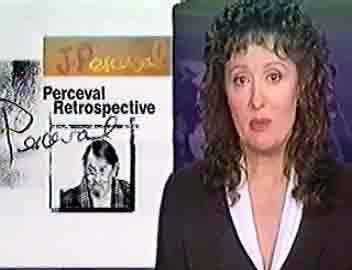
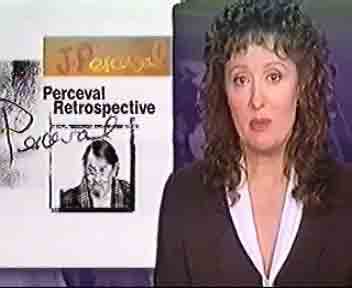
VIDEO:
Australian
National NEWS
John Perceval exhibition
in
Galeria Aniela
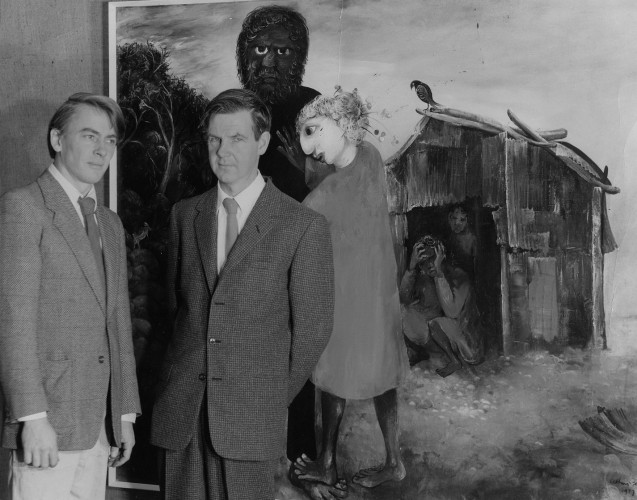
Photo
(1958):
John Perceval left and
Arthur Boyd
right
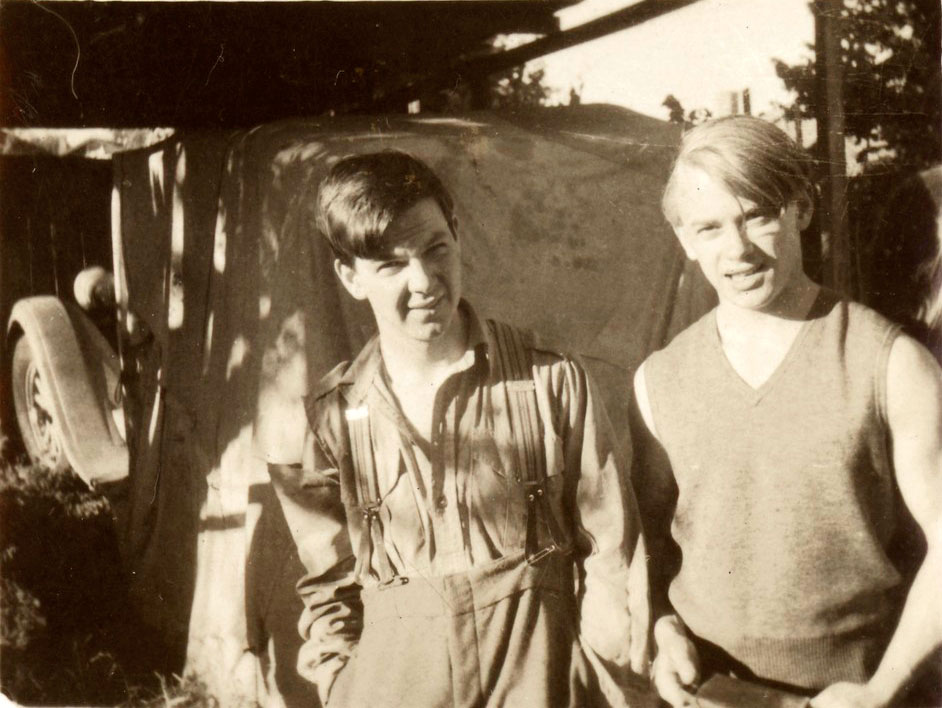
Photo (1943):
John Perceval (right)
Arthur Boyd
left Photograph Albert Tucker
National Library of
Australia
1923
John
de Burgh
Perceval was
born
1 February 1923 in Western Australia
at
Bruce Rock,
Western Australia.
Perceval birth name
is Linwood Robert Steven South.
He was
the second
child of Robert South and Dorothy née Dolton.
1925
Perceval
parents separated. Perceval remained at his father's farm
1935
Perceval reunited with his mother in
Melbourne
in 1935.
Following
the marriage of his mother to William de Burgh Perceval, he changed his name to
John and adopted the surname de Burgh Perceval.
1938
Perceval contracted polio, was hospitalized, took the opportunity to
further his skills at drawing and painting.
1941
Perceval enlisted in the army in
1941
Perceval befriended
Arthur Boyd
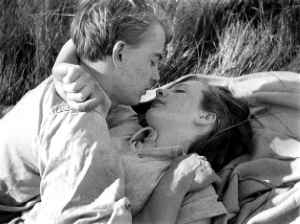 1944
after leaving the army John
Perceval married Arthur
Boyd's
sister Mary and moved into the Boyd family home at Open Country,
Murrumbeena.
They had four children
Matthew,
Tessa Perceval,
Celia Perceval
and Alice. 1944
after leaving the army John
Perceval married Arthur
Boyd's
sister Mary and moved into the Boyd family home at Open Country,
Murrumbeena.
They had four children
Matthew,
Tessa Perceval,
Celia Perceval
and Alice.
1948 Perceval held his
first solo exhibition at the
Melbourne Book Club
in 1948 and showed regularly with the
Contemporary Art Society.
Perceval
made an impact virtually
as soon as he had begun to paint in the 1940s, when he exhibited in
Melbourne in 1942 at the
Contemporary Art Society
of Victoria, Australia.
By the 50's and the
60's
Perceval
work had
developed into an individual style giving him
an artistic acclaim as well as the financial success.
1949 - 1955
Perceval concentrated on producing
earthenware ceramics and helped to establish the
Arthur Merric Boyd Pottery
in Murrumbeena.
1956 Perceval has
return to painting and produced a series of paintings of the famous
Williamstown
series and
Gaffney's Creek.
1958
Perceval won
McCaughey Prize
1959
Perceval signed the Antipodean Manifesto which shape of Australian
contemporary art.
1960
Perceval won
Wynne Prize
1963
Perceval moved
to England
1963 Perceval held
solo exhibitions in London, and travelled to Europe, before returning to
Australia
1965
Perceval take up the first
Australian National
University
Creative Fellowship.
JOHN PERCEVAL National Gallery of Victoria
1966
Albert Hall,
Canberra
held Perceval first major Retrospective Exhibition.
1971
Author Margaret Plant
published
monograph of
John Perceval
1974
Perceval committed himself to
Larundel
hospital,
suffering from
alcoholism and schizophrenia,
where he remained until 1981.
1984
Heide
Museum of Modern Art held
PERCEVAL
Retrospective
1991
John Perceval was awarded
Officer of the
Order of Australia
(AO)
1991
National Gallery of Victoria
organized
Perceval Retrospective
1992
National
Gallery of Victoria Melbourne
organized
Perceval
Retrospective (1945-1992)
June 2000
Perceval 'Scudding Swans' sold for $552,500, the highest price for a
living Australian painter (28/06/2000).
August 2000
Galeria
Aniela
organised
PERCEVAL Retrospective
(19
August -19 October 2000)
with John
Perceval
encouragement and
personal
support and
his
manager,
Ken McGregor.
19 August 2000
Justin Miller,
Chairman
Sotheby’s Australia
open
JOHN PERCEVAL
Retrospective - 80 paintings (1946-1999) on
the ABC TV Australian National NEWS
15 October 2000
John Perceval died
in Melbourne (aged 77)
survived by his four children; Matthew,
Tessa,
Celia
and Alice.
March 2010
John Perceval painting 'Scudding Swans' sold fo r
$690,000.
JOHN PERCEVAL
played a major role in the Antipodean group in
the late 1950's in Melbourne.
Antipodean group reacted strongly against the promoters of
non-figurative painting who followed the trends in the United States and
suggested that representational painting was unfashionable and outdated.
Perceval
was the member of the famous group known as the
Angry Penguins
who redefined Australian art in the 40s and the 50's. Other
members included John and Sunday Reed,
Joy Hester,
Sidney Nolan,
Arthur Boyd
and
Albert Tucker.
John
de Burgh
Perceval (1923-2000) is
one of the Australia's most
important 20th century artists
(Australian
Painter)
and
remains the best-loved artist.
Perceval
contribution to important historical group and the development of the
contemporary Australian art is significant. All major public and private
collections have acquired the representation of Perceval works.
With a contribution spanning nearly
six decades, John Perceval created a relatively small body
of work by comparison with artists like
Arthur Boyd
and
Sidney Nolan,
Perceval
produced fewer than 600 original oil paintings.
VIDEO:
ABC TV Australian National NEWS Perceval Retrospective Exhibition in Galeria
Aniela
Awards :
1958
McCaughey Prize
1960
Wynne Prize
1966
Albert Hall, Canberra
held Perceval first major Retrospective Exhibition.
1984
Heide
Museum of Modern Art held Perceval Retrospective Exhibition
1992
National Gallery of Victoria
Melbourne
organized
John Perceval
major Retrospective (1945-1992)
1991
Officer of the Order of Australia
2000
Galeria Aniela
held
Perceval Retrospective
exhibition open by Justin Miller,
Chairmen of
Sotheby's Australia (19
August to 19 October held
80
paintings from 1946 to 1999)
VIDEO: Australian
National NEWS | the ABC TV
VIDEO:
Australian National NEWS Perceval
Retrospective
filmed by the ABC TV
PHOTOS:
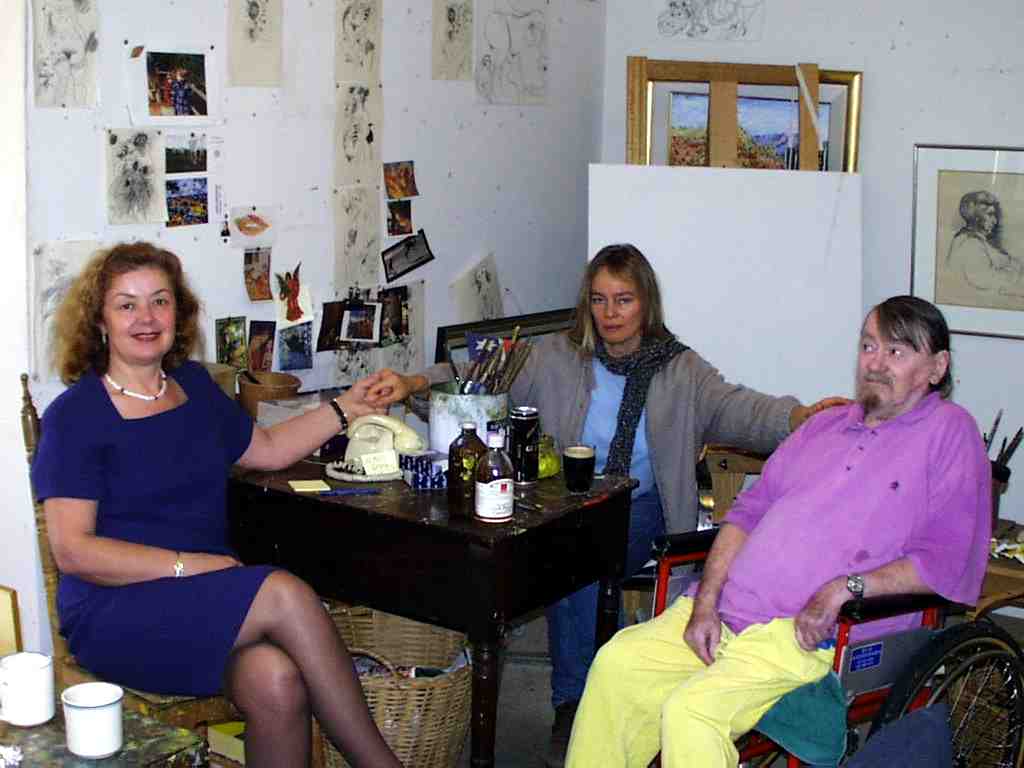
Photo (1998): John Perceval,
Celia
Perceval and Aniela in Perceval Melbourne Studio
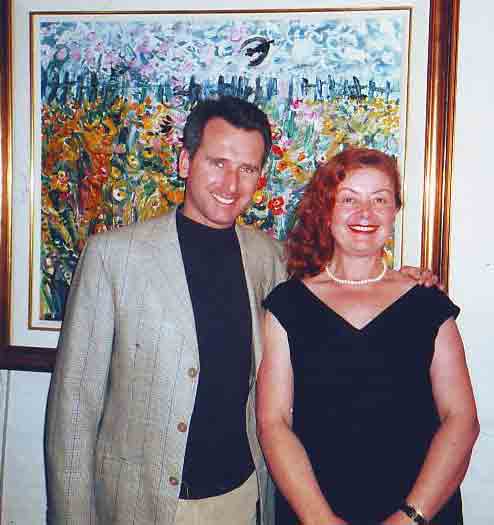
PHOTO 1999: Aniela,
Celia Perceval,
and
John Perceval
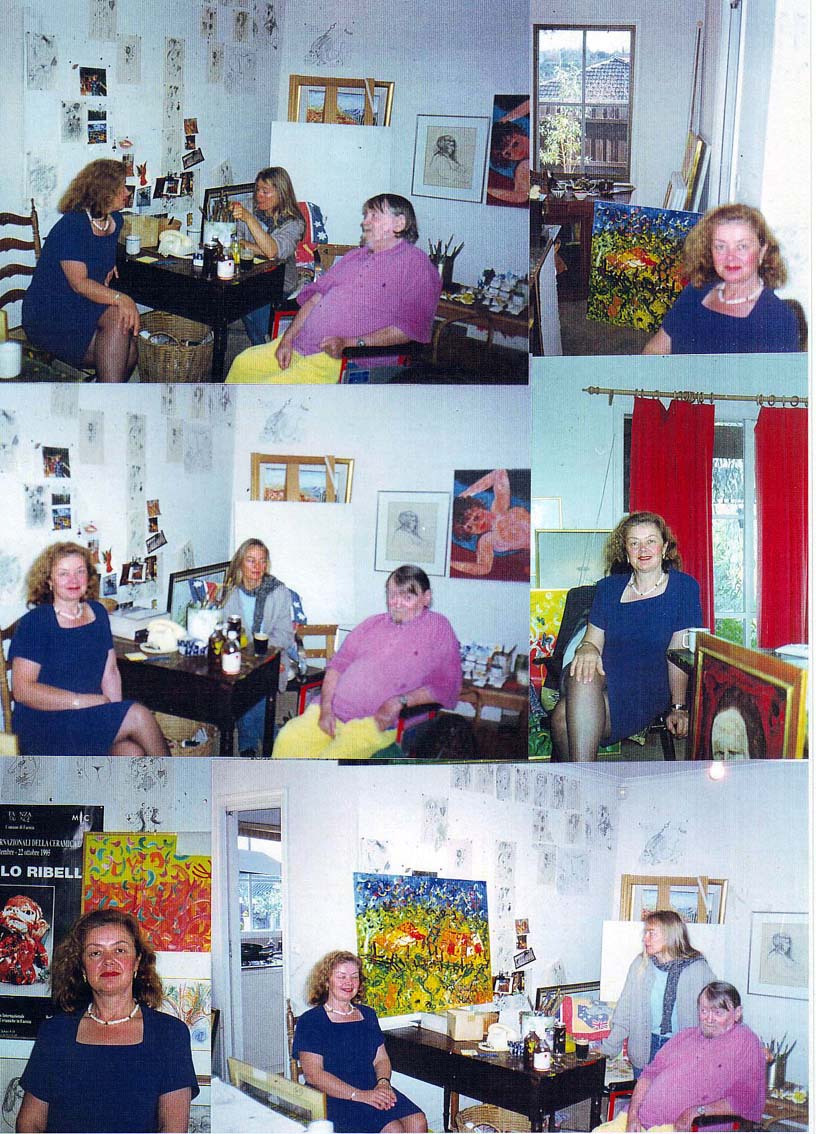
Perceval Retrospective
was
organized with the artist
encouragement and support.
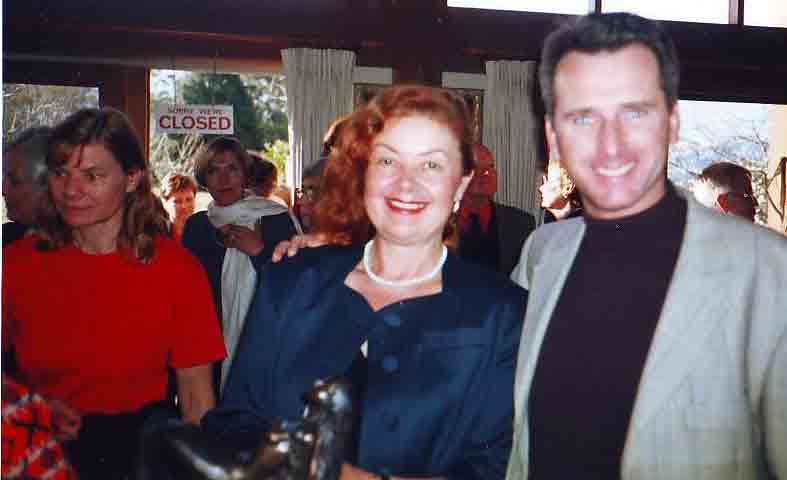
Justin Miler,
Chairman
Sotheby's Australia
open
Perceval
Retrospective
on
19 August
2000
ABC TV Arthur BOYD in
Galeria Aniela filmed by Australian National NEWS
ABC TV Sunday Afternoon
Best of BOYD exhibition
in Galeria Aniela
VIDEO gallery website:
JOHN PERCEVAL Retrospective ABC TV the Australian National News
|
|
|
|
JOHN
PERCEVAL Videos
Photo 1999: JOHN PERCEVAL
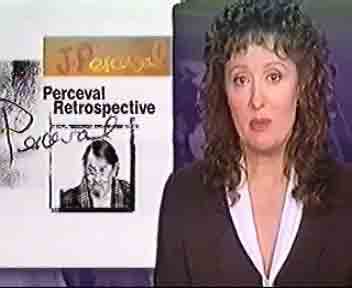
VIDEO ABC TV Australian National
News JOHN PERCEVAL
Retrospective
|
|
|
|
|
|
FREE Sunflowers
circa 1989
JOHN PERCEVAL
1923-2000
Oil on Cotton paper board
Signed
Lower left
PERCEVAL
Measurement: 76 x 57 cm
Framed:
94 x 75 cm
Price
may change without a prior notice
-
ENQUIRE
VIDEO: "Free Sunflowers" JOHN PERCEVAL
(1923-2000)
Exhibited:
2000 "PERCEVAL
Retrospective"
Galeria Aniela Fine art Gallery,
NSW, Australia
2000
Video
"Perceval Retrospective" the ABC TV
Australian National
NEWS
in Galeria Aniela
2001 "Tribute to JOHN PERCEVAL"
Wagner Art Gallery,
NSW, Australia.jpg)
2003 "Masters of Art" Galeria
Aniela Fine art Gallery, NSW, Australia
2005 "The Grand Masters"
The Art Lounge Gallery launched by
Edmund
Capon
Art Gallery of NSW
"Free Sunflowers" is a
beautiful, rich and highly textured
painting
with clear and expressive tone of colour. Characteristically
Perceval, it is the artist
superb
signature work with
swirling brush strokes and warm tones
beautifully
composition.
Perceval loved Vincent van Gogh's work
and yet,
Perceval Sunflowers are free of van Gogh inhibitions allowing the
unconscious to come to the fore and releasing new and greater powers.
John
Perceval Sunflowers come from his most powerful memory from his upbringing was
of the golden fields of sunflowers on his father property in Western Australia.
'Free Sunflowers' emphasize Perceval strength as colorist achieving the most
hues that can bring about joy.
|
|
|
Sunflowers on
Crimson circa
1988-90
JOHN
PERCEVAL1923-2000
Sunflowers on Crimson circa 1988-89
Oil on canvas,
signed lower left and sign verso
Measurements (image): 60 x 52
cm
Place of Execution: Melbourne, Victoria
NOTES:
This
highly textured
painting is Perceval signature work in typical swirling brush
strokes with rich paintwork,
superb composition,
in characteristic expressive tone of colour.
Price
may change without a prior notice
-
ENQUIRE
Exhibited :
2000 "PERCEVAL
Retrospective"
Galeria Aniela Fine art Gallery,
NSW, Australia
2000
Video
"Perceval Retrospective"
the ABC TV Australian National NEWS
in Galeria Aniela
2001 "Tribute to JOHN PERCEVAL"
Wagner Art Gallery,
NSW, Australia
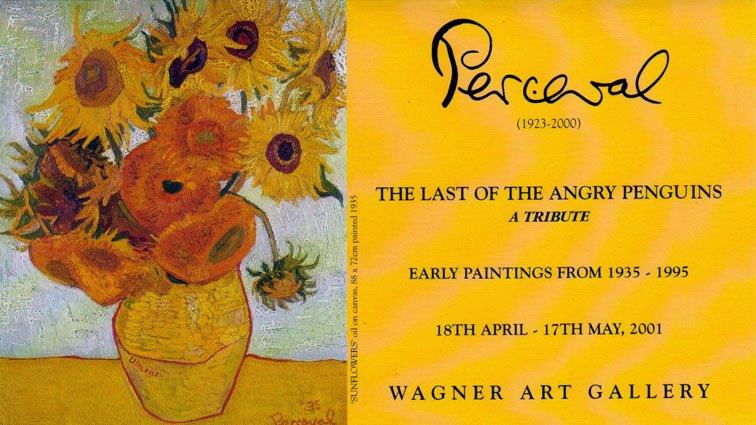
2003 "Masters of Art" Galeria
Aniela Fine art Gallery, NSW, Australia
2005 "The Grand Masters"
The Art Lounge Gallery -
Edmund Capon
Art Gallery of NSW
|
|
|
|
|
|
|
|
John
Perceval
1923-2000
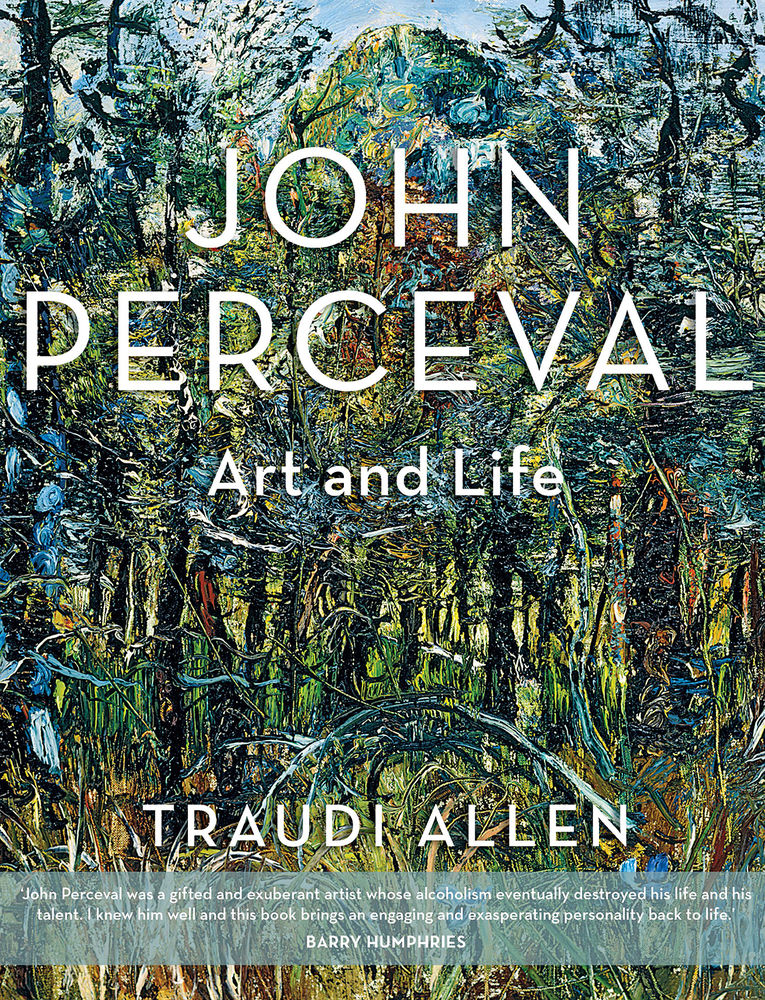
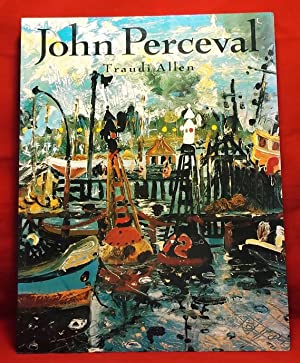 JOHN PERCEVAL has played a major role
in the Antipodean group in the late 1950s in Melbourne and
in
1959 he signed the Antipodean Manifesto which determined the shape of Australian
contemporary art. Antipodean group reacted
strongly against the promoters of non-figurative painting who followed the
trends in the United States and suggested that representational painting was
unfashionable and outdated. In 30 June 2000
Sotheby's
sold John Perceval "Scudding Swans" (Williamstown series) for $552,500 it was
then a record for a living Australian painter. In March 2002
Dutscher Menzies
sold John Perceval "Sulphur Smoke" for $596,600. JOHN PERCEVAL has played a major role
in the Antipodean group in the late 1950s in Melbourne and
in
1959 he signed the Antipodean Manifesto which determined the shape of Australian
contemporary art. Antipodean group reacted
strongly against the promoters of non-figurative painting who followed the
trends in the United States and suggested that representational painting was
unfashionable and outdated. In 30 June 2000
Sotheby's
sold John Perceval "Scudding Swans" (Williamstown series) for $552,500 it was
then a record for a living Australian painter. In March 2002
Dutscher Menzies
sold John Perceval "Sulphur Smoke" for $596,600.
John de Burgh Perceval
AO
(1
February
1923
-
15 October
2000)
was a well-known
Australian
artist.
Perceval was the last surviving member of a group known as the
Angry
Penguins
who redefined Australian art in the 1940s. Other members included John and
Sunday Reed,
Joy Hester,
Sidney Nolan,
Arthur Boyd
and
Albert
Tucker.
He was born Linwood Robert Steven South at
Bruce Rock,
Western
Australia,
the second child of Robert South (a wheat farmer) and Dorothy née Dolton. His
parents separated in 1925 and he remained at his father’s farm until reunited
with his mother in
Melbourne
in 1935. Following the marriage of his mother to William de Burgh Perceval, he
changed his name to John and adopted the surname de Burgh Perceval.
John Perceval
moved to Melbourne with his mother in 1934 attending a local boarding school,
Trinity Grammar, here he had his first access to a large library, where the
school’s collection of art books left a profound impact on the teenager. Greatly
influenced by Van Gogh’s famous painting of the same title, Perceval’s first
work
Sunflowers
(1935) captures the essence of Van Gogh’s work but Perceval’s own flair can be
seen in its depth and unique textural qualities.
In 1938 Perceval contracted
polio
and was hospitalised, giving him the opportunity to further his skills at
drawing and painting.
When he contracted polio and was confined to a
hospital bed, Perceval spent much of this time developing his skills in drawing
and painting. Although he survived the infection, it seriously affected his neck
muscles, speech patterns and left him with a permanent limp. These problems
continued to give Perceval constant troubles throughout his life.
Enlisting in the army in 1941, following the
outbreak of war in the Pacific, Perceval was assigned to the Army Survey Corps
when he was rejected as unfit for military duty.
In the army Perceval first met and befriended
Arthur Boyd.
During this time he used his drawing skills to become a draughtsman and soon met
other young artists such as
Albert
Tucker,
Sidney Nolan
and
Arthur Boyd.
Becoming a close friend with Boyd, Perceval later met his sister, Mary whom he
married in 1944. His associations with Boyd also allowed him to be introduced to
the well-known art patrons John and Sunday Reed who helped establish his name
within Australia’s art circles.
After leaving the army and moving into the Boyd family home at Open Country,
Murrumbeena,
he married Boyd's younger sister Mary in 1944. Together he and Mary Boyd
produced four children.
From 1943, and the aftermath of the war,
Perceval began to produce joyful religious and genre paintings with richly
textured surfaces. Although he was exhibiting regularly with the Contemporary
Art Society, Perceval held his first one-man show at the Melbourne Book Club in
1948.
Establishing a pottery workshop at Murrumbeena
with Arthur Boyd and Peter Herbst in 1944, between 1949 and 1955, Perceval
turned to ceramic work and created a series of angel figures. Returning to
painting in 1956, Perceval produced a series of spontaneous images depicting
Williamstown, Gaffney’s Creek and a range of seascapes.
Perceval held his first solo exhibition at the
Melbourne
Book Club
in 1948 and showed regularly with the
Contemporary
Art Society.
Between 1949 and 1955 he concentrated on producing earthenware ceramics and
helped to establish the
Arthur
Merric Boyd Pottery
in Murrumbeena. Returning to painting in 1956 Perceval produced a series of
images of
Williamstown
and
Gaffney's
Creek.
In 1959, Perceval became a member of the Antipodeans, a group of self-taught
Australian painters who dramatically changed the local art scene in the 1940s
and 50s. Working alongside Arthur Boyd, Albert Tucker, Sidney Nolan and
Joy Hester,
during his time as an Antipodean Perceval worked with passionate intensity to
put his strong responses to nature onto canvas. Proving to be one his most
creative periods, his palette and style had matured greatly to show subtle
contrasts in tone and vibrant use of colour. In 1961 he began to receive wider
recognition and was asked to contribute to the renowned Whitechapel Gallery’s
50 Australian Painters
show in London. His work was also included in the 1962 Rebels and Precursors in
Australia, London’s Tate Gallery in 1963 and later at Brazil’s Museum of Modern
Art.
Moving to England in 1963 Perceval held solo exhibitions in London, and
travelled to Europe, before returning to Australia in 1965 to take up the first
Australian
National University
Creative Fellowship (Australian
National University Creative Fellowship in Canberra).
John Perceval, a major retrospective exhibition, was held at
Albert Hall,
Canberra in 1966. Author Margaret Plant's monograph John Perceval, was published
in 1971.
However, despite his rising success, Perceval was
tackling serious health problems.
Suffering from
alcoholism
and
schizophrenia
in 1974 Perceval committed himself to the psychiatric hospital
Larundel,
Melbourne, where he
spent nearly ten years of his life
and remained until 1981.
Perceval produced a small number of crayon sketches during this time and he did
not seriously take up drawing and painting until 1987. Some of the images
Perceval produced after his release from hospital reflect strong elements of
tension and trauma. This can be seen in his works
Jack-in-the-box with rooster lid (1987) and Feeding the Seagulls (1988)
which include axe images and troubled expression. After Perceval left the
hospital he again to begin producing jubilant and brilliant paintings with
richly textured surfaces which brought him fame in the 50’s in his early
artistic acclaim.
In 1984 John Perceval Retrospective Exhibition of Paintings was held at
Heide
Park and Art Gallery.
Perceval created the prestigious Sunflowers
series and also continued his bellowed Williamstown series of paintings.
John Perceval established very strong emotional connection with Williamstown, a
small Melbourne Harbour. Williamstown paintings formed Perceval first major show
in 1956 bringing Perceval an immediate artistic acclaim and financial success.
Perceval early Williamstown paintings are in the prestigious permanent
collection of the
National Gallery of Victoria (Melbourne)
and the
Heide Art Gallery, Victoria (John and Sunday
Reed Collection).
In 1990
National
Gallery of Victoria
organized John Perceval major Retrospective exhibition.
In 1991 Perceval was awarded Officer of the
Order of
Australia
(AO), it was the year after the
National
Gallery of Victoria
organised John Perceval Retrospective.
In 2000 JOHN PERCEVAL held his last major retrospective exhibition at
Galeria
Aniela
officially opened by Justin Miller, Chairman
Sotheby's
Australia on Saturday, 19 August. The exhibition included 85 works, from as
early as 1943, oil paintings, drawings, pastels and watercolours some works have
not been previously seen.
The exhibition held for 3 months
was a fabulous success and canvassed by the
ABC TV
Australian National News.
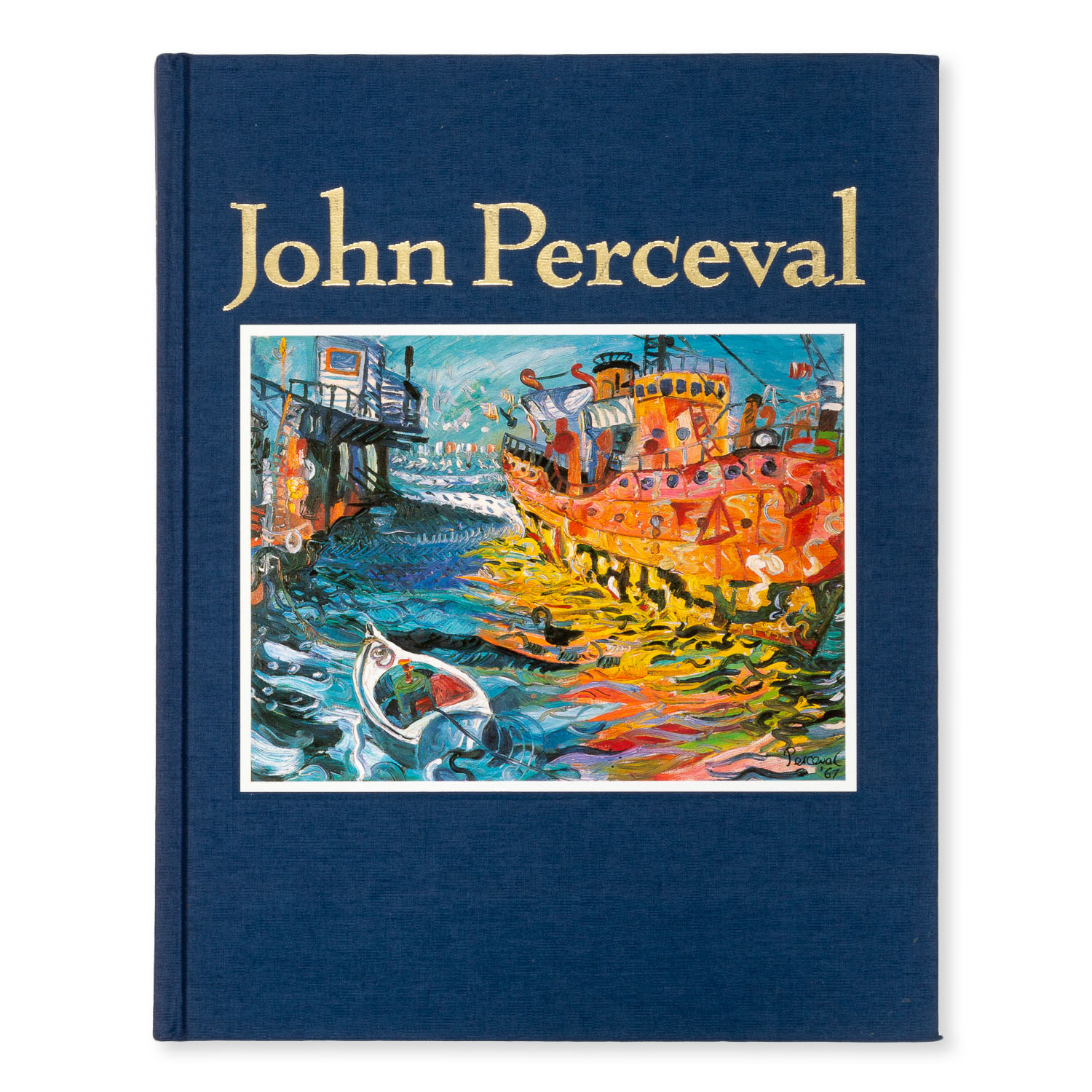
Perceval
continued with his art until his death in 2000. As the last of the original core
of the Antipodeans, Perceval death was considered a great tragedy.
Prior to his death Scudding Swans (1959) sold for $552,500, a
record for a living Australian painter. Perceval is survived by his four
children, all of whom
Celia
Perceval,
Tessa
Perceval and Matthew Perceval are practicing artists today.
|
|
|
|
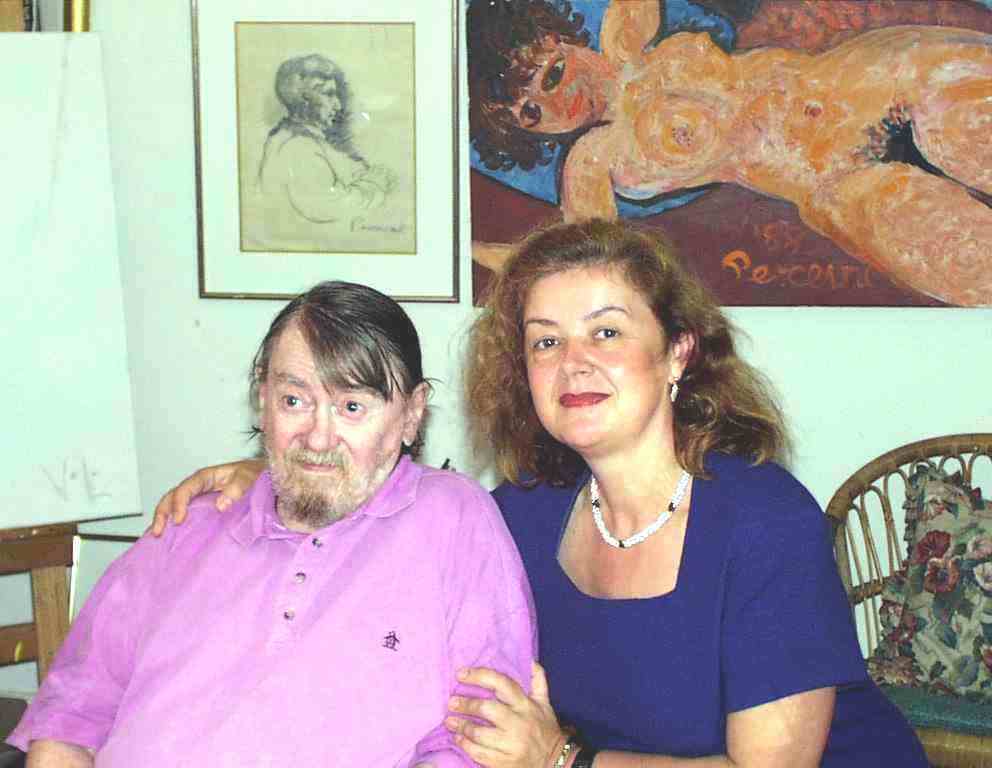
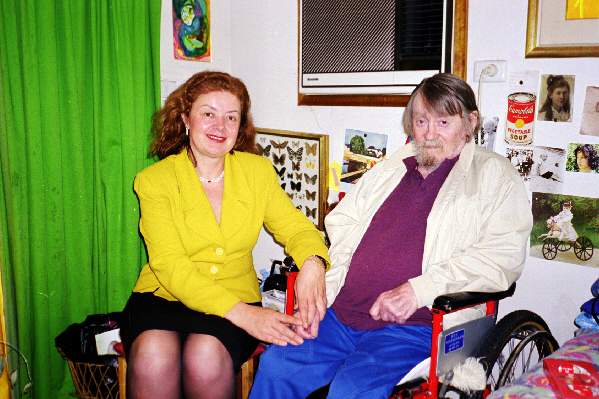
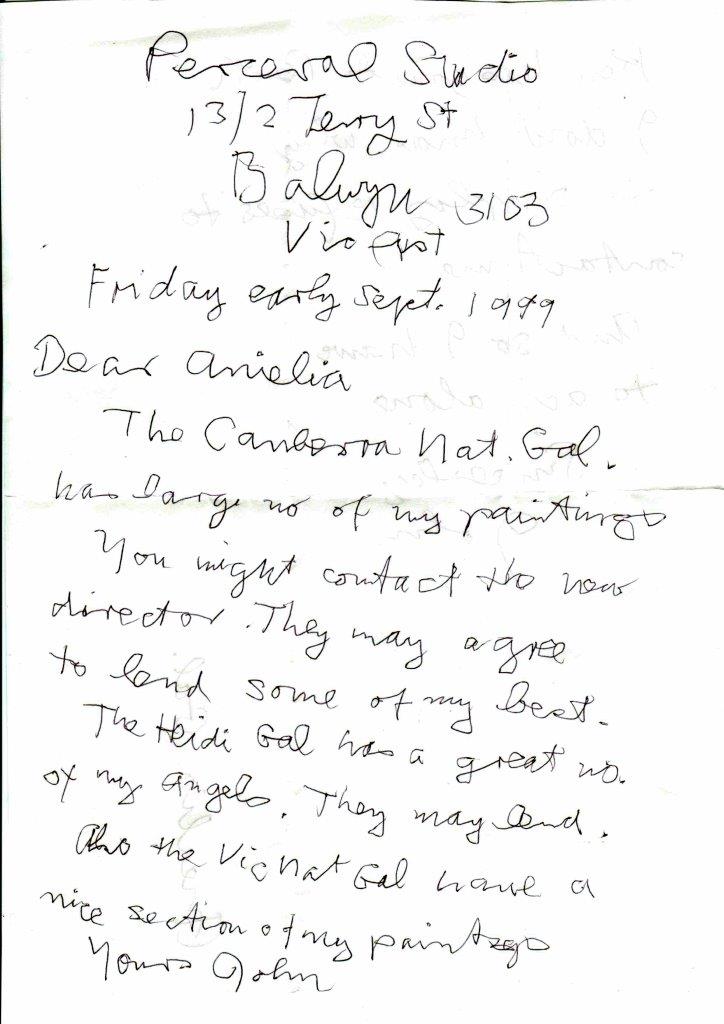
Photo 1999: John Perceval and Aniela
at the
Melbourne
Studio
of John Perceval
|
|
|
|

Galeria Aniela
provides an
independent
professional
consulting
and brokerage service with
experienced guidance
and
support
that others are unable to match, representing
clients best interest in the
Art Market
from the point of the
investment
value,
quality and
provenance,
shipping worldwide.
Founded in 1994,
Galeria Aniela Fine Art Gallery
and
Sculpture Park
built
a strong
standing
in
Australia and globally,
hosted and
exhibited
world-class
artists
and received
international
celebrities including
David Attenborough, Cameron
O’Reilly,
the Australian Prime Minister
Hon.
Bob Hawke
and more.
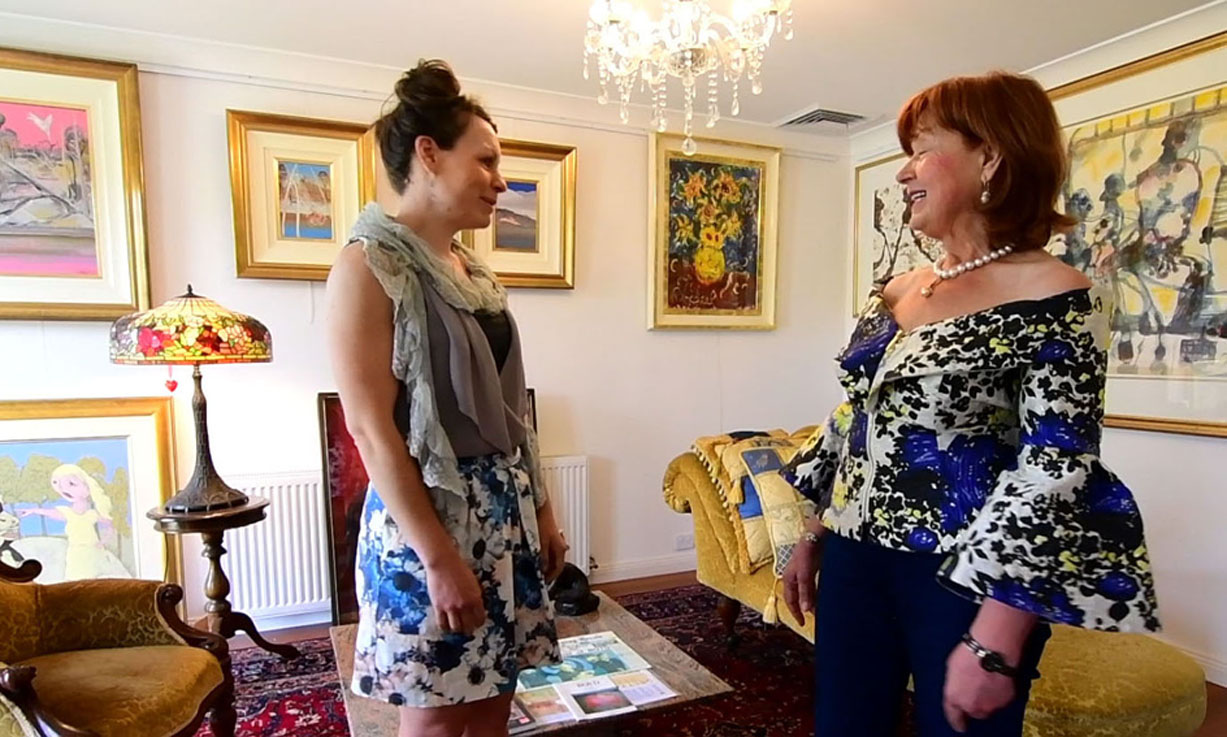
video Galeria Aniela Fine Art consulting and brokerage service
At Galeria Aniela, Fine Art
refers to
high-quality
works by
renowned
artists.
Combining a wide network of resources with the
expertise in the
Australian
art and
Global
art market, Galeria
Aniela assists clients in all aspects of dealings in
fine art,
helping save time and money.
Whether you are a first-time buyer, an astute investor
or enthusiastic collector, our people focused approach
ensures an enjoyable and rewarding experience.
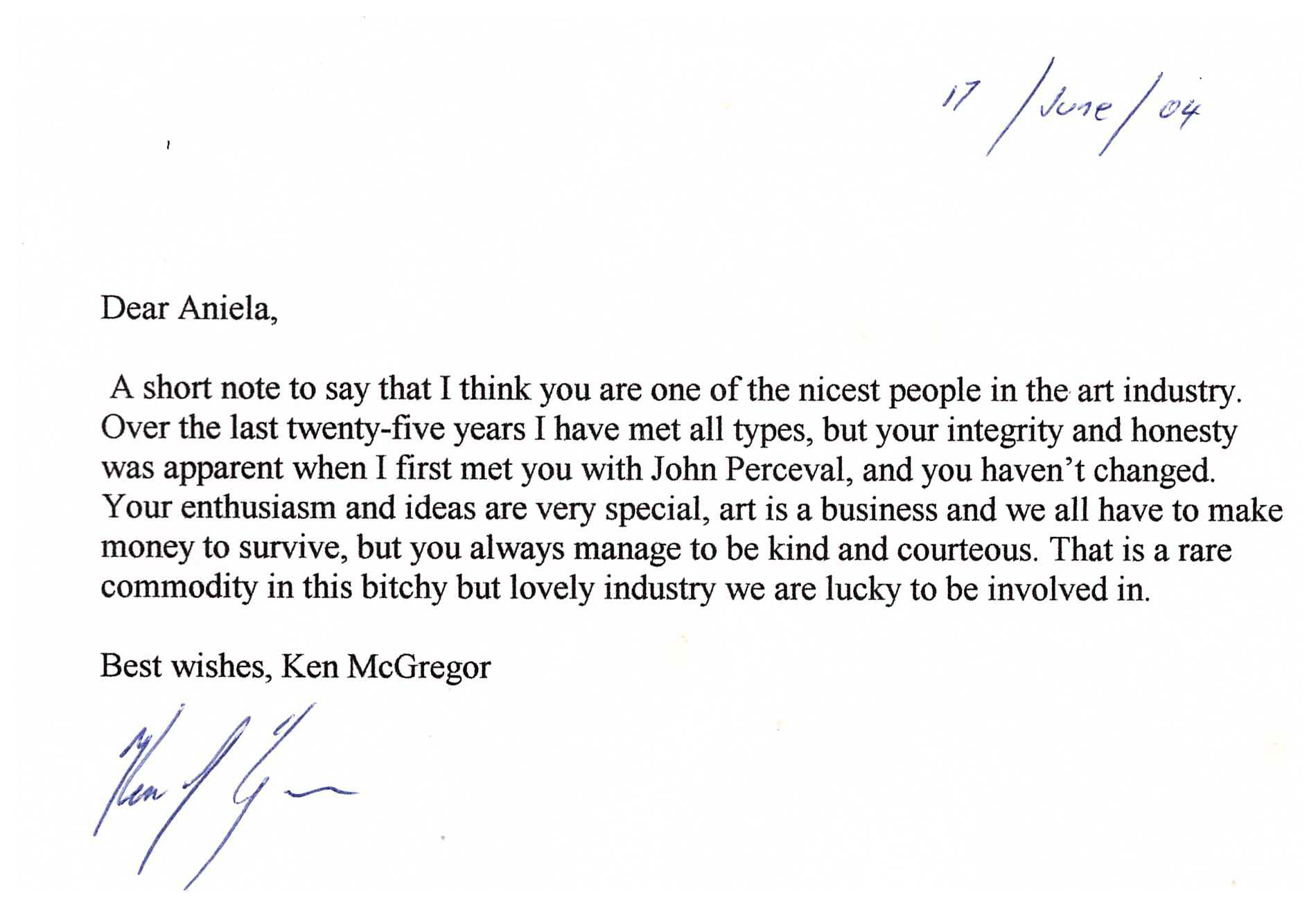
Testimonials
We welcome the opportunity to speak with you, please
feel free to
contact
us
to discuss ways in which Galeria Aniela can assist you
now and in the future.
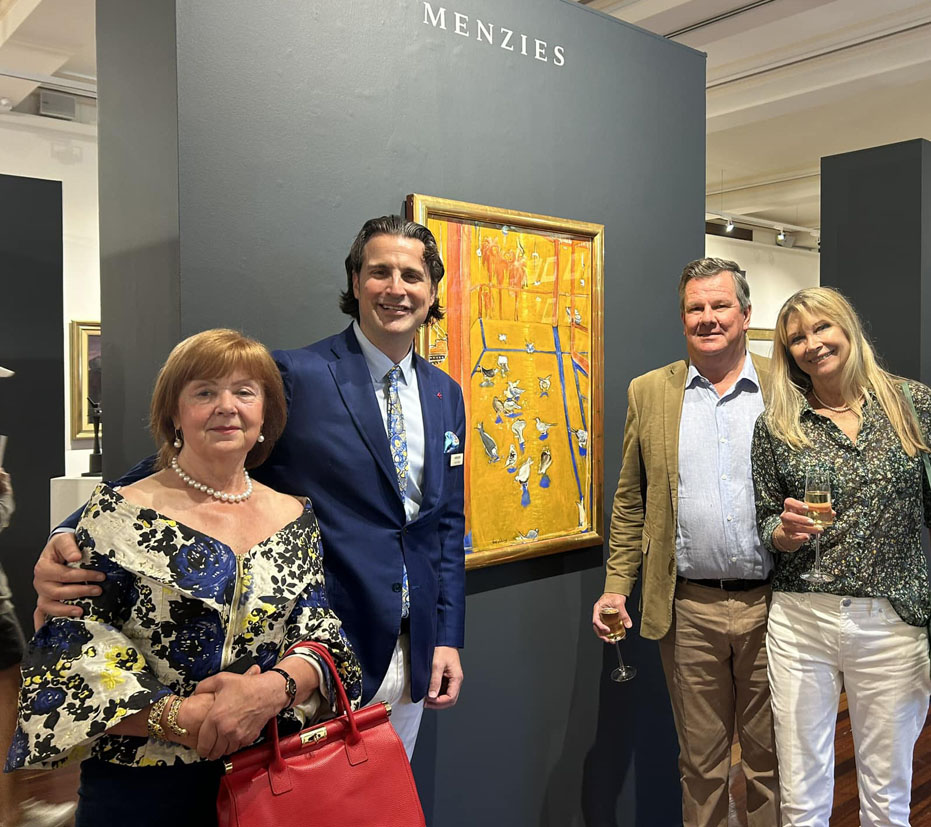
If you consider selling work of
Arthur Boyd,
Brett Whiteley,
Fred Williams,
Guy Boyd,
John Perceval, Charles Blackman,
Garry Shead,
John Olsen,
Arthur Streeton
or another significant work of fine art, please
contact us.
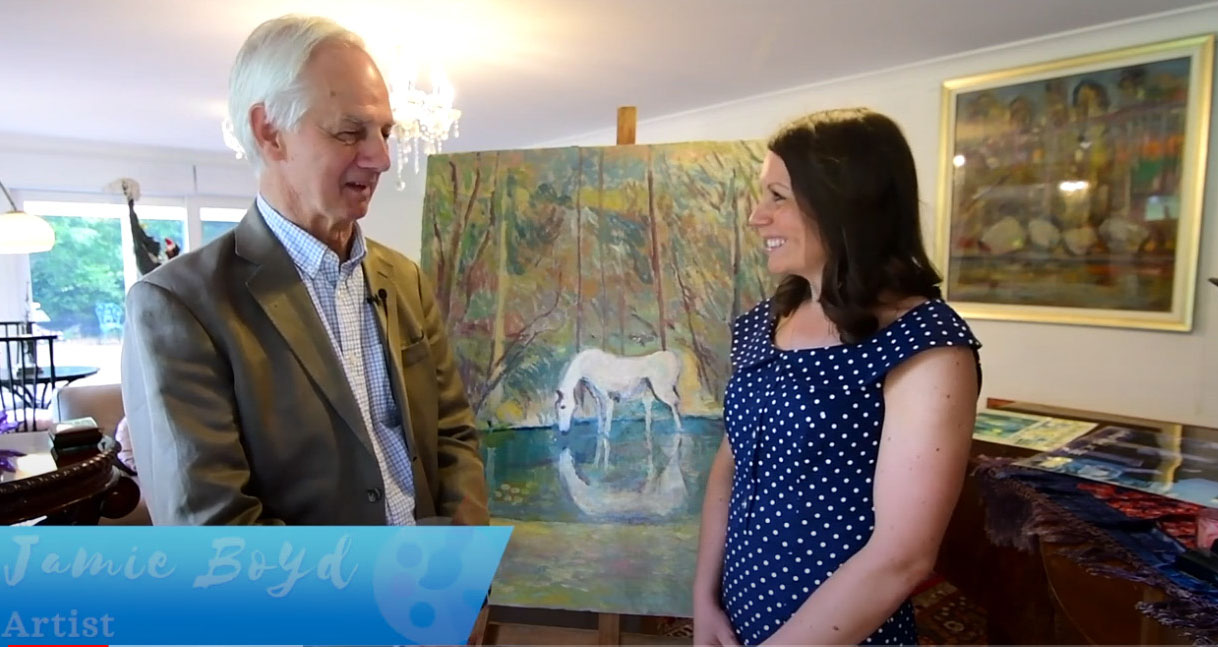
Video Jamie Boyd, the Boyd family most important LIVING artist
The
BOYD family
exhibition
in Galeria Aniela coup the
front page
Sydney Morning Herald,
Australian National NEWS ABC TV
and
Sunday Afternoon ABC TV.
John Perceval Retrospective won
the Australian
National NEWS ABC TV and
Charles Blackman Retrospective conquer
Australian
Art Scream
SBS TV.
Works of art live for generations, constantly reborn in the minds of
the beholders to bring new meanings, new dreams, new ways of seeing
and experiencing the world. Be part of this magic world of amazing
fine art from the ocean of tranquillity to
concur
the heart, mind and soul.
The vision of Galeria Aniela is to increase the awareness of Australian
artists
cultural contribution. With passion for art, hard work and dedication, we strive
for high ideals to create a better future for the arts.
When you purchase Art from
Galeria Aniela ,
you make a valuable contribution to our mission of helping artists to make a
living with their creations and together we make a difference.
|
|
|
|
|
|
 HOME
HOME.jpg)