|
Galeria Aniela offers
helpful information as a guide only for art lovers and collectors
who buy art for the
pleasure it gives.
|
|
|
|
Buying
art
ABOUT
LAY-BY
Superannuation
Tax Deduction
If you love
Art of
impeccable
provenance,
the
ART
you want is at
Galeria Aniela
Ideally buying a work of art you love
for the
pleasure it gives,
should always take precedence over a 'pure' investment.
A carefully selected quality work of ART
of impeccable
provenance
is worth the price you
pay and may
become one of your most enjoyable and viable investments.
Galeria Aniela offers a range of
professional services that others are unable to match.
We can
find
for you
a specific artwork, helping you to save time and money.
Galeria Aniela nurture
buyers regardless of wealth and status, advising on purchases according to your
individual interest and taste, and also may offers
an interest
free
lay-by.
Caution
is important when buying fine art.
To avoid
making costly mistakes,
purchase ART
of
impeccable
provenance
from a
reputable art-dealer.
Quality Control
 Galeria Aniela strongly discriminates quality
and provides assured
quality-control. Galeria Aniela strongly discriminates quality
and provides assured
quality-control.
We are the last bastions where serious connoisseurship meets
commercialism.
We
recognize the importance of the buyer's confidence in purchasing a
work of art
of impeccable
provenance.
We advise for the collector and
the investor on starting, forming and building-up art collections.
Whether you are a first time buyer,
an art-collector or a strategic investor, we are committed to
provide you with a friendly, clear advice.
Our
people focus approach ensures an enjoyable and rewarding
experience.
|
|
|
|
the PRICE OF ART
 Artists
set fair prices on their creations individually by the merit (it is
little to do with the costs of materials and labour required in
making). Artists
set fair prices on their creations individually by the merit (it is
little to do with the costs of materials and labour required in
making).
By pricing their work, artists aspire to make a living with their
creations and create unbiased market values.
Once an artwork is get to the hands of the first buyer, its
commercial value is largely determined by the principle of supply
and demand, but it can be managed by the gallery the artist is
represented or the artist's primary dealer.
By doing the gallery can participate in the pricing works by artists
gallery represents.
Galeria Aniela supports the artist's prices so the artists can make
living with their creations.
When you purchase at Galeria Aniela you get a work of art of
impeccable
provenance that is
genuine, original and unique.
Artworks of late artists are traded at individual prices in the
prevailing art collector’s opinion. History play the essential role
of supplying attribution, establishing opinion and authenticating
what is offered on the market - see
prices famous
artist's paintings.
 No
different than any market, a work of art is a commodity for which a
market is created and maintained by financially interested parties.
The market value of the art item is derived from its exchange value,
the price a buyer pays for the artwork. No
different than any market, a work of art is a commodity for which a
market is created and maintained by financially interested parties.
The market value of the art item is derived from its exchange value,
the price a buyer pays for the artwork.
Individual works of art are traded at individual prices. The value
placed on one artwork by the World Art Market may differ from the
critical value placed on the similar artwork or the same work at
different time and location. The price of work of outstanding rarity
and quality can exceed all reasonable expectations.
Auction prices cannot be assumed to fairly represent the artworks
value. You have to develop your eye for quality and use your own
sense of art value.
Prices of art fluctuate and may differ by significant factor and
vary from item to item even by the same artist and size, in the
prevailing opinion of a collector. No two objects are exactly the
same, prices and values vary being particular to each object and
other factors which all affect prices - such as the artist's
standing, the artwork's condition,
provenance,
and exhibition history. Also other seemingly unrelated
elements may affect the artwork value - see
appraisal
guidelines.
|
|
|
|
 Art plays very important role in cultures of any society. Whether
music, paintings or sculpture, is evident that Art, has huge impact
and in a positive way it affect persons mood, emotions, can make us
feel happier, calmer, or inspired. Art plays very important role in cultures of any society. Whether
music, paintings or sculpture, is evident that Art, has huge impact
and in a positive way it affect persons mood, emotions, can make us
feel happier, calmer, or inspired.
How art benefit humanity?
Art has emotional power, it influences humanity by changing
opinions, instilling values and translating experiences across space
and time.
Art affects the fundamental sense of self, and is considered to be
the source of humanity’s collective memory. We can learn about
ourselves
and others through art.
 Art
benefits building self-esteem it helps development and increase
human
Connectivity, Plasticity, Tolerance, Empathy and Feelings of Love
and Encourages Creative Thinking. Art
benefits building self-esteem it helps development and increase
human
Connectivity, Plasticity, Tolerance, Empathy and Feelings of Love
and Encourages Creative Thinking.
Why art is important?
Art has real value to societies it stimulates economy and creates
employment (i.e. museums, cafes and restaurants, National & Regional
galleries, art-books, magazines, art critics, transport, shops,
accommodation etc.)
We benefit from the artists legacy. Artists are the most giving
human beings. They create works or art with generosity of spirit
giving us enjoyment, Relieve Stress, Boosts Self-Esteem and
Provide a Sense of Accomplishment.
|
|
|
|
fakes
Be
vigilant
important
Caution when buying fine art
To avoid
costly mistakes, we
encourages collectors to
buy artworks
of
impeccable
provenance
from dealers and galleries that deals with the
artist.
Verification, inclusion in
publications, is an absolute essential, ideally leading all the way
back to the
artist.
Bargain
hunting clouds the judgment, exposing
susceptible shoppers
to unscrupulous sellers that offer artworks that are misrepresented
and of questionable provenance including bogus art.
By all means shop around and compare prices, quality
and provenance, as it alters price by significant factor.
Judge each piece for its own merits. However,
too great preoccupation with the price is often
counter-productive.
Some buyers aim to
save themselves a commission or
may aspire to spot a 'Sleeper’, a
Misattributed
Masterpieces That Earn Millions
instead may
acquire a
fake art.
A sleeper is defined as an artwork that has been undervalued and
mislabeled due to an expert's oversight and consequently is
undersold at auction. Accordingly, the art object is introduced into
the public art market under a wrong label.
What is
fake art? Art forgery is creating and selling of artworks which
are falsely credited to other, usually more famous artists.
'Stories about the prevalence of fakes, shady sellers,
unreliable auction practices.’
(Sydney Morning Herald, 23/08/2014) http://johnmcdonald.net.au/2014/melbourne-art-fair-2014/
Christie’s and the forger’s art of deception: fake painting sold to
the Australia Club in Sydney http://www.dailytelegraph.com.au/news/nsw/christies-and-the-forgers-art-of-deception-fake-painting-sold-to-the-australia-club-in-sydney/news-story/71e2e72c4b6c2dcac5df0a0e065bc2bd
The
former owner of a painting is suing Sotheby's after it was later
claimed as a £10 million Caravaggio http://www.telegraph.co.uk/culture/art/art-news/11190852/Man-who-sold-painting-for-42000-sues-auction-house-after-it-was-later-claimed-as-10m-Caravaggio.html
Tucker fake shines light on Christie’s and art world mismanagement
http://www.afr.com/lifestyle/arts-and-entertainment/tucker-fake-shines-light-on-christies-and-art-world-mismanagement-20150112-12mjh9
German Art Dealer Busted Trying to Sell Fake Giacometti Sculpture
https://news.artnet.com/art-world/giacometti-forgery-fraud-court-296471
‘Fake’ pop art sold at top Nordic auction house http://www.thelocal.se/20150513/fake-pop-art-sold-at-top-nordic-auction-house



 RETURN TOP
|
|
|
|
auction
market Selling art
The Secondary
Art Market
selling art
If you consider selling work of
Arthur Boyd,
Brett Whiteley,
Fred Williams,
Jeffrey Smart,
Arthur Streeton,
John Perceval, Charles Blackman,
Garry Shead,
Guy Boyd
or other significant work of fine art, please
contact us.
What Is the Primary Art Market?
The
Primary Art Market
refers to the first-time purchase of artwork,
where
an artwork is sold for the first time, directly from an artist or a
gallery that is exhibiting the artist's work.
What Is the Secondary Art Market?
Once an artwork is sold on the
Primary Market,
it enters the Secondary Market.
The Secondary Art Market refers to the re-sale of artworks that
includes private selling or an auction. It allows collectors and
various players in the art world to resell artworks they own.
Handled
by dealers and auction
houses,
the
Secondary Art Market provides opportunities for art collectors and
art investors (buyers and sellers).
Art Auction GLOSSARY
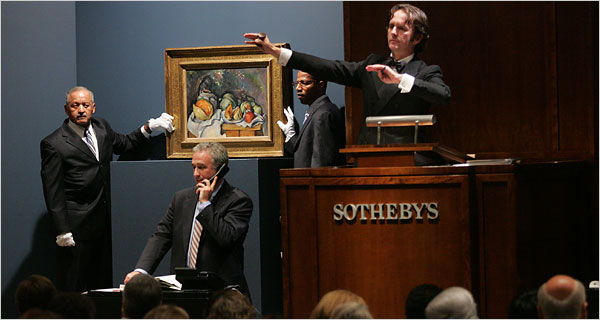
Reserve price
is
the price agreed by the seller for an item
sold at
the lowest to sell.
Estimates
are placed strategically low to attract all bidders,
auction house art specialists provide a free initial estimate of its
auction value.
Vendor commission is
paid by the vendor as the fee for the sale, up to 25% of the hammer
price.
Hammer Price
is
the winning bid for the artwork (Lot) at art-auction. It is the
price upon which the auctioneer's hammer falls, determining the
buyer's sale price.
Buyer's premium
is
paid by the buyer up between 20% and 25% is charged in addition to the
hammer price.
GST
is
paid by the buyer, it is the goods and services tax (GST is 10% in
Australia) it is a value-added tax levied on most goods and services
sold for domestic consumption.
Insurance
is
paid by the vendor, auction houses provide secure storage and full
insurance for the items throughout the auction process insurance fee
can also be charged on top of the hammer price. In
the event that a art lot does not sell, the reserve price is used to
determine fees.
Shipping Fee
is
paid by the vendor and in the event that a lot does not sell the
reserve price is used to determine the fee.
Copyrights Fee
is paid by the vendor.
Generally Viscopy Copyright for reproduction in an auction catalogue
starts from
AU $360 per artwork.
Re-sale Royalty
A 5% royalty is payable to visual artists on
re-sales of their work on the second transfer of ownership after 9
June 2010.
RE-SALE ROYALTY
is
paid by the vendor
5 % of the hummer price. Under the Resale Royalty Act a seller must
pay a 5% royalty on the resale price for re-sales of works that are
re-sold after June 2010. Act 2009 came in to effect in 2010, June,
8th.
However for artworks sold and created before 9 June
2010, the royalty is not payable on a FIRST re-sale (if the first
transfer of ownership occurs after 9 June 2010.
Example: A work completed in 2002 sold in 2008 and
"re-sold" in December 2018 is the first transfer of ownership after
8 June 2010 and the artist is not entitled to a re-sale royalty. The
next re-sale will the second transfer of ownership will attract the
re-sale royalty.
HANDLING FEE
some auctions charge the vendor a handling fee and
in the event that a lot does not sell, the reserve price is used to
determine the fee.
Consigning -
Art specialist
will advise you on the appropriate estimates and reserve for
your artwork, as well as associated costs including vendor
commission, illustration and copyright fees if applicable.
If you decide to proceed, you will be provided with a
Consignment Agreement form to sign.
Withdrawal of
property -
Without any prior notice to the Vendor,
Auction houses reserves the right to withdraw from sale the property
or to have the property listed at any auction.
What happens after the auction
Settlement -
after the sale, you receive an after-sale advice listing
the final bid price.
If your artwork is sold, you will be sent payment for the sold
artwork approximately 35 days after the sale, provided that the
money has been paid by the buyer and the funds cleared.
A summary of the sale include the cost of the commission, insurance
and other fees that will have been taken out of the hammer price.
All Charges for
Sold artworks are invoiced after the sale, all pre-sale
agreed fees
must be paid (for example, shipping, insurance,
Copyright fees, vendors
commission
and handling fees.
If Unsold -
In the event that a
lot does not sell, the reserve price is used to determine the vendor
fees.
In the event that your artwork failed to sell, you receive a
notification that it was bought-in to be returned to you, or
you may be given the option of re-offer your artwork in an upcoming
auction as well as adjusting the estimate and reserve price.
All Charges for
Unsold
items are invoiced after the sale and
agreed pre-sale
fees must be paid (i.e. shipping,
insurance, Copyrights fees, handling costs
etc).
|
|
|
|
Art purchase as a legitimate tax
deduction
TAX
DEDUCTION
Tax advantages are changed regularly, to
satisfy yourself please seek professional assistance to check the
latest details.
Work environment
requires artworks on premises
to be attractive,
that
includes business and home office.
The addition of the artwork to any office space makes the environment
healthier and more attractive.
Beyond enhancing almost any type of decor, artworks can also become a viable investment.
Art
purchases
may
qualify
to bring Tax deductions including
some
business expense
expenditure.
A business-owner can spend reasonable
amounts of money on artworks for the workplace and in many cases can expect to
take advantage of a tax write off.
Common tax
deduction when Buying & selling art
There are instances in which a person who buys or sells
artwork can take advantage of tax deductions and write offs.
The most commonly used 'write offs' that relates to artworks involves a
deduction when a person sells a work of
art
that has dropped in value since the initial purchase. The seller may
qualify for a tax deduction or 'write off' based on the difference in
value of the artwork.
Business tax advantages are changed regularly so verify it with your
accountant.
A Loan To purchase
A LOAN may reduce your tax bill, the
interest of your loan is deductible also, the Expenses related to the
loan like (advertising, agent commission, improvement, cleaning, repair
restoration, framing, insurance, legal fees on the purchase as well as
the sale, travel expenses).
If
you decide to rent your art then your expenses may be claimed from the
date the art investment first became available for rent.
Interior Design
If you are involved in
interior design and you purchase artwork with the idea of using it on
behalf of a client, that purchase normally will be considered a
legitimate business expense. Therefore, you likely will be able to write
off or deduct the cost of such artwork from your profits. Keep in mind
that when you use the artwork in a decorating project, or when you sell
the artwork to a client, any money you earn for that sale above and
beyond what you paid for the artwork originally will be considered
income for your business.
Although there are ways in
which artwork can be used as a means to obtain a tax write off or
deduction, the primary focus of purchasing, selling or trading in art
cannot be tax-related. There are ways in which purchasing, holding and
ultimately selling art can be a solid investment plan. However, in the
majority cases, significant tax write off associated with art ownership
is not an essential element of that type of investment.
|
|
|
|
Superannuation
SUPERANNUATION
Fine Art is 'Super Good'
Works of art and the self-managed superannuation
funds (SMSFs) please check the latest release of regulations by the Australian Taxation
Office
Works of art can be one of a premier assets. Collecting art is
enjoyable, satisfying and can be financially rewarding experience,
in both the short term and the long term.
Fine art
often has
a better rate on return than other investments.
When
setting an investment strategy, it is wise to seriously consider a
work of art as an asset in your Do-It-Yourself-Super-Fund and
purchase a quality work of art from your superannuation fund.
For
collectors looking at diverse tax arrangements we give an
opportunity to purchase a top-quality art as an alternative
investment strategy instead of juggling percentages of your supper
funds between 'Cash', ‘shares’ 'Local Equities', 'International
Equities', 'Bonds' and 'Real Estate'.
As fine art appreciate, a
carefully selected work of art may produce good increase in value.
It is wise to channel a percentage of your funds into an asset that
will have capital appreciation as not all of your assets ought to
return revenue on an annual basis.
|
|
|
|
Lay-by
Price-Lock
LAY
BY
A method of
a purchase in which the purchaser pays
regulars installments.
The selected artwork
is set aside until is fully paid. The
purchaser
collects the artwork when is fully
paid -
shipping worldwide
LAY-BY benefits
No Interest,
No service fee, No transaction fee.
Deposit
25% of the purchase price
Payments
Regular monthly bank-transfers payments
Late payment
Additional 15% can be
charged
unless a prior arrangement is made
Returns
purchased artworks
are excluded from being returned
Exchange
purchased artworks are
excluded from being exchanged
Cancellation
purchased artworks are excluded from cancellations
C hange of mind
Artworks purchased are
excluded from a change of mind
Purchased artworks are excluded from returns, exchanges, refunds,
cancellations and a change of mind.
When you purchase a
work of art from Galeria Aniela we immediately pay the artist,
helping artists make a living with their creations.
|
|
|
|

Galeria Aniela
Fine Art
provides an
independent
professional
consulting
and brokerage service
that others are unable to match,
representing
clients best interest in the
art market
from the point of the
quality,
investment
value
and
provenance.
Founded in 1994, Galeria Aniela Fine Art Gallery
and
Sculpture Park
has built
a strong standing in
Australia and overseas,
exhibiting world-class artists
and hosting
international
celebrities including
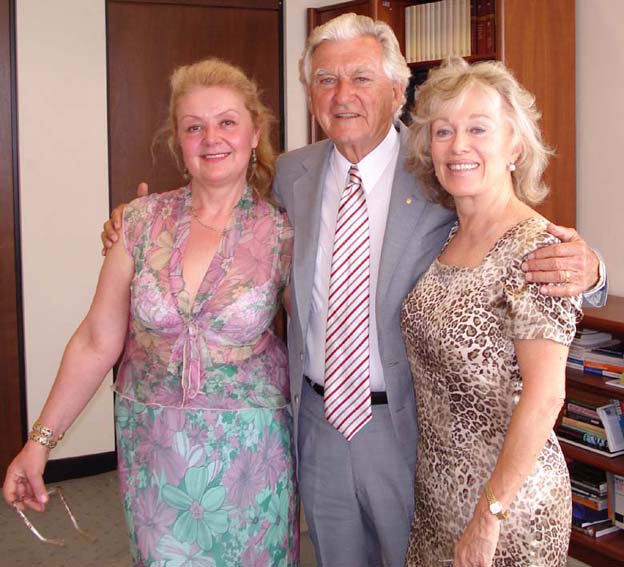
Sir David Attenborough, Cameron
O’Reilly
and Robert
James (Bob)
Hawke the Prime Minister
of
Australia.
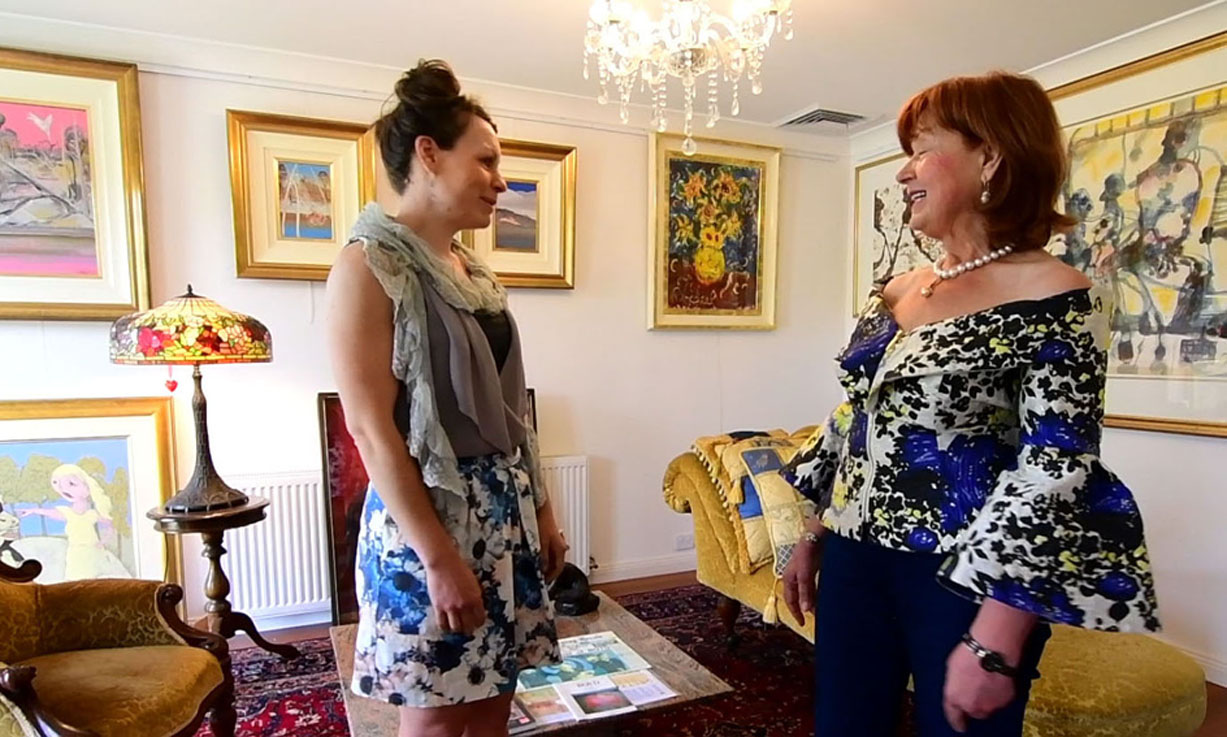
video Galeria Aniela Fine Art consulting and brokerage service
Combining a wide network of resources and
expertise in the
Australian
art and
Global
art market, we assist
our clients in all aspects of dealings in
fine art,
helping save time and money.
Whether you are a first-time buyer, an astute investor
or enthusiastic collector, our people focused approach
ensures an enjoyable and rewarding experience.
We welcome the opportunity to speak with you,
feel free to
contact
us
to discuss the ways in which Galeria Aniela can assist you
now and in the future.
Testimonials
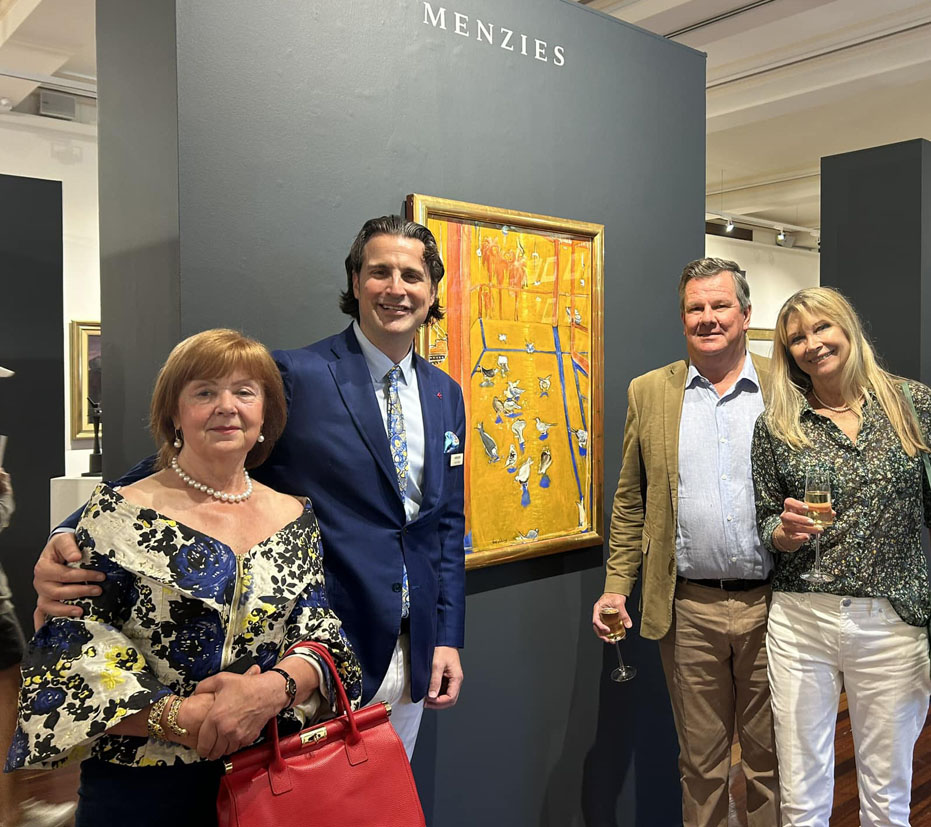
Photo
26 November 2023: (LEFT) Aniela and Cameron Menzies
at Menzies Art Brunch in Sydney
At Galeria Aniela, Fine Art
refers to
high-quality
works by
renowned
artists.
If you consider selling work of
Arthur Boyd,
Brett Whiteley,
Fred Williams,
Jeffrey Smart,
Arthur Streeton,
John Perceval, Charles Blackman,
Garry Shead,
Guy Boyd
or other significant work of fine art, please
contact us.
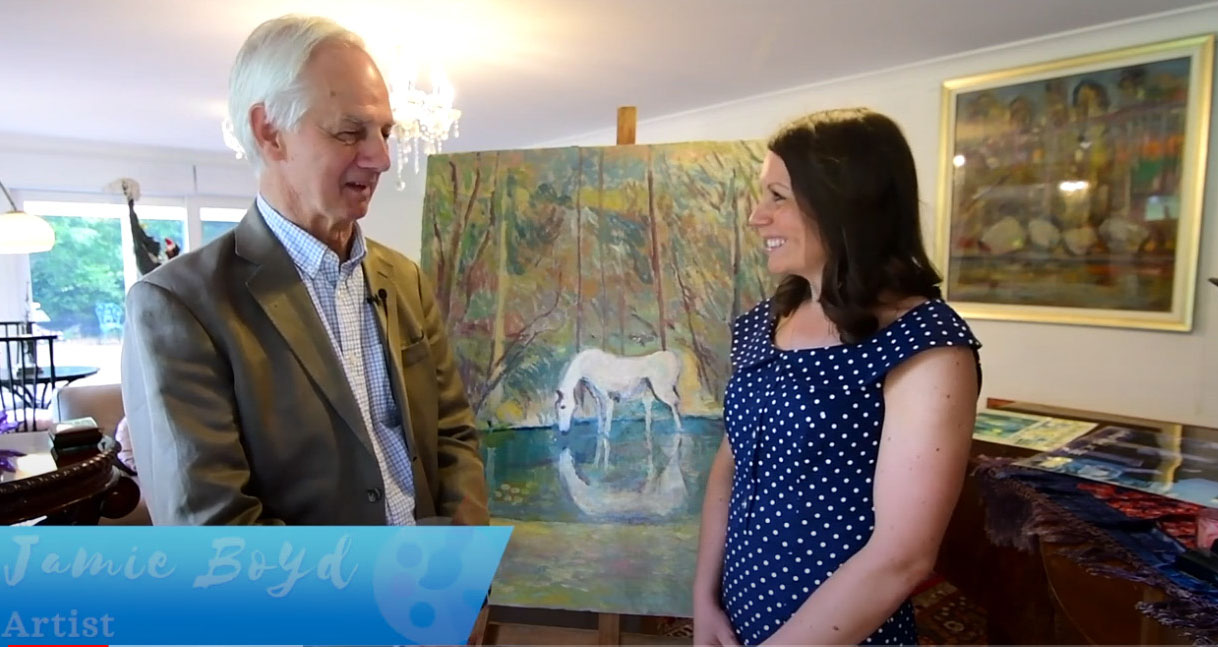
Video Jamie Boyd, the Boyd family most important LIVING
artist
The
BOYD
family
exhibition
in
Galeria Aniela Fine Art Gallery
and
Sculpture Park
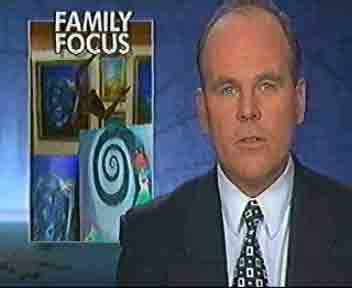
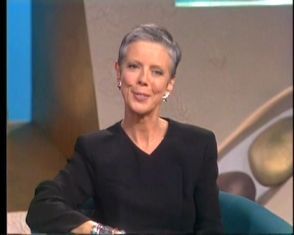
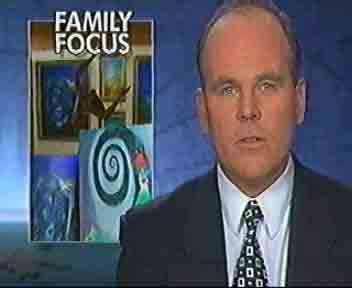
coup the
front page
Sydney
Morning Herald,
Australian National NEWS the ABC TV
and
Sunday
Afternoon the ABC TV.
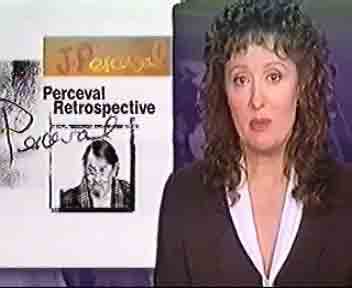
John Perceval
Retrospective conquer
the Australian
National NEWS ABC TV and
Charles Blackman
Retrospective won
Australian
Art Scream
SBS
TV.
Works of art live for generations, constantly reborn in the minds of
the beholders to bring new meanings, new dreams, new ways of seeing
and experiencing the world. Be part of this magic world of amazing
fine art from the ocean of tranquillity to
concur
the heart, mind and soul.
The vision of Galeria Aniela is to increase the awareness of
Australian
artists
cultural contribution. With passion for art, hard work and
dedication, we strive for high ideals to create a better future for
the arts.
When you purchase Art from
Galeria Aniela,
you make a valuable contribution to our mission of helping artists
to make a living with their creations and together we make a
difference.
|
Fine Art is one of the
most enjoyable and viable
essential
investments
to wellbeing
|
| |
|
Contact-us
Copyright
Disclaimer |
|
 World’s Local Fine Art