home

about us

contact us

artists

buying art and investing

payment and delivery

please be patient while the page loads

www.galeriaaniela.com.au    261A Mt Scanzi Road Kangaroo Valley NSW 2577 Australia  T: +612 4465 1494            disclaimer

Brett Whiteley (1939 – 1992) biography

Click to on the image to enlarge


Click to enlarge

 
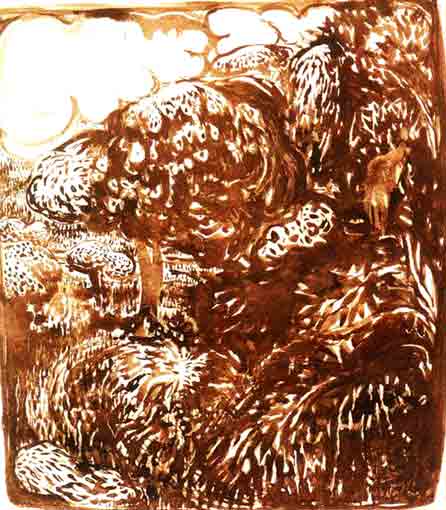
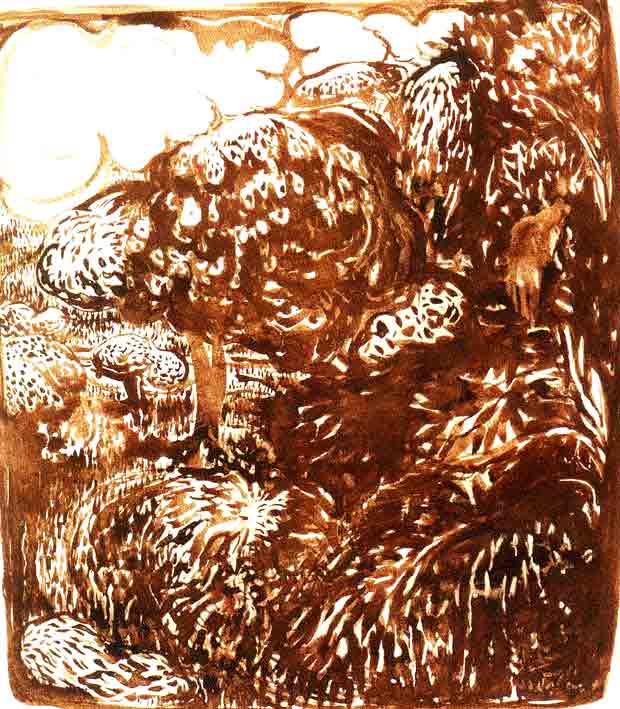
‘Garden 1975’ is a rare, museum quality beautiful original Whiteley painting from the period of his international artistic acclaim done at the pick of his artistic career. A characteristic Whiteley, unique and without equal perfect painting of his stunningly beautiful garden with exceptional attention to details, Whiteley characteristic graceful swirling strokes, exemplary elegant shapes and pleasing to the eye his skilful distinctive flowing lines.

Artist: Brett Whiteley (1939-1992)
Title:  Garden, 1975
Medium: ink on paper
Image size: 85 x 75 cm
Signed lower right: BW (
Brett Whiteley)
Artist's stamp upper left
lower right inscribed 21/07/75 'Further glimpsing [sic] in Garden'
Provenance:
Robin Gibson Gallery, Sydney
Corporate collection, Victoria
Sotheby's, Sydney, 7 May 2007, lot 73
Private collection, NSW


Price: $110,000 AUD

Convert Currency

Whiteley recent sales

The garden is like a drawing said Wendy Whiteley

Brett Whiteley (1939– 1992)
is one of the most important Australian painters of the twentieth century
. With the pinnacle Whiteley artistic career 1975 to1980. Artworks from the period his final years 1983-1985 were uncompleted and remain at the studio in Surry Hills, before his death 15 June 1992.

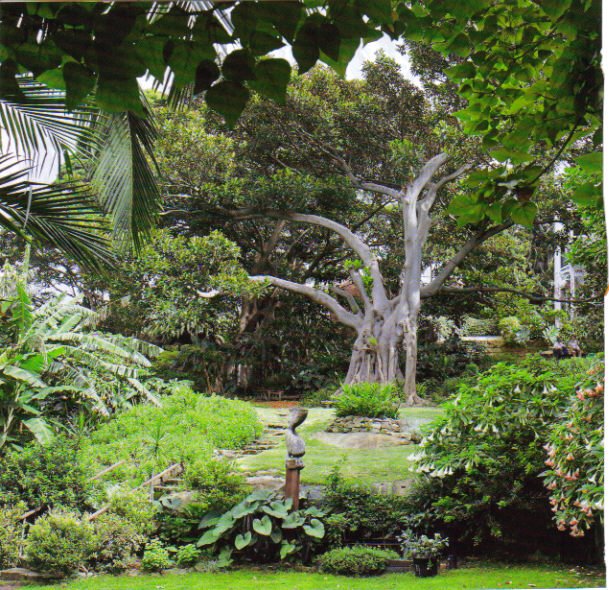
Whiteley 'Garden'  (left) was inspired by the beautiful garden at Lavender Bay. The garden is like a drawing' say Wendy Whiteley, the widow of the great Australian artist.

NOTE: Whiteley prime creative years are from 1973 to 1980. Garden 1975 is a typically Whiteley  hybrid (painting/drawing) with the swirling curvatures repetitive patterning that would seem to suggest the ongoing influence of van Gogh's visionary style. This exquisite high-quality, original Whiteley artwork is from the pick of his artistic career. It is a superb work with exceptional attention to details, graceful elegant shapes and pleasing to the eye skilful flowing lines inspired by his garden of Sydney's north shore.
 

Brett Whiteley (1939–1992) is one of Australia's most revered and the most important painters of the twentieth century. His lyrical expressionism and lack of inhibition placed him at the forefront of Australia's avant-garde art movement.  Famous for his utterly exceptional draughtsman skills, he attracted the international recognition . He won many Australian prizes  and international Art Awards 1975-1978 and his work hangs in many galleries, including the National Gallery of Australia in Canberra, the Tate Gallery in London and the Museum of Modern Art in New York  and major collections around the world.
 

click on the image
All prices are in Australian $ AUD. Prices may change without a prior notice please contact us, to purchase visit how to pay. 
Galeria Aniela sell items only of impeccable provenance and quality, recognizing the importance of a client confidence in buying authentic original art. We provide a professional service and we give an informed advice with an opportunity to purchase a high-quality work of art by some of Australia's most important artists. Our people focused approach ensures that everyone has an enjoyable and rewarding experience.  
 

The GARDEN of Wendy - Brett Whiteley (1939– 1992)

The garden is like a drawing said Wendy Whiteley"The garden is like a drawing" says Wendy Whiteley.

Wendy Whiteley is the widow of the great Australian artist Brett Whiteley AO (1939– 1992), and the garden isn't officially hers.

A stunningly beautiful garden, hidden away down near the water, at Lavender Bay, North Sydney. Random benches in quiet spots, secluded paths, and a spectacular view to the Sydney Harbour Bridge. Luscious tree ferns, robust palm trees and a Moreton Bay fig are highlights. And the birdlife has returned, to Wendy's delight.

Wendy's artistic talent is evident in the garden. A natural wonderland, a rainforest of sorts, now sits below her Lavender Bay home and stretches along the harbour towards Milsons Point.

Whiteley garden:
Australian Story - Wendy Whiteley 6 Sep 2004;
http://www.abc.net.au/austory/content/2004/s1193966.htm

Threat to secret Whiteley garden - Government - News | Mosman Daily

scroll down to view more garden

Wendy's Secret Garden

The garden it's now known as "Wendy's Secret Garden'' to the locals. Wendy Whiteley developed the garden over a period of years in most the beautiful way, following the death of her husband Brett, 53, in 1992 and her daughter, Arkie, 35, in 2001. The garden located near the railways was in disarray and the railways helped her to remove the larger bits of junk, and old train carriages.

Wendy Whiteley observes that “you can go two ways with grief”, I could have given up and slid into an abyss of depression, or become suicidal…..I just felt an overwhelming desire to do something positive…doing something creative, right here, would be the most freeing thing I could do”. Despite knowing little about planning a garden, Wendy was undeterred.  "I don't get daunted by things,'' Wendy said. "I have an obsessive personality which can be good or bad, depending where you direct you obsession".

"It's like I need some big leaves here because these other ones are all scritchy and scratchy you know, and these things will flower so you will get a bit of colour but this won't. I used to read the labels (on the plants) and it said this plant needs sun so don't put it under the coral tree because it will die.''

LEFT: Wendy Whiteley

Wendy's Secret Garden Whiteley garden below Wendy's Lavender Bay home and stretches along the harbour towards Milsons Point.

Whiteley garden below Wendy's Lavender Bay home and stretches along the harbour towards Milsons Point.205/365 Wendy Whitley's Secret Garden (Lavender Bay, Sydney)

Brett Whiteley Studio, 2 Raper Street, Surry Hills T: (02) 9225 1740. Open 10-4pm Saturday & Sunday. Entry is free. See www.brettwhiteley.org.

The Brett Whiteley Studio Gallery is managed by the Art Gallery of New South Wales and was bequeathed by the estate of Brett Whiteley upon his death. Brett Whiteley was one of Australia's most famous modern artists.
His extensive body of paintings and sculptures are held in major collections around the world including the Tate in London, the Museum D'Art Moderne in Paris and the Museum of Modern Art in New York.

 
Brett Whiteley AO (1939–1992), one of the most important Australian painters of the twentieth century. "Garden 1975" is a brilliant ink on paper, a characteristic Whiteley, with his typical pleasing to the eye skilful flowing lines, an exemplary elegant shapes graceful swirling strokes and exceptional attention to details.

Artist:    Brett Whiteley (1939– 1992) AO
Title:      Garden 1975
Medium: original ink on paper
Image Size: 85 x 75 cm
Framed size: 122 x 108 cm
Signed lower right:  BW (Brett Whiteley)
Artist's stamp upper left
Date inscribed lower right: 21/7/75
Artist's stamp lower right
Further glimpsing [sic] in 'Garden'

Brett Whiteley AO (1939–1992), one of the most important Australian painters of the twentieth century is represented in Australian National and International galleries including Tate Gallery, London, Museum of Modern Art, New York and major collections around the world. An acknowledged genius, Whiteley is famous for his skill as a great Master-draughtsman.

"Garden 1975" is a brilliant ink on paper, a characteristic Whiteley, with his typical pleasing to the eye skilful flowing lines, an exemplary elegant shapes graceful swirling strokes and exceptional attention to details.

Whiteley painted "Garden" in 1975 at the pick of his artistic career when he met the critical acclaim 1975-1978 wining international art awards and major  Australian art Awards attracting the international recognition.

View
Whiteley history sales
ABC-net: Whiteley painting sells for record prices


prices may change without a prior notice, to buy contact us   


Disclaimer:
Nothing in this document should be taken as a recommendation to acquire art. Forecasts, projections, current and historical art prices, and statements of opinion contained in this document and our site are only statements of presently held beliefs. They may prove inaccurate. The past performance is not always indicative of future performance and neither art galleries nor Galeria Aniela or Sotheby’s and auction houses its subsidiaries nor do its associated companies either directly or indirectly guarantee a return. You ought to satisfy yourself with its accuracy and completeness through inspections, surveys, inquiries, searches, tests, and seek your own independent knowledge. Seek consultants and representatives, financial and legal advice. You must not rely solely on the information provided. You ought to build up your own independent knowledge, follow your heart and keep your own independent thinking.
Brett Whiteley Biography 1939 - 1992
 

Brett Whiteley AO (7 April 1939 – 15 June 1992) an Australian artist is one of the most famous Australian painters of the twentieth century. Whiteley is known for his skill as a great draughtsman, had many shows in his career, and travelled extensively around the world. Brett Whiteley is represented in all Australian National galleries. He is one of the most important and best loved Australian artists, Whiteley painting sells for record price, his original paintings have sold for many millions dollars.

Famous Works: The Soup Kitchen 1958, Red Painting 1960, Alchemy 1972-73, Self Portrait the Studio 1976, The Jacaranda Tree (Sydney Harbour) 1977
Visible Influences: Francis Bacon, Amedeo Modigliani, Henri Matisse, Chinese Calligraphy.
Movements & Styles: Whiteley is known for his skill as a great draughtsman. Surrealism in majority of his work and abstraction in his early  career.

Whiteley
produced mostly landscapes, nudes and still lives, portraits, cityscapes, and erotic works also abstract works in early in his career.

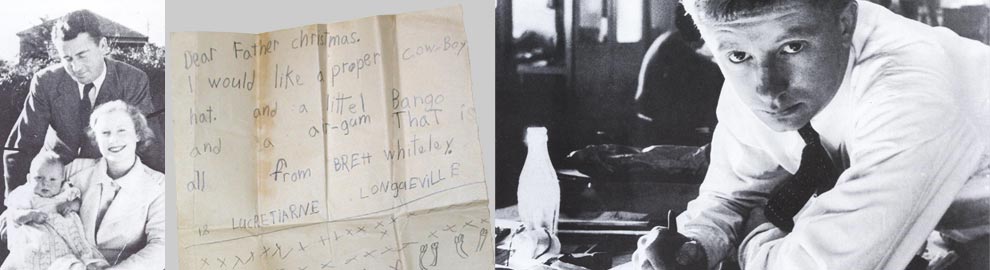
Whiteley born in 1939 in Sydney, New South Wales, grew up in Longueville, a harbourside suburb in north Sydney. By the age of seven had won his first art competition. He was sent to boarding school at Scots College, Bathurst and in 1956 was awarded first prize in the Young Painters' section of the Bathurst Show. He left school mid-year and took night classes in drawing at the Julian Ashton Art School in Sydney while holding down a job at an advertising agency.

Whiteley 1939 59

Brett Whiteley is now one of the most famous Australian painters of the twentieth century. Whiteley painting sells for record price.

Brett Whiteley died 15th of June 1992, is the most famous for semi-surreal landscapes, gardens with views of Sydney and nudes. Whiteley's topics also  included portraits, still lifes, birds and abstracts. The Sydney based artist created paintings, drawings and sculpture.  Brett Whiteley was inspired by singers like Bob Dylan and lived the lifestyle of a rock star. He was married to the beautiful Wendy Whiteley who was his "Muse" for a number of years though he lived fast and hard. Whiteley searched for a muse in drugs, just as many rock stars had done before him, but ultimately it was this lifestyle that shortened his life and career.

Awards:
1961 Dyason Bequest, AGNSW;
1961 International Prix at the 2nd Bienalle, Paris
1964 International Drawing Prize, Darmstadt, Germany
1964 Perth Festival Art Prize, Australia
1975 Sir William Anglis Memorial Prize, Melbourne
1976 Archibald Prize for 'Self Portrait in the Studio'
1976 Sulman Prize for 'Interior with Time Past'
1977 Wynne Prize for 'The Jacaranda Tree'
1978 Wynne Prize for 'Summer at Carcoar'
1978 Sulman Prize for 'Yellow Nude'
1978 Archibald Prize for 'Art, Life and the Other Thing'
1984 Wynne Prize for 'South Coast After the Rain'
1991 Awarded the Order of Australia (OA)


Educated at The Scots School, Bathurst and The Scots College, Bellevue Hill, Brett Whiteley started drawing very early in life. While a teenager, he painted on weekends at Bathurst and Sydney with such works as The Soup Kitchen (1958). In 1960, Whiteley left Australia on a Travelling Art Scholarship (judged by Sir Russell Drysdale at the Art Gallery of New South Wales). One of the works he submitted to win the scholarship was Sofala, which he had painted in 1956; it was done in images which were slightly abstracted in brownish colours. After winning the scholarship he travelled around Europe, visiting Italy, France and England. He arrived in London at a time when many Australian artists were becoming popular in England. During this period, there was a fascination with Australian art there, and Australian artists were looked on favourably by the English public. Australian artists Arthur Boyd, Sidney Nolan and Russell Drysdale had become well known and were exhibiting in London, as well as many other Australian artists who were also there.

After meeting the director of the Whitechapel Gallery, he was included in the group show 'Survey of Recent Australian Painting' where his Untitled Red painting was bought by the Tate Gallery. This made him the youngest artist ever to have been bought by the Tate, and it was this fact which helped him to have even more success, such as when he won the first prize for Australia at the Biennale de la Jeunesse in Paris. During the next few years he had much contact with artists in London and in travels to other parts of the world, and it was these friendships and contacts which helped him to become an accepted artist.


LONDON

In 1960, aged 21, Whiteley left Australia on a Travelling Art Scholarship (judged by Sir Russell Drysdale at the Art Gallery of New South Wales), and by 1961 had settled in London where his work was shown at the Whitechapel and Marlborough galleries. In London he met many other painters, including fellow Australians, Arthur Boyd and John Passmore.
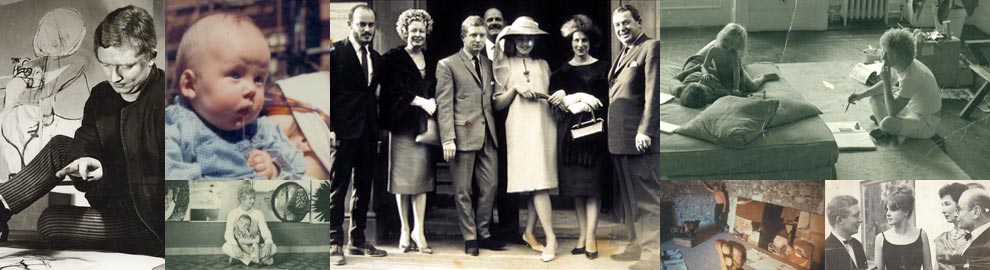
Whiteley 1960's


In 1962, he married Wendy Julius and their only child, daughter Arkie Whiteley, was born in London in 1964. While in London, Whiteley painted works in several different series: bathing, the zoo and the Christies. His paintings during these years were influenced by the modernist British art of the sixties - particularly the works of William Scott and Roger Hilton - and were of brownish abstract forms. It was these abstracted works which established him as an artist, right at the time when many other Australian artists were exhibiting in London. He painted Woman in Bath as part of a series of works he was doing of bathroom pictures. It has primarily black on one side and an image of his wife Wendy in a bathtub from behind. Another in the series was a more abstracted Woman in the Bath II, which owed a debt to his yellow and red abstract paintings of the early sixties.

In 1964, while in London, Whiteley was fascinated by the murderer John Christie, who had committed murders in the area near where Whiteley was staying at Ladbroke Grove. He painted a series of paintings based on these events, including Head of Christie. Whiteley's intention was to portray the violence of the events, but not to go too far in showing something which people would not want to see. During this time, Whiteley painted works based on the animals at the London Zoo, such as Two Indonesian Giraffes, which he found sometimes difficult because of how much the animals would move. As he said: "To draw animals, one has to work at white heat because they move so much, and partly because it is sometimes painful to feel what one guesses the animal 'feels' from inside." (Whiteley 1979: 1) Whiteley also made images of the beach, such as in his yellowish painting and collage work The Beach II, which he painted on a brief visit to Australia before his return to London and his winning of a fellowship to America.

Whiteley appears as a character in the book Falling Towards England by Clive James under the name Dibbs Buckley. Wendy appears as "Delish."
 

New York

In 1967 he exhibited at the Pittsburgh International Carnegie Institute in the United States and was awarded the Harkness Foundation Scholarship. He lived in New York for 18 months and returned permanently to Australia in 1969 after a brief stay in Fiji. His reputation grew world-wide with his success in winning the international prize at the second Biennale de Paris (International Biennale for Young Artists) in 1962, the same year he had his first one-man exhibition at the Matthiesen Gallery. Around this time he married Wendy Julius at a Chelsea Registry Office in London, a marriage that would last for over 25 years. Whiteley's painting developed rapidly during his time overseas. His abstract and fluid style turned increasingly to figuration, and his paintings became laced with images of sex and violence. His work began to incorporate collage elements such as fibreglass shapes and photographs. He exhibited widely during these years, including in Australia, France, Belgium and Italy.

When in 1967 Whiteley won a Harkness Fellowship Scholarship to study and work in New York he met other artists and musicians while he lived at the Hotel Chelsea. His first impression of New York was shown in the painting First Sensation of New York City, which showed streets with fast moving cars, street signs, hot dog vendors, and tall buildings. One way that America influenced him is the scale of his works. He was very much influenced by the peace movement at the time and came to believe that if he painted one huge painting which would advocate peace, then the Americans would withdraw their troops from Vietnam. Still fairly young, Whiteley was idealistic and caught up in the great peace movements of the 1960s, with the protests against America's involvement in the war in Vietnam. The work was called The American Dream, it was an enormous work that used painting and collage and anything else he could find to put on the 18 wooden panels. It took up a great deal of his time and effort, taking up about a year of working on the piece full time. It started with a peaceful dreamlike serene ocean scene on one side, that worked its way to destruction and chaos in a mass of lighting, red colours and explosions on the other side. It was his comment on the direction the world would be headed and his response to a seemingly pointless war which could end in a nuclear holocaust. Many of the ideas from the work may have come from his experiences with alcohol, marijuana and other drugs. He believed that many of his ideas have come from these experiences, and he often used drugs as a way of bringing the ideas from his subconscious. He sometimes took more than his body could handle, and had to be admitted to hospital for alcohol poisoning twice. Around him at the Hotel Chelsea, other artists and musicians took heroin, which Whiteley did not take at that time. The painting which was finally produced was made of many different elements, using collage, photography and even flashing lights, with a total length of nearly 22 meters. However Marlborough-Gerson, his gallery, refused to show this work which he had been working on for about a year, and he was so distraught that he decided to leave New York, and he 'fled' to Fiji.
 

Fiji
Whiteley made paintings in Fiji of the people, similar to the way that Paul Gauguin had travelled to Tahiti to paint native people and culture in the nineteenth century. Whiteley painted the native people of Fiji, such as in Fiji Head - to a creole lady which incorporates text as well as a downward looking portrait. During his time in Fiji, he started painting birds, which were a source of great beauty for him, and which he enjoyed painting. Whiteley had experience in painting animals from his zoo series in London. A stylized image of a bird he painted, "Orange Fruit Dove Fiji", shows the bird looking towards fruit on a plant, while it is sitting on its nest with eggs shown below.

Whiteley 1970's

In 1972 he began work on Alchemy and by the following January it was complete. It was exhibited at the Bonython Gallery in Sydney. This incredible work was interpreted as an allegory of life's journey, from birth to death, and the ultimate transmutation. He exhibited at The World Expo in Washington in 1974 and, ominously, stated in an interview to Philip Adams that he had 'moved from alcohol to more serious mind altering chemicals'. Whiteley's acclaim continued to grow throughout the seventies and eighties. In 1975 he was awarded the Sir William Angliss Memorial Art Prize. In 1976 he won his first Archibald Prize with Self-portrait in the studio and the Sir John Sulman Prize for Interior with Time Past (genre painting). In 1977 he won the Wynne Prize for The Jacaranda Tree (On Sydney Harbour), and in 1978 became the only Australian artist ever to claim the Archibald, Sulman and Wynne art prizes - a unique treble.

Whiteley Success with Archibald and other prizes
In the late 1970s Brett Whiteley had great success with the Art Gallery of New South Wales, winning all of their major prizes twice. These were the Archibald, Wynne and Sulman prizes, considered the most prestigious art prizes in Australia.


Sydney Harbour and landscapes
By the beginning of the seventies Whiteley was involved with The Yellow House artist's community in Potts Point, Sydney and was seen as one of the leading lights of the avant-garde art movement.

Whiteley loved painting Sydney Harbour views in the 1970s such in his painting Interior with time past, which shows an interior and exterior view starting with a room that leads through open windows to the harbour full of boats outside. The table in the front of the room close to the viewer has minutely decorated vases and small objects, while a drawing on the left and a sculpture to the extreme right show how Whiteley often used erotic images in his works. He painted a view of his friend Patrick White as a rock or a headland in Headland; White had told Whiteley that in the next life he would like to come back as a rock. Whiteley painted other images of the Australian landscape, including a view of the south coast of New South Wales after it had been raining called South Coast After the Rain. He did paintings of the areas around Bathurst, Oberon and Marulan, all in New South Wales. He soon settled in Lavender Bay. He painted abstracted images of bush scenes such as The Bush and also images which resulted from experimentation with various drugs, such as alcohol in the humorous Self Portrait after three bottles of wine.


 Brett Whiteley Art Awards:
1961 Dyason Bequest, AGNSW;
1961 International Prix at the 2nd Bienalle, Paris
1964 International Drawing Prize, Darmstadt, Germany
1964 Perth Festival Art Prize, Australia

1975 Sir William Anglis Memorial Prize, Melbourne
1976 Archibald Prize for 'Self Portrait in the Studio'
1976 Sulman Prize for 'Interior with Time Past'
1977 Wynne Prize for 'The Jacaranda Tree'
(On Sydney Harbour)
1978 Wynne Prize for 'Summer at Carcoar'
1978 Sulman Prize for 'Yellow Nude'
1978 Archibald Prize for 'Art, Art, Life and the other thing
1978 -  Sulman Prize: Yellow Nude
1978 -  Wynne Prize: Summer at Carcoar
In 1978 Whiteley was the only artist who won all three major prizes in one year and the first time ever that all Art prizes went to the one and the same artist.
                                                                                                      1984 Wynne Prize for 'South Coast After the Rain'
In 1991 Brett
Whiteley was awarded the Order of Australia ( AO).


Whiteley first Archibald win, Self Portrait in the Studio shows a view of his studio at Lavender Bay overlooking Sydney Harbour, with his reflection in a mirror shown at the bottom of the picture, while the painting is primarily a look at his studio, shown in deep, bluish tones. As with many of his works, the viewer is led deeper into the picture with minute detail, and a view of Sydney Harbour is on the left which establishes the location of the picture. These paintings along with some of the other works, show Whiteley's love for ultramarine blue, Matisse, for collecting objects and for a love of Sydney Harbour.

Whiteley second Archibald win, Art, Life and the other thing, again shows his willingness to experiment with different media such as photography and collage, and his respect for art history, including an image of the famous 1943 William Dobell portrait of Joshua Smith, which won a court case against people who claimed it was a caricature, not a portrait. He also experimented with warping and manipulating a straight self portrait and altering and distorting the image, incorporating his pictorial sense of addiction. Whiteley later won the Wynne Prize again, in 1984, with The South Coast After Rain

Whiteley was the subject of an ABC television documentary called Difficult Pleasure directed by Don Featherstone in 1989, which showed him talking about many of his main works, and his recent works such as ones done on a month long trip to Paris, one of his last overseas trips. He also showed his large T-shirt collection, and talks about his sculpture, which he said is an aspect of his work that many people do not take seriously. Difficult pleasure is how he described painting, or creating art: Art is an argument between what a thing looks like and what it means. Whiteley became increasingly dependent on alcohol and became addicted to heroin, leading to bouts of schizophrenia[citation needed]. Whiteley's work output began a steep decline, although its market value continued to climb. He made several attempts to dry out and get off drugs completely, all ultimately unsuccessful. In 1989, he and Wendy, whom he had always credited as his 'muse', divorced.

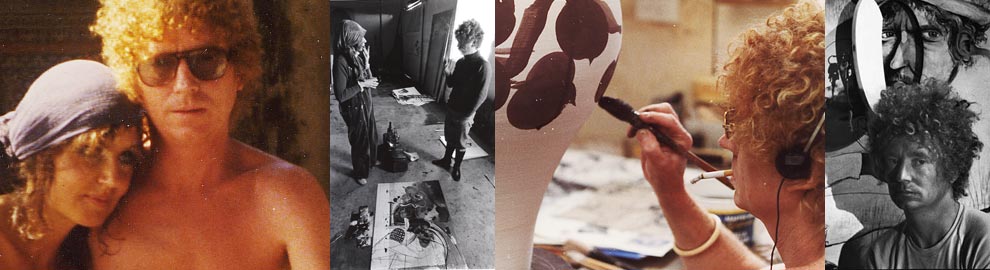
Brett and Wendy Whiteley with their daughter Arkie, 1980s www.smh.com.au-brettwhitelyWendy Whiteley at the opening of the Brett Whiteley Studio

Whiteley was awarded the Wynne Prize again in 1984, and the following year purchased an old T-shirt factory in Surry Hills, Sydney and converted it into a studio. Further renovations followed and in later years the downstairs gallery area was repainted and now houses changing exhibitions. In 1991 he was awarded the Order of Australia (General Division). In the last years of his life Whiteley travelled far and wide, taking in England, Bali, Tokyo, and spending two months in Paris in an apartment on Rue de Tournon. On 15 June 1992 he was found dead from a heroin overdose in a motel room in Thirroul on the NSW coast. The coroner's verdict was 'death due to self-administered substances'. He was 53 years old.


Brett Whiteley is one of Australia's most revered artists. His lyrical expressionism and lack of inhibition placed him at the forefront of Australia's avant-garde art movement. He won many prizes and awards and his work hangs in numerous galleries, including the National Gallery of Australia in Canberra, the Tate Gallery in London and the Museum of Modern Art in New York.
 

In the Queen's Birthday Honours of 1991, Brett Whiteley was appointed an Officer (AO) of the Order of Australia. On 15 June 1992, aged 53, he was found dead from a heroin overdose in a motel room in Thirroul, north of Wollongong. The coroner's verdict was 'death due to self-administered substances'.

In 1999, Brett's mother Beryl Whiteley founded the Brett Whiteley Travelling Art Scholarship in memory of her son.

In 1999, Whiteley's painting The Jacaranda Tree (1977), which had won the Wynne Prize, sold for $1,982,000, a record for a modern Australian painter.

In 2007 his painting The Olgas sold for an Australian record of $3.5 million. On 7 May 2007, Opera House, (which took Whiteley a decade to paint, and which he exchanged with Qantas for a period of free air travel) sold for $2.8 million, in Sydney.

Whiteley collections

Collections represented

All public state galleries, regional Australian galleries including

 www-flickr-comwww.abc.net.au  www-portrait-gov-au www-artgallery-nsw-gov-au Brett Whiteley Aboriginal-inspired mural. (ABC Western Plains: Aimee Volkofsky)

Selected Awards

1961 Dyason Bequest, AGNSW
1961 International Prix at the 2nd Bienalle, Paris
1964 International Drawing Prize, Darmstadt, Germany
1964 Perth Festival Art Prize, Australia
1975 Sir William Anglis Memorial Prize, Melbourne
1976 Archibald Prize for 'Self Portrait in the Studio'
1976 Sulman Prize for 'Interior with Time Past'
1977 Wynne Prize for 'The Jacaranda Tree'
1978 Wynne Prize for 'Summer at Carcoar'
1978 Sulman Prize for 'Yellow Nude'
1978 Archibald Prize for 'Art, Life and the Other Thing'
1984 Wynne Prize for 'South Coast After the Rain'
1991 Awarded the Order of Australia (OA)


ABC-TV Stateline segment
Brett Whiteley Travelling Art Scholarship
view now

Source: The Sun-Herald.

Below is the image at: www.smh.com.au/.../2007/06/13/1181414384035.html

Below is the image at: www.news.com.au/story/0,23599,21731414-2,00.html

Below is the image at: www.theage.com.au/.../12/11/1197135454993.html

Below is the image at: www.abc.net.au/rn/talks/bbing/stories/s647142.htm

Below is the image at: www.smh.com.au/.../2007/04/18/1176696914384.html

Below is the image at: www.artgallery.nsw.gov.au/.../2003_BWTAS_winner

Below is the image at: www.podfrey.com/The_Brett_Whiteley_Gallery-de...

 Below is the image at: australianscreen.com.au/.../difficult-pleasure/

Below is the image at: www.abc.net.au/.../2008/11/13/2418893.htm

Below is the image at: www.brettwhiteley.com.au/whats_on/tas_winner

Below is the image at: www.smh.com.au/.../2007/11/10/1194329560576.html


References

  • Hopkirk, F. (1996) A portrait of Brett Whiteley by his sister. Random House, Milsons Point, Sydney

  • James, B. (2000) Whiteley with words, Art Gallery of New South Wales, Sydney

  • McGrath, S. (1979) Brett Whiteley. Bay Books, Rushcutters Bay, NSW.

  • Pearce, B. Robertson, B. & Whiteley, W. (2004) Brett Whiteley Art & Life. Thames & Hudson Ltd., London

  • Smith, Bernard; with Terry Smith & Christopher Heathcote (2001). Australian Painting 1788-2000. Melbourne, Vic: Oxford University Press. pp. 630p. ISBN-13: 978-0195515541. 

  • Whiteley, B. (1983) Another way of looking at Vincent Van Gogh. Richard Griffin Publisher, South Melbourne

  • Whiteley, B. (1979) Zoo. Pegasus books, Melbourne.

  • Wilson, G. (2001) Select works of Arthur Boyd & Brett Whiteley. Bundanon Trust, West Cambewarra, NSW

Biography Summary

1939
Whiteley was born on the 7th of April in Sydney, Australia.
1946
Wins his first art competition, the Anual RSPCA exhibition held at Farmer's Blaxland Gallery. The work was titled "The Driver Sits in the Shade But What About the Horse?"
1948
Whiteley is sent to boarding school at Scots College, Bathurst.
1954
See's Australian painter Lloyd Rees's European paintings, exhibited at Macquarie Galleries, Sydney.
1956
Wins art award, Young Painters Section at the Bathurst Show in New South Wales. Whiteley leaves school and begins working at Lintas Advertising Agency, Sydney, in the layout and commercial art department.
Whiteley's mother Beryl Whiteley leaves Australia for London.
1956-1959
Meets his future wife, Wendy Julius from the National Art School East (Sydney) where Whiteley was also attending life drawing classes.
Attends various sketch clubs occasionally.
Converts a glasshouse at his family home into a painting studio.
Occasionally attends life drawing classes at the Julian Ashton Art School.
On weekends Whiteley paints landscapes around Bathurst, Sofala, Hillend and the South Coast of New South Wales.
Does sketches in the Sydney Soup Kitchen and Night Refuge, frequented by the poor and homeless.
1959
Leaves Lintas Advertising Agency to begin painting works for an Italian scholarship.
Wins the Italian Government Travelling Art Scholarship in November.
Judged by Australian artist Sir Russell Drysdale at the Art Gallery of New South Wales.
The works exhibited were Sofala, Dixon Street, July, and Around Bathurst.
1960
Whiteley arrives in Naples Italy on the 25th February.
Spends March through to May in Rome and Florence. Stays in an apartment in Rome near the Spanish Steps with Beryl Whiteley (mother).
Briefly visits Paris and London. Is selected to be in a group exhibition at the McRoberts and Tunnard Gallery in London after taking his portfolio around the galleries.
Meets up with Wendy in Paris on the 14th of June. After spending two weeks in Paris they return to his Florence Studio.
Exhibits work in the group exhibition at the McRoberts and Tunnard Gallery, London from the 20th July to the 1st of September. Sells three gouache paintings.
Travels around Italy to such places as Siena and Arezzo. Spend much time in the Uffizi Gallery absorbing work by artists from the 14th and 15th centuries (Cimabue, Duccio, and Piero della Francesca).
Travels to Venice in August with Australian artist Michael Johnson to view the Biennale and visits Morandi in Grizzana.

1961
Is awarded a grant under the Dyason Bequest from The Art Gallery of NSW. This grant allowed Whiteley to stay in London.
Works in Paris from September to October after being awarded the Arts Advisory Board Scholarship.
Awarded International Prix at the 2nd Bienalle, Paris.
Represents the Australian National Committee in June at the International Association of Plastic Arts, organized by UNESCO at the Meeting of Young Painters.
Three works selected for the "Survey of Recent Australian Painting" exhibition at the Whitechapel Art Gallery in London. Paintings include, "Untitled Red Painting (1960)", "Untitled White Painting (1960)", and "Untitled Dark Painting (1961)".
Meets the British artist Francis Bacon.
1962
Exhibits at the Stedelijk Museum in Amsterdam.
Exhibits at the Berlin World Fair in the Stuyvesant Collection, and travels to Baden-Baden, Stuttgart and to Venice for the Biennale.
Brett Whiteley marries Wendy Julius on the 27th of March at the Registry Office in Chelsea, London.
The newly married Whiteleys spend 5 months in the south of France in old farm houses at Sigean, then travelling onto Spain and Germany.
Travels to the United States, visiting New York, Connecticut, and Washington.
Whiteley meets the artists Willem deKooning.
Returns to London in November and moves into an apartment.
1963
Work on the large work "Summer at Sigean" for 6 months.
Starts work on the Bathroom series of paintings and drawings.
Work selected for the "Australian Painting" exhibition at the Tate Gallery in London. Painting were also hung in the "British Paintings in the 1960s" exhibition at the Whitechapel Gallery in London, that also toured Great Britain and Switzerland.
Clem Whiteley, the artist's father dies on May 3, aged 55.
1964
Awarded International Drawing Prize for "Bather and Heater (1964)", International der Zeichnung, Darmstadt, Germany.
Awarded travelling grant from The Stuyvesant Foundation.
Awarded the Perth Festival Art Prize, Australia.
Exhibits at the Whitechapel Gallery, London in "The New Generation 1964" exhibition.
Travels to Deya, Majorca.
Arkie Whiteley is born at StGeorge's Hospital in London on the 6th of November.
1965
Exhibited in De Hendendaagse Schilderkunst in Austalia, France, Belgium, Germany, and Italy.
Exhibits in the "Treasures from the Commonwealth" Commonwealth Festival exhibition, Burlington House, London.
Spends time in Deya, Majorca from June to July.
Exhibits work in "The English Eye" exhibition at the Marlborough-Gerson Gallery in New York.
Awarded the T.E. Wardle Invitation Art Prize, Perth, Australia.
Returns to Australia in December and spens time at Whale Beach, north of Sydney.
1966
Exhibits in an exhibition with British artist David Hockney and Australian artist Arthur Boyd.
Exhibited at Clune Galleries, Sydney with "The Zoo Graphics" series of works.
Included in an exhibition of the Mertz Collection "The Australian Painters 1964-1966" at the Corcoran Gallery of Art in Washington DC, USA.
Exhibits in "British Graphics" Museum Boymans-van Beuningen, Rotterdam.
Exhibits in a group show at Marlborough New London Gallery, London.
Exhibits in a group show at Palais des Beaux Arts, Brussels.
1967
Exhibits at Pittsburgh International Carnegie Institute, Pittsburgh, USA and is awarded the Harkness Foundation Scholarship.
Spends May to June travelling throughout Majorca, Tangier, and Madrid.
Moves into a penthouse apartment at the Chelsea Hotel, New York.
Exhibits in a group exhibition at the Whitechapel Gallery, London.
1969
Leaves New York in July for Fiji and lives in Navutuleva for 5 months.
Fined for possession of drugs in Suva.
Returns to Australia and moves into a home in Lavendar Bay, Sydney.
1970-72
Becomes involved with The Yellow House artist's community in Potts Point, Sydney.
1971
Exhibits in a group show "The Bonsai Show", Australian Galleries, Melbourne.
Rents the Gasworks studio in Waverton, Sydney.
1972
Begins work on the large "Alchemy" painting in February.
Exhibits n the "Australian Painters and Tapestries of the Past 20 Years" New South Wales House, London.
1973
Completes "Alchemy" in January and exhibits it at Bonython Gallery, Sydney.
Travels to Mauritius and Kenya in June.
1974
"..moved from alcohol to more serious mind altering chemicals" (Whiteley quoted from an interview with Phillip Adams.
1975
Awarded the Sir William Anglis Memorial Prize, Melbourne.
Included in the "Australian Painting" exhibition, China.
Moves from the Gasworks studio in Waverton to a downstairs studio in his Lavender Bay House.
1976
Awarded the Archibald Prize for "Self Portrait in the Studio".
Awarded the Sulman Prize for "Interior with Time Past".
1977
Awarded the Wynne Prize for "The Jacaranda Tree".
Spends march and april in London.
Stays with Australian artist Joel Elenberg at Arthur Boyd's Italian house, Casa Paletaio, in Pisa during August.
Travels to Venice, Florence, and Rome.
1978
Awarded the Wynne Prize for "Summer at Carcoar"
Awarded the Sulman Prize for "Yellow Nude"
Awarded the Archibald Prize for "Art, Life and the Other Thing"
Travels to Bali and New Caledonia.
Exhibits 4 works at the Cologne International Art Fair.
1979
Joel Elenberg shares Whiteley's Lavendar bay studio with him.
1980
Spends june to september in Bali with Joel Elenberg and his family. Elenberg dies.
1981
Moves in to studio at Reiby Place, Circular Quay, Sydney.
Spends November in Vanuatu.
1982
Travels to Spain, Germany, and France.
1983
Travels to Central Australia with Michael Driscoll and works on the publication Native Rose
1984
Brett is awarded the Wynne Prize at the Art Gallery of New South Wales with "South Coast After the Rain"
1985
Purchases an old Tshirt factory in Surry Hills, Sydney and converts it into a studio. (The Brett Whiteley Museum is now currently situated here)
1986
Arrives in India to meet Wendy at Bombay, then returns with to Australia.
1987
Travels to London
1989
Brett and Wendy Whiteley are divorced.
Spends from May to August in London and Morocco.
Stays in an apartment on Rue de Tournon, Paris and works on a series of drawings.
Travels to Bali, Tokyo, and Kyoto with girlfriend Janice Spencer.
1991
Awarded the Order of Australia in the Genral Devision.
1992
Brett Whiteley Dies in a hotel room in Thirroul, New South Wales. June 15.
After a long struggle with the drug heroin, Whiteley loses his battle with it and overdoses, alone in a hotel.


Selected Awards

1961 Dyason Bequest, AGNSW
1961 International Prix at the 2nd Bienalle, Paris
1964 International Drawing Prize, Darmstadt, Germany
1964 Perth Festival Art Prize, Australia
1975 Sir William Anglis Memorial Prize, Melbourne
1976 Archibald Prize for 'Self Portrait in the Studio'
1976 Sulman Prize for 'Interior with Time Past'
1977 Wynne Prize for 'The Jacaranda Tree'
1978 Wynne Prize for 'Summer at Carcoar'
1978 Sulman Prize for 'Yellow Nude'
1978 Archibald Prize for 'Art, Life and the Other Thing'
1984 Wynne Prize for 'South Coast After the Rain'
1991 Awarded the Order of Australia (OA)


home

about us

contact us

artists

buying art and investing

payment and delivery

invest in fine art - fine art is one of the most enjoyable and viable investments