|
Lenore BOYD
born 1953
|
|
If you love
Art of
impeccable
provenance,
the
art
you want is at
Galeria Aniela
|
|
Lenore Boyd, a renowned sculptor, is a Master in her discipline.
Lenore
has been influenced by work of
Auguste
Rodin,
Aristide
Maillol,
Michelangelo
Bourdelle and
her father
Guy Martin à
Beckett Boyd.
She
was an apprenticed for 4 years and
studied the
sculptural techniques in the studio of her father
Guy Boyd.
During
past 50 years Lenore Boyd produced a body of work held in
collections around the world.
Lenore Boyd has deep
appreciation and understanding of the human form. She was an artist in
Residence at Firbank Grammar School Brighton in 1995, a member of the
Association
of Sculptors of Victoria
and
Victorian
Artists Society
and conducted regular workshops. |
|
|
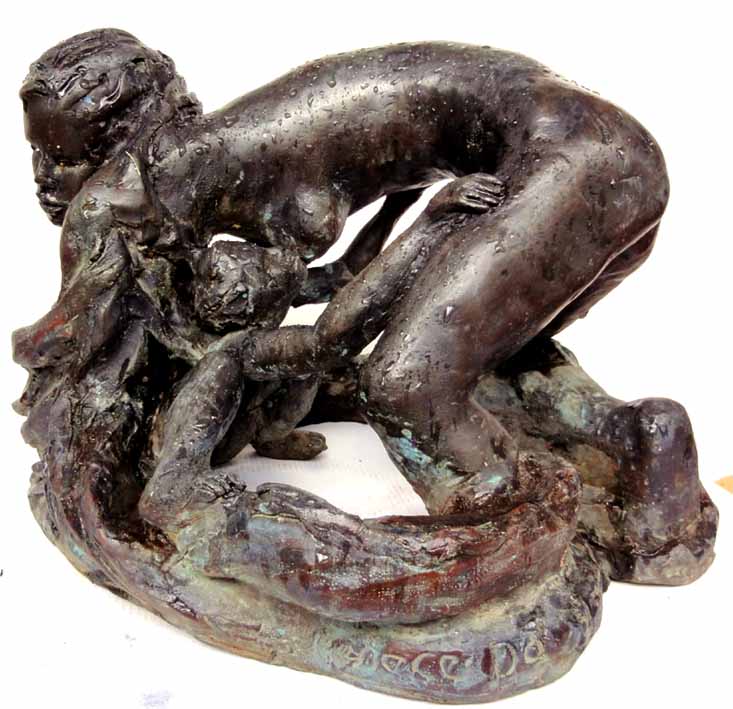
Mother Earth
ENLARGE
Bronze 7/12
Height: 26 cm by 38 cm
Price:
PURCHASE ENQUIRY |
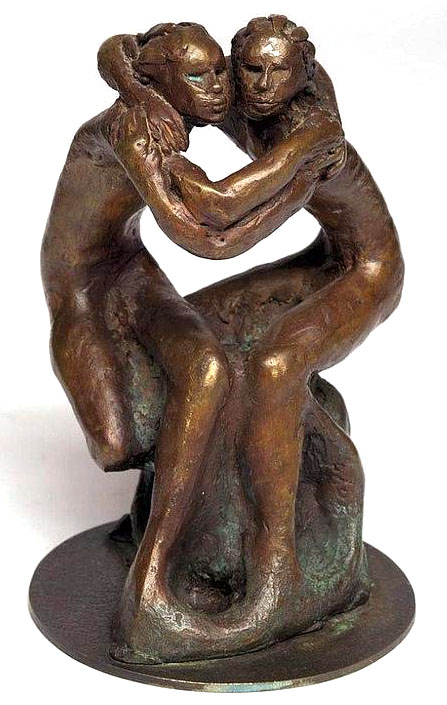
Brothers Loving Bond
Bronze
Height: 28 cm
Price:
PURCHASE ENQUIRY |
|
|
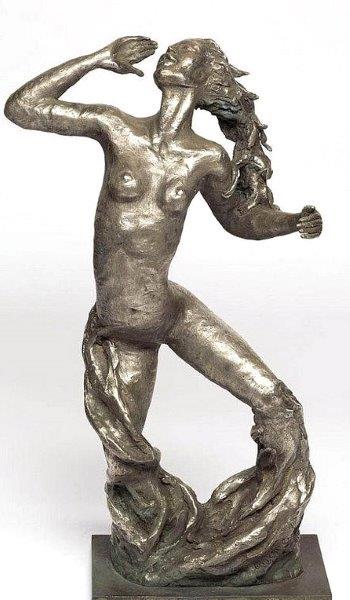
Eco
silver on bronze
Height:
60 cm
Price:
PURCHASE
ENQUIRY |
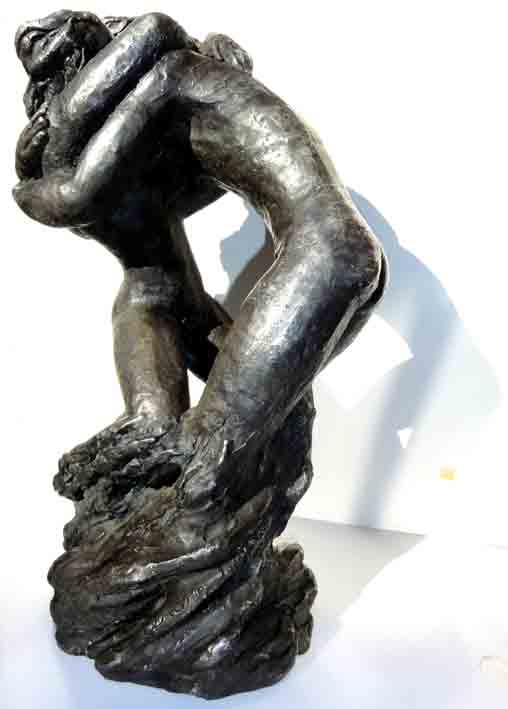
Lovers turning into a Tree
ENLARGE
silver
on bronze
Height:
60 cm
Price:
PURCHASE ENQUIRY |
|
Themes for
Lenore Boyd work derive
from myths of ancient cultures and her life journey |
|
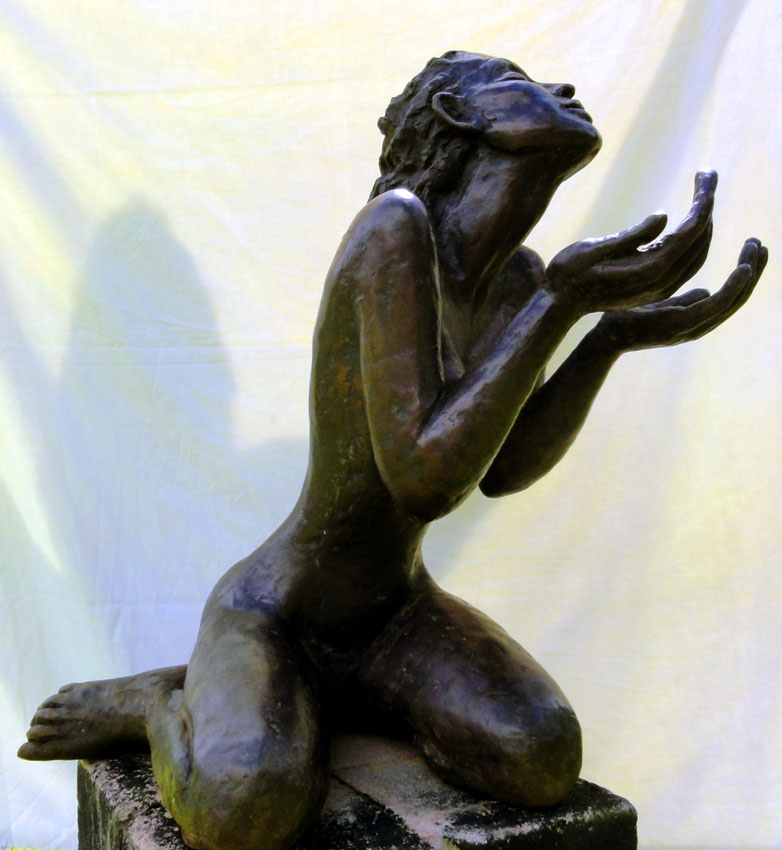
Gratitude A/P
ENLARGE
Bronze
Height:
3/4
Life-size
Price:
PURCHASE ENQUIRY |
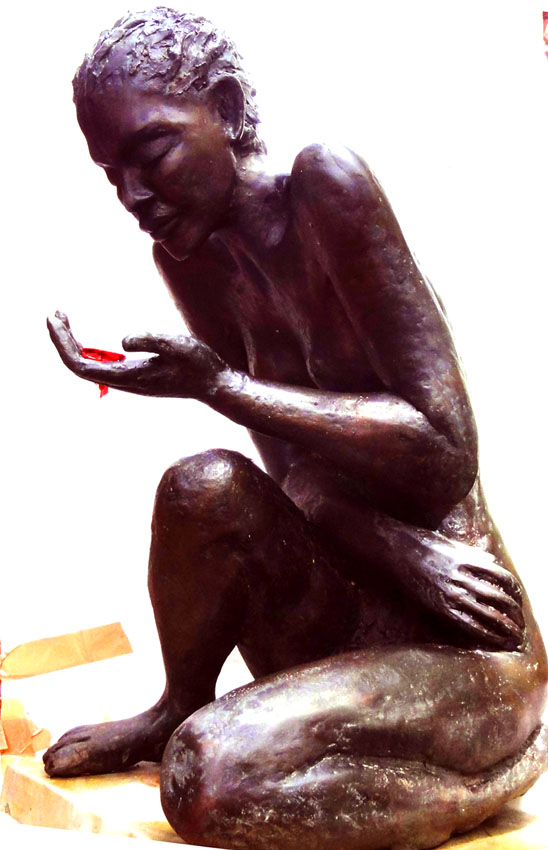
The Pearl 3/12
ENLARGE
Bronze
Height:
Life-size
Price:
PURCHASE ENQUIRY |
|
|
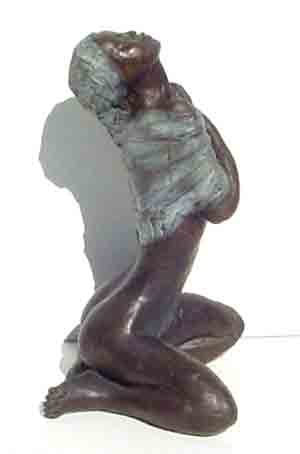
Clytie
bronze
Height: 30 cm
Price:
PURCHASE ENQUIRY |
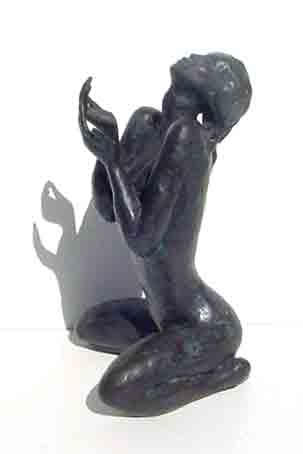
Wingless
Angel
Bronze
Height:
30
cm
Price:
PURCHASE ENQUIRY |
|
|
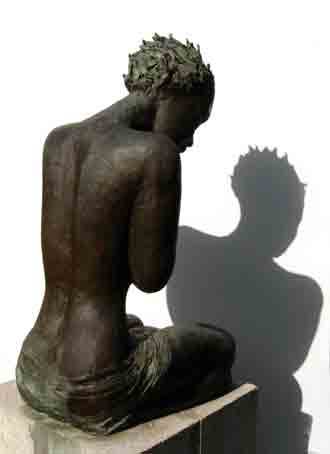
Grace I
Height: 75 cm
Bronze
Price:
PURCHASE
ENQUIRY |
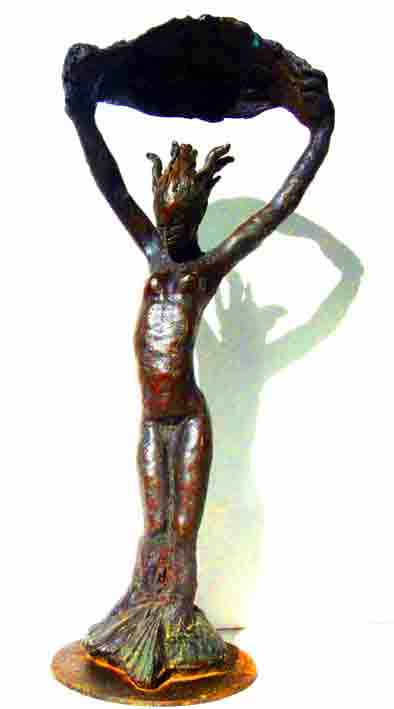
Victory 2/12
Bronze
Height:
44 cm
Price:
PURCHASE ENQUIRY |
|
|
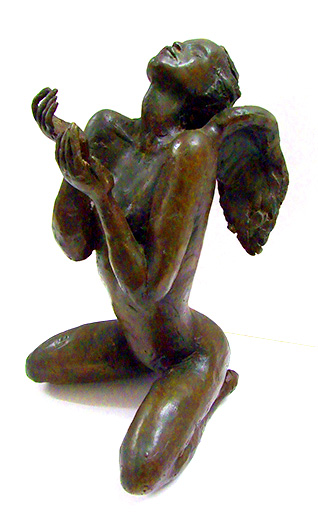
Lenore BOYD
ANGEL
Bronze
Height:
30 x 19 cm
Price:
SOLD |
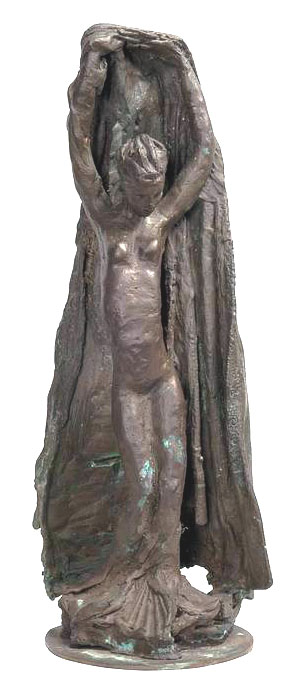
Lenore BOYD
Spirit
Bronze
Height: 30 cm
Price:
SOLD |
|
|
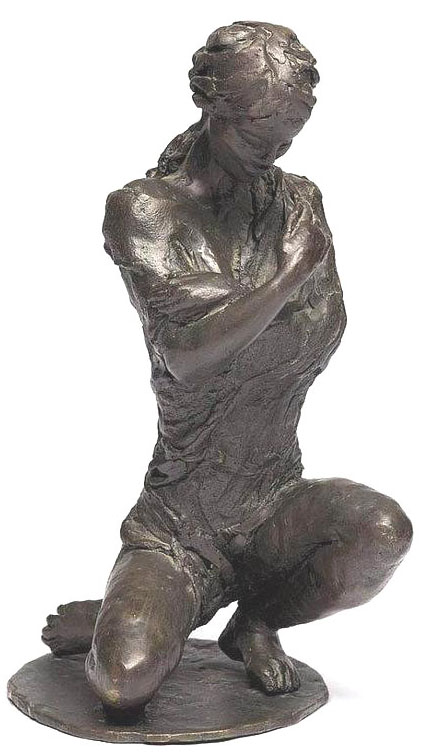
Lenore BOYD
Grace
Bronze
Height: 38 cm
Price:
SOLD |
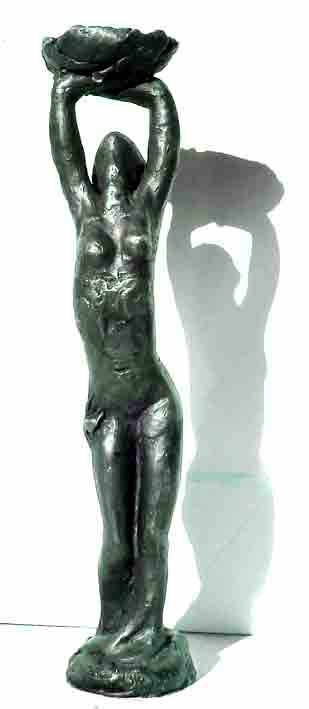
Lenore BOYD
Light bearer 8/12
silver on bronze
Height:
38 cm
Price:
SOLD |
|
|
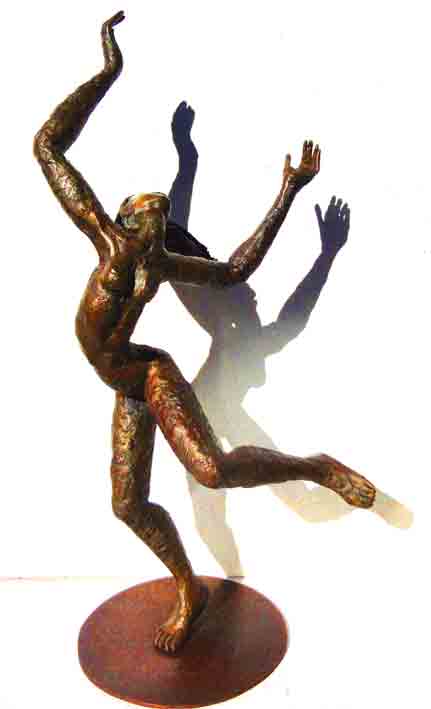
Lenore BOYD
Joie de Vivre 5/12
Bronze
Height:
62 cm
Price:
SOLD |
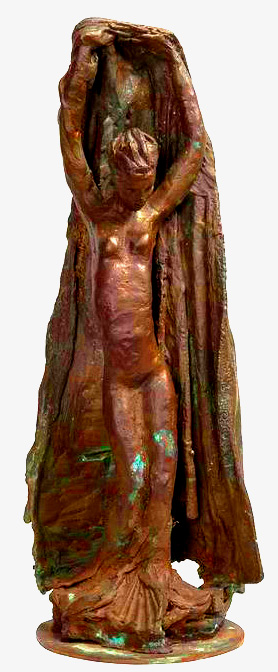
Lenore BOYD
Tree Spirit
Bronze
Height: 30 cm
Price:
SOLD |
|
|
|
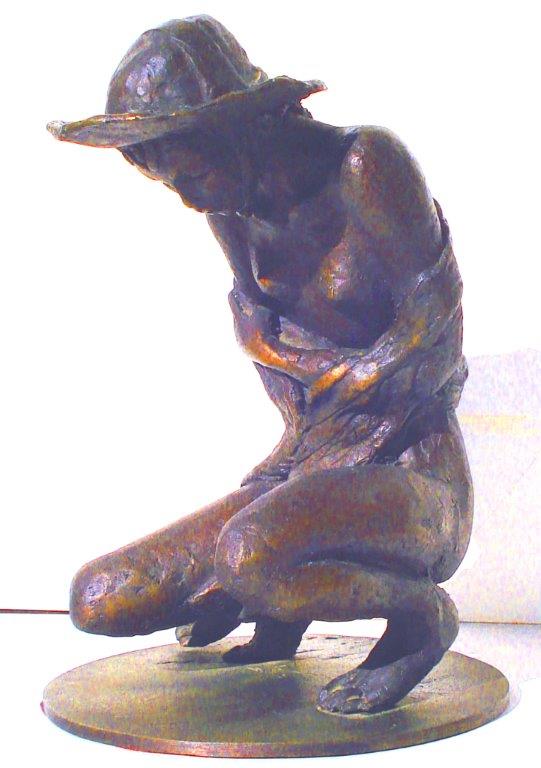
Lenore BOYD
On the Shore 6/12
Bronze
Height:
28 cm
Price:
SOLD |
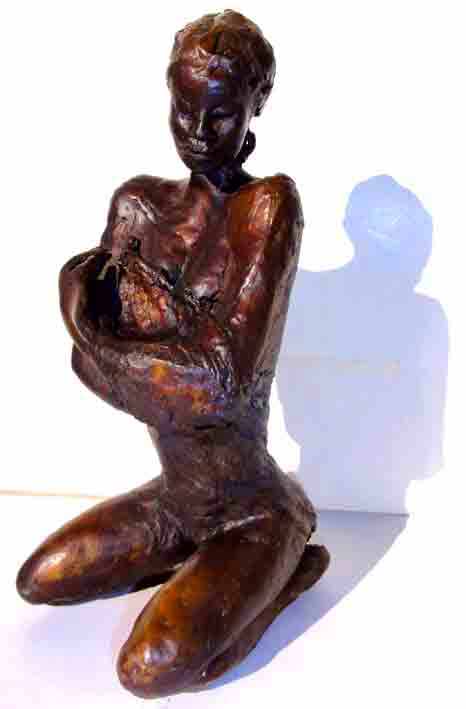
Lenore BOYD
Cradle 7/12
Bronze
Height:
30 cm
Price:
SOLD |
|
|
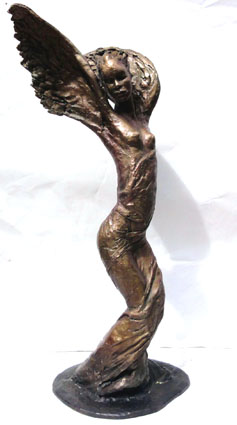
Lenore BOYD
Angel 7/12
Bronze
Height:
55 cm
Price:
SOLD |
.jpg)
Lenore
BOYD
Echo 4/12
bronze
Height:
62
cm
Price: SOLD |
|
|
Lenore BOYD
Bathsheba
Bronze 1/12
Price:
SOLD |
Lenore
BOYD
Deirdre of
the Sorrows
Bronze 1/12
Price:
SOLD |
Lenore BOYD
Intersession
Bronze
2/12
Price:
SOLD |
Lenore BOYD
Adam's
Rib
Bronze
10/12
Price:
SOLD |
Lenore BOYD
Angel
Bronze
5/16
Price:
SOLD |
Lenore
BOYD
Angel 2/12
Silver on bronze
Price:
SOLD |
Lenore
BOYD
Aphrodite Goddess
Bronze
7/12, 8/12, 10/12, 11/12
Price:
SOLD |
Lenore
BOYD
Basketballer
Bronze 3/12
Price:
SOLD |
Lenore BOYD
Clytie
Bronze 2/16
Price:
SOLD |
Lenore
BOYD
Dryad
Bronze
1/12
Price:
SOLD |
Lenore
BOYD
Guardian
Bronze
4/12
Price:
SOLD |
Lenore
BOYD
Goal
Bronze
3/12
Price:
SOLD |
Lenore BOYD
Joie de
Vivre
Bronze
3/12,
4/12
Price:
SOLD |
Lenore
BOYD
Mother
Earth
Bronze
1/12
Price:
SOLD |
Lenore
BOYD
Nymph by
Clear Water
Bronze
1/12, 6/16
Price:
SOLD |
Lenore
BOYD
Pearl -
Life size
Bronze
2/12
Price:
SOLD |
Lenore BOYD
Victory II
Bronze
1/12
Price:
SOLD |
Lenore
BOYD
Victory
I
Bronze
1/12
Price:
SOLD |
Lenore
BOYD
Somersault
Bronze
3/16
Price:
SOLD |
Lenore
BOYD
Sun-woman
Bronze
2/16
Price:
SOLD |
|
|
|
silver patina
on
bronze
Patinas are formed by chemical reactions on the surface of metals. Sculptural patinas are made by mixing chemicals and applying them
to the surface, rather than waiting for nature to take its course.
Most of patinas are achieved by brushing chemical solutions onto the surface
of the bronze while heating that surface with an oxyacetylene torch.
Others are formed over several days by burying the piece in wood chips
soaked with other patina chemicals. Often, the final patina is a result
of two or more different patinas layered one over another.
Unlike
conventional patinas,
silver
patina
is costly
and requires special protective wear (in addition to eye and face
protection, long sleeves and particular gloves) as the hot patina
actively splatters and permanently damage and discolours skin and
fingernails.
Nitrate
toxicosis in humans can occur through
enterohepatic
metabolism
of nitrate to
ammonia,
with nitrite being an intermediate. Nitrites
oxidize
the
iron
atoms in
hemoglobin
from
ferrous
iron (2+) to
ferric
iron (3+), rendering it unable to carry oxygen. This process can lead to
generalized
lack of oxygen
in organ tissue and a dangerous condition called
methemoglobinemia.Humans are
vulnerable to methemoglobinemia due to nitrate
metabolizing
triglycerides
present at higher concentrations than at other stages of development.
Some can be more susceptible to the effects of nitrate than others. The
Nitrate
ion is a
polyatomic
ion
with the
molecular formula
NO−3 and a
molecular mass
of 62.0049 g/mol. It is the
conjugate base
of
nitric acid,
consisting of one central
nitrogen
atom
surrounded by three identical oxygen atoms in a
trigonal planar
arrangement.
The
nitrate ion carries a
formal charge
of negative one, where each oxygen carries a −2⁄3 charge whereas the
nitrogen carries a +1 charge, and is commonly used as an example of
resonance.
The
Silver
patina is a ‘solution of
silver
nitrate’
applied to bronze using the ‘torch technique’, care must be taken
subsequently to bring up the desired effect.
Flakes of silver
nitrate
and stir to dissolve then apply while heating the metal till steams off
as the patina is brushed on. Patterns can be made with brushstrokes.
Silver patina
colour variation (from dark gunmetal depths to brighter silvers) is not
entirely controllable and requires specialised knowledge as well as the
extensive expertise.
The grey and white effects of silver can be rinse off, wearing rubber
gloves (to keep the residue off hands) when the surface is first cooled.
Once it is rinsed and completely dry, it can be waxed. Once the wax is
dry, the surface can be buffed to produce a shiny silver or silver-grey
colour, sometimes dramatically different from the un-buffed look.
When the patina dries
it is mostly a dull, variegated grey-white, with hits of green and
occasional shiny silver flecks.
The
loose white can be gently rinse away, then wax is applied to the
surface, finally (when the wax is well hardened) the sculpture can be
buff it on a soft brass brush wheel to bring up a cloudy mottled
silver-grey with a medium-high gloss.
Much of the white is powdery, however,
and must be fixed with a spray fixative if the matte grey-white effect
is to be kept; otherwise, the white powder will smudge with the
application of the protective ‘wax coating’.
When the matte effect is preserved then the patina is
called
Grey.
If a
thin foil of silver is applied onto the object then the electro-plating
process is used to apply a thin layer of gold to a metal surface. A method of coating a metal object with
silver by passing an electric current from a block of pure silver to the
article to be plated through a solution of cyanide and silver salts.
Electro-plated Nickel Silver, with a nickel based alloy being the base
metal to be plated.



 RETURN TOP
|
|
|
|
LENORE
BOYD
Biography
Lenore
Boyd
was born in 1953,
she is the daughter of
Phylis and
Guy Martin à Beckett BOYD.
Lenore
is grandmother and
the mother of five children. She is working around the world.
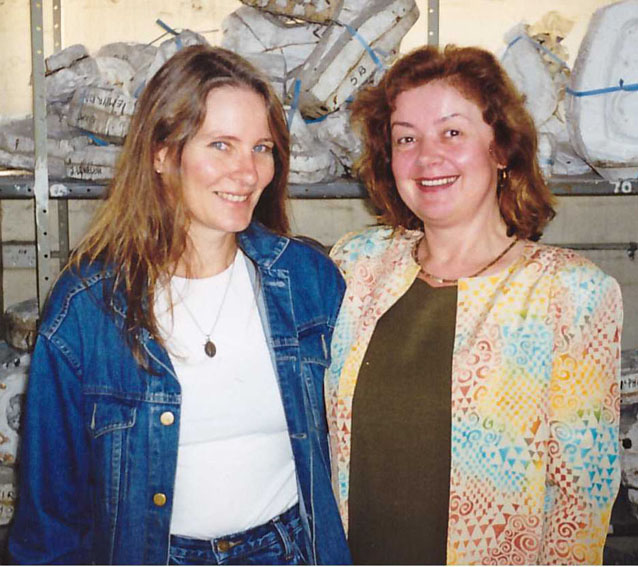
PHOTO 1997: Lenore BOYD and
Aniela
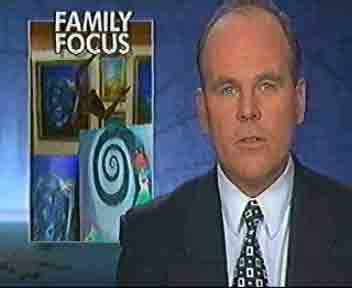
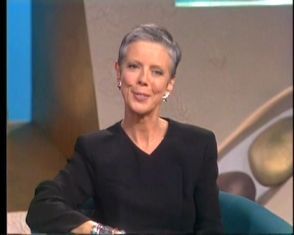
VIDEO ABC TV
|
Sunday
Afternoon
|
BOYD Exhibition
in Galeria Aniela
VIDEO:
ABC TV
NEWS
Australian
National NEWS
in
Galeria Aniela
STUDY
Lenore
began sculpting at an early age, influenced by family heritage and
surrounded by a creative environment. She studied sculptural technique
in studio of her father, the late Guy BOYD, to whom she was apprenticed
for four years. As a member of the Association of Sculptors of Victoria
and the Victorian Artists Society, she attended life classes and drawing
from life since 1969.
Lenore
has deep understanding of the human form and an appreciation its beauty,
her work has been influenced by classical sculptors including Rodin,
Maillol, Michelangelo Bourdelle and Guy BOYD, her father.
Themes for
sculpture are often derived from myths of ancient cultures as well as
her own life journey. She was an Artist in Residence at Firbank
Anglican Girls School, Brighton in 1995 and conducted regular workshops.
Lenore is a master in her discipline, during past thirty years she has
produced a prolific body of work.
selected MAJOR
EXHIBITIONS
1971, 74, 77, 80, 86, 92,
93 Von Bertouch Galleries, Newcastle, NSW
1973 Australian
Galleries, Melbourne
1974 Desborough
Galleries, Perth
1975 David Dryden
Gallery, Adelaide
1976 The Barn,
Adelaide
1978 Collectors
Gallery, Perth
1991 Andrew Ivanyi
Galleries, Melbourne
1992, 93,
96 The Convent Gallery,
Daylesford, VIC
1992 Benson Gallery,
Otway Ranges, VIC
1993 Beaver Gallery,
Canberra
1994 Bell Gallery,
Berrima, NSW
1995 Art World
Graphics, Rushcutters Bay, Sydney
1995 Mosman Gallery,
Mosman, NSW
1995 St Albans
Historic House, Whittington, Geelong,
1996 Redhill Gallery,
Brisbane
1997 Galeria Aniela
Fine Art Gallery, Kangaroo Valley. The exhibition triumphed the front
page of Sydney Morning Herald, 17th May, ABC TV National News - 18 May.
The exhibition was also, featured on the ABC TV Sunday Afternoon Arts
Program - 22 June 1997.
GROUP
EXHIBITIONS
1970,
76, 89 Manyung Galleries, Mt
Eliza, VIC
1973 Salamanca
Gallery, Hobart
1971,
96 Von Bertouch Galleries,
Newcastle, NSW
1973,
76, 90 Adelaide Arts Festival, SA
1992 Schubert
Galleries, Goal Coast
COLLECTIONS
Commissions
Lenore has completed numerous commissions and she obtained wide media
coverage
Australian Sculptors
Ken
Scarlett 1980
The
Arts of the BOYD's, Dbres/Herbst 1990
Elle
1990
The
Age 1990 and 1991
New
Idea 1991
The
Melbourne Report 1991
Herald Sun 1994
Arena Journal 1996
Lenore BOYD father,
Guy Martin à Beckett
BOYD
(12 June 1923 – 26 April 1988) was an
Australian
sculptor
born in
Murrumbeena, Victoria,
he was a member of the famous
BOYD artistic dynasty,
and brother of painters
Arthur BOYD
and
David BOYD.
Guy was a potter and figurative sculptor noted for his
ability to capture the fluidity and sensuality of the female
form. He was also active in environmental and other causes,
including the damming of Tasmania's
Franklin River
and the
Lindy Chamberlain
affair.
Initially Guy BOYD was a potter, establishing both Martin BOYD
Pottery and later Guy BOYD Pottery. These studios produced a
wide range of modernist objects from house-wares to decorative
pieces which enjoyed strong commercial success. Iconic
Australian imagery, particularly flora and indigenous motifs,
feature heavily. This period of work is also stepped in the
'atomic age' aesthetics of the 1950s and early 1960s with a
familiar color palate and shapes that hold strong Echos of Eames
and others.
Guy BOYD turned away from this commercial work and to a
full-time career in sculpture in 1965. His commissions include
sculptures in both Melbourne and Sydney's international
airports, Caulfield town hall, the Commonwealth Bank and has
pieces in the National Gallery, Melbourne. He has had
exhibitions of his work in Australia, England, Canada and the
US. He also won the Churchill Fellowship to study art overseas
in 1968 and was appointed the Art Advisor to Deakin University
in 1988. 'Guy BOYD' written by Anne Von Bertouch and Patrick
Hutchins was published by Lansdowne Press in 1976.
Guy BOYD was Australian Co-ordinator of 'Save Lindy Chamberlain'
and wrote the book 'Justice in Jeopardy' in her defence. He was
President of the Brighton Foreshore Protection Committee,
which he founded with a plaque commemorating his
achievements in preserving the Brighton Foreshore erected on
the beach at Brighton, Victoria, Melbourne. He was President
of the Port Phillip Protection Society and was arrested
campaigning against the damming of the Franklin River in
Tasmania. He migrated to Canada with his wife and four
younger children, settling in Toronto in 1975, but returned
to live in Australia five years later. Died 26 April 1988
RETURN TOP
|
|
|
Embrace 1/6
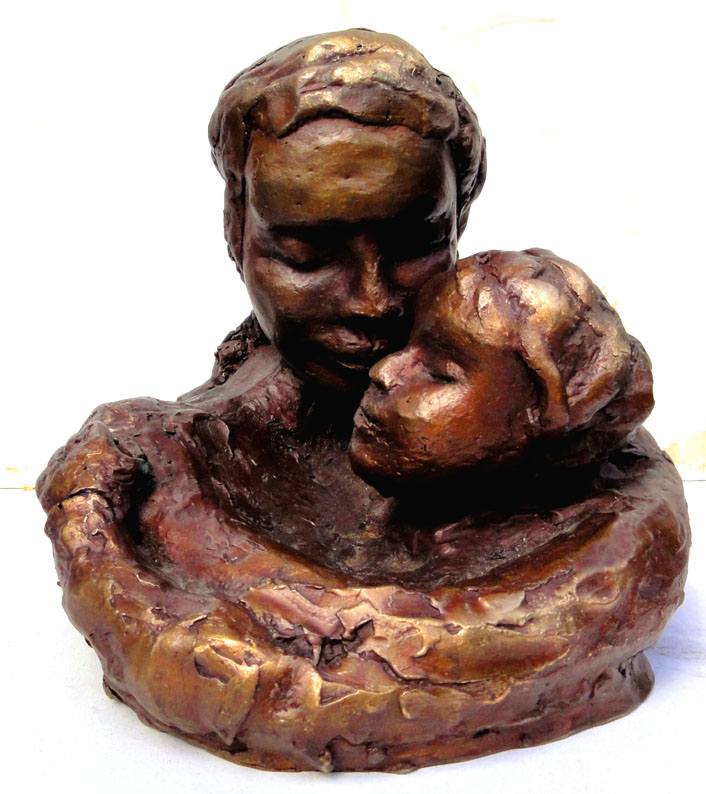
Lenore BOYD,
Embrace, bronze 1/6, 18 x
18 cm
Price
subject to change without a
prior notice
PURCHASE ENQUIRY
Shipping Worldwide |
|
|
Mother Earth 7/12
.jpg)
Lenore BOYD, Mother Earth,
bronze 7/12, height 26
cm by 38 cm
Price
subject to
change without a prior notice
PURCHASE ENQUIRY
Shipping Worldwide |
|
|
Prayer A/P
Lenore BOYD,
Prayer,
Bronze
A/P, 72 cm
Price
subject to change without a prior
notice
PURCHASE ENQUIRY
Shipping Worldwide |
|
|
|
The Pearl 3/12
Lenore BOYD,
The Pearl,
Bronze 3/12,
Life Size
Price
subject to change without a prior notice
PURCHASE ENQUIRY
Shipping Worldwide |
|
|
Genesis The Lovers 7/12
.jpg)
Lenore BOYD,
Lovers turning into a Tree,
silver on bronze,
7/12,60 cm
Price
subject to change without a prior notice
PURCHASE ENQUIRY
Shipping Worldwide |
|
|
|

Galeria Aniela
provides an independent professional service
and experienced guidance
representing clients best interest in the art market.
We welcome the opportunity to speak with you, please
feel free to
contact us
to discuss ways in which Galeria Aniela can assist you now and in
the future.
Whether you are a first-time buyer, an enthusiastic collector or an
astute investor, our people focused approach ensures an enjoyable
and rewarding experience.
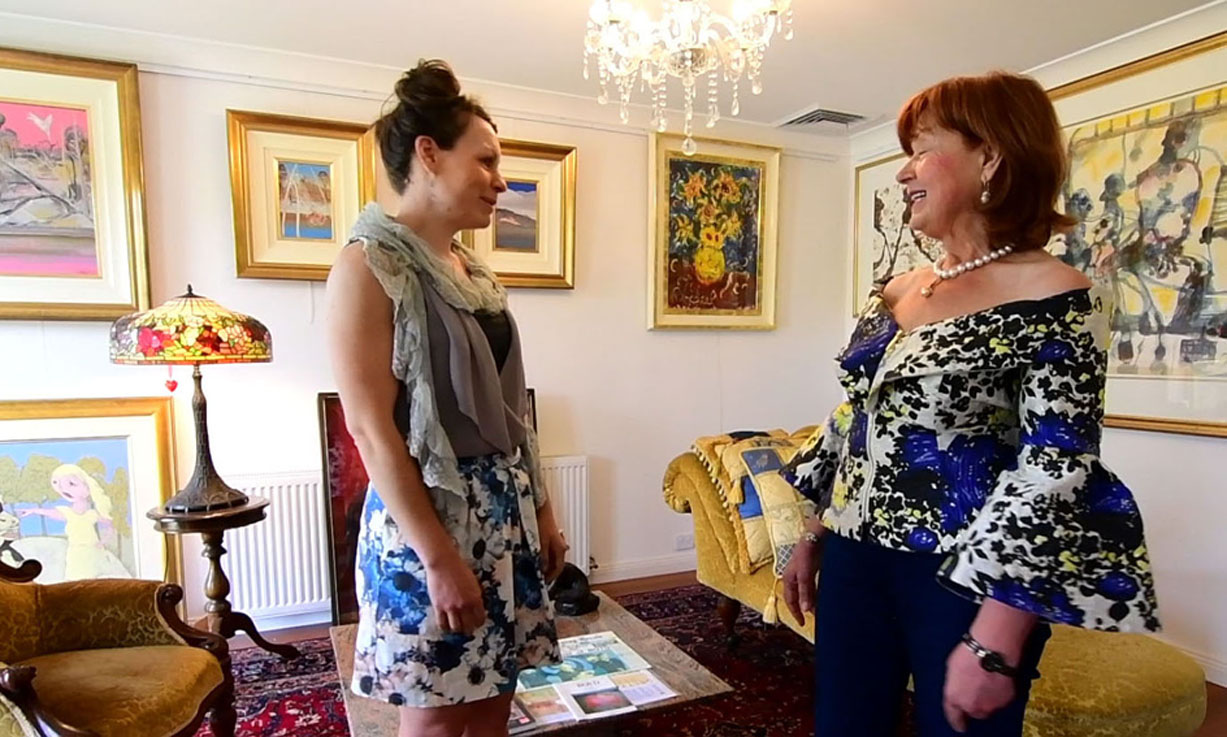
video | Galeria Aniela Fine Art broker
Combining a wide network of resources with
expertise in Australian fine art, we
assist clients in all aspects of acquisitions of fine art objects,
shipping worldwide,
ensuring impeccable
provenance
and
quality,
helping save
time and
money.
Testimonials
Founded in 1994, Galeria Aniela exhibited world-class artists
and received celebrities including
Sir David
Attenborough, Cameron
O’Reilly
and
Hon Bob Hawke,
Australian Prime Minister.
Galeria Aniela
built
a
strong
standing
in Australia and internationally.
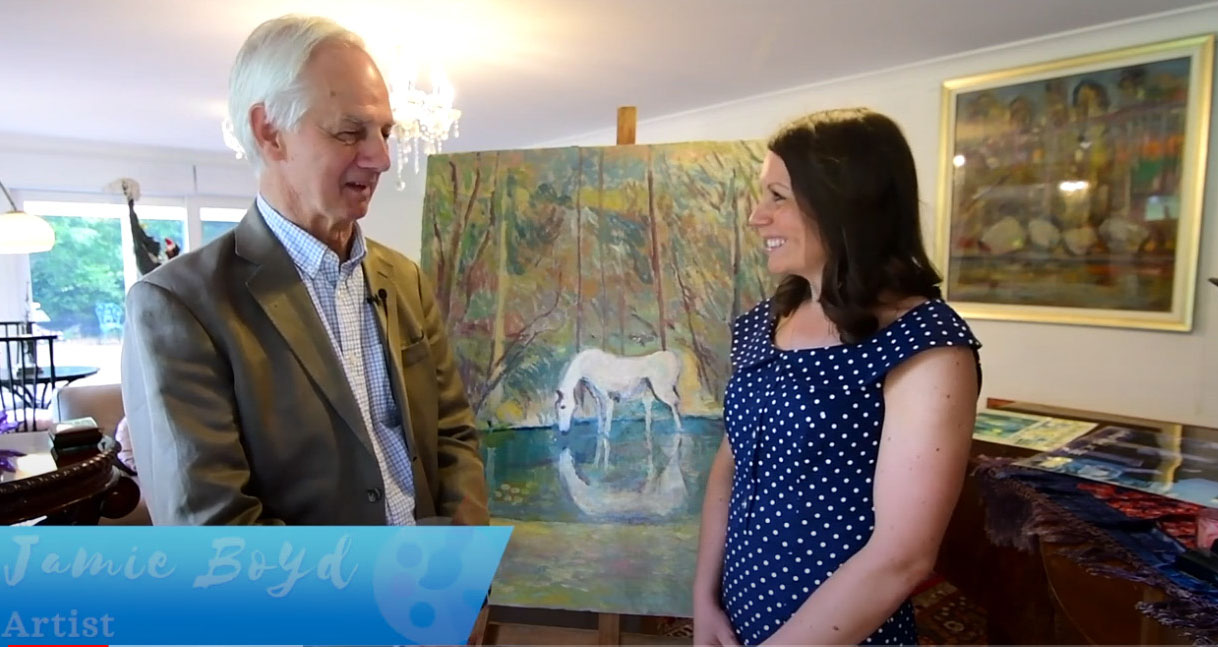
Video |Jamie Boyd, the Boyd family most
important LIVING artist
The
BOYD family
exhibition in Galeria Aniela
coup the
front page
Sydney Morning Herald,
Australian National NEWS| ABC TV
and
Sunday Afternoon |ABC TV.
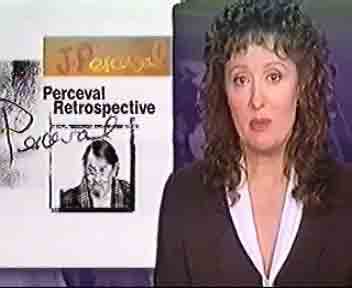
John Perceval Retrospective Exhibition held
in Galeria Aniela
conquer
the Australian National NEWS |ABC TV.
If you consider buying or or selling an original work of fine art by
Arthur Boyd,
Brett Whiteley,
Fred Williams,
Charles Blackman,
Garry Shead,
John Perceval,
Arthur Streeton or another significant work of fine art, please
contact us.
|
|
|
|
 HOME
HOME