|
Brett Whiteley
1939-1992 |
|
If you love
qualityArt of
impeccable
provenance,
the
art
you want is at
Galeria Aniela
|
|
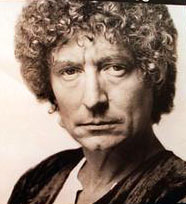 Brett Whiteley
AO
( 1939-1992)
is one of
the most famous
Australian painters.
His work is held
in international
collections
including
Tate Gallery London,
Museum of Modern Art New York,
National Gallery of Australia.
Awards:
1975
Sir. William Anglis
Memorial Art Prize,
1976
Archibald
Prize,
1976 Sulman Prize
and
1977
Wynne Prize. Brett Whiteley
AO
( 1939-1992)
is one of
the most famous
Australian painters.
His work is held
in international
collections
including
Tate Gallery London,
Museum of Modern Art New York,
National Gallery of Australia.
Awards:
1975
Sir. William Anglis
Memorial Art Prize,
1976
Archibald
Prize,
1976 Sulman Prize
and
1977
Wynne Prize.
Whiteley
Henri's Armchair
sold for
$6,136,364;
My Armchair
$3,927,270;
The Olgas $3,480,000 and
Opera House
$2,880,000.
|
|
|
|
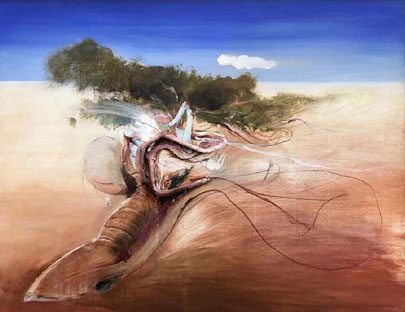
Unashamed
Angophora
Oil, Collage, Branch on Board
120
x 150 cm
Cat. no. 69.90
Price: SOLD
|
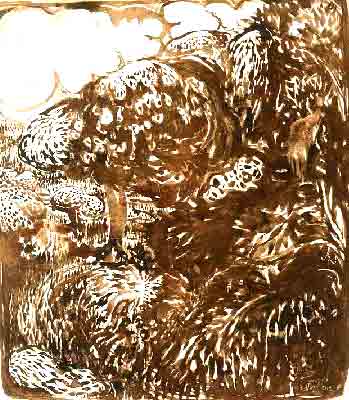
Garden, 1975
Sepia
Ink on paper
86 x 76 cm
Cat. no.
141.75
Price: SOLD |
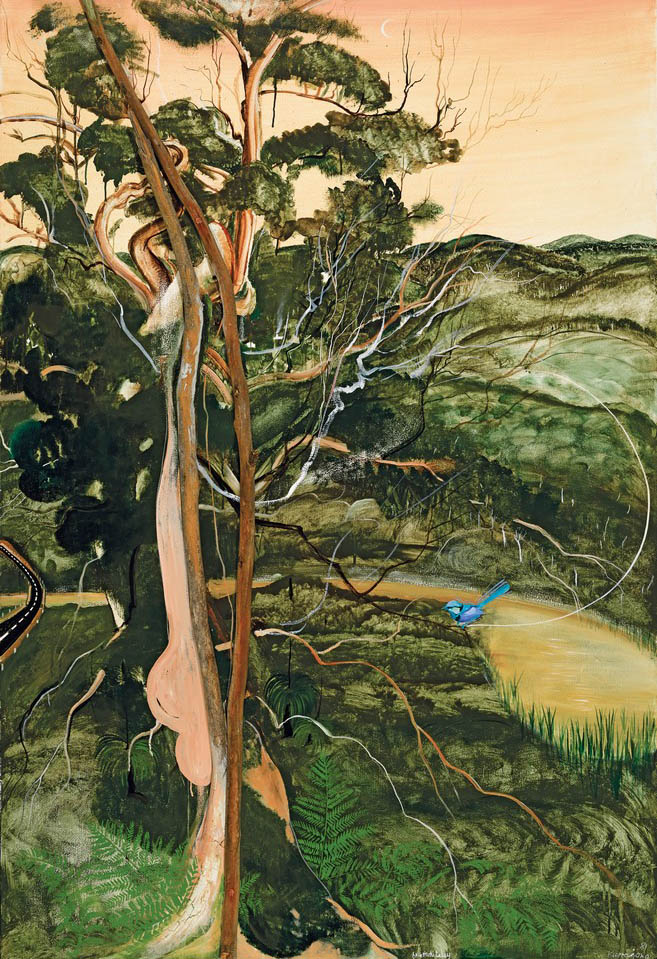
Kurrajong with Blue Wren
Oil, Collage on Board
120
x 180 cm
Cat. no. 177.81
Price: SOLD |
|
|
|
If you consider buying or selling an original work of
Brett Whiteley,
Arthur Boyd,
Charles Blackman,
Fred Williams,
Garry Shead,
John Perceval,
Arthur Streeton or another significant work of fine art, please
contact us.
|
|
|
|
Auction Results
|
Details
|
Price excl. GST
|
|
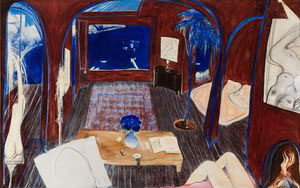 |
Henri's Armchair 1974-75
Oil, ink and charcoal on canvas, signed, dated inscribed verso: "Henri's
Armchair"/ 1974/ Brett Whiteley/, 195x302cm, Menzies, Sydney,
26/11/2020, Lot No. 1 |
$6,136,364 |
|
|
|
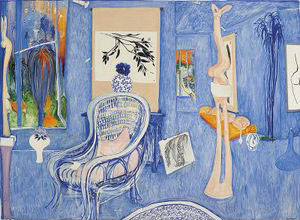 |
My Armchair, 1976
Oil on canvas, signed dated lower right Brett Whiteley 1976, inscribed
upper right interior at Lavender Bay under sunlight, artist's monogram,
206.5x283.5cm, Menzies, Important Australian and International Fine
Paintings and Sculpture, Melbourne, Lot No. 42 |
$3,927,270 |
| |
|
|
|
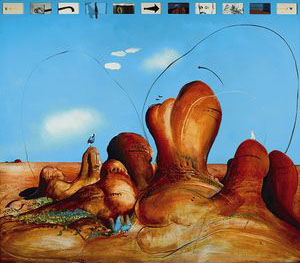 |
The Olgas for Ernest Giles
(Also Known as to Ernest Giles) 1985
Oil and mixed media on board, signed with initials and dated lower
right: BW/ 85, inscribed lower right: To Ernest Giles, 213.5 x 244.5 cm,
Deutscher~Menzies, Fine Australian & International Art, Sydney, Lot No.
35 |
$3,480,000 |
| |
|
|
|
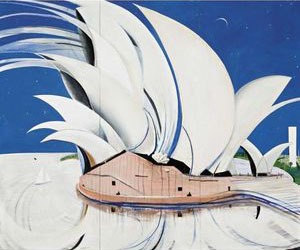 |
Opera House
Oil, cardboard, collage, shell, ink on
canvas
board, signed and dated 1971-82 lower left; inscribed to John Cage upper
right, 203x244cm, Sotheby's Important Australian Art, Sydney, Lot No. 7
|
$2,880,000 |
| |
|
|
|
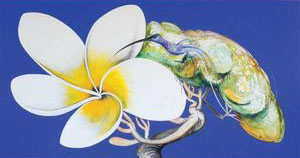 |
'Frangipani and Humming Bird' Japanese: Summer
Oil tempera on canvas, 211x400cm, Sotheby's, Important Australian Art,
Sydney, Lot No. 39 |
$2,040,000 |
| |
|
|
|
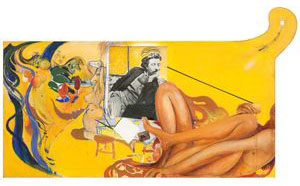 |
Gauguin,
1968
(Also Known as Portrait of Paul Gauguin on the Eve Of His Attempted
Suicide, Tahiti)
Oil, acrylic, charcoal, graphite, plastic, glass, wood & printed paper
collage construction on panel, signed, dated inscribed lower right
portrait of Paul Gauguin on the eve of his attempted suicide, Tahiti/
Brett Whiteley 1968, NY, 152.5x264.5cm (irreg.), Menzies, Australian &
International Fine Art & Sculpture, Melbourne, Lot No. 37 |
$2,024,999 |
| |
|
|
|
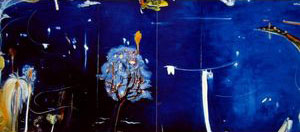 |
The Jacaranda Tree (On Sydney Harbour), 1977
Oil on canvas, signed 'Brett Whiteley 1977' lower right, 208x456cm,
Christies, Australian & International Art, Sydney, Lot No. 85
|
$1,982,500 |
| |
|
|
|
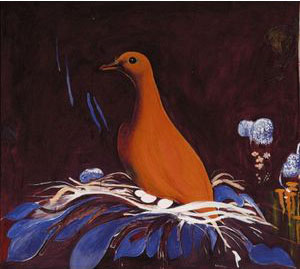 |
Orange Fiji Fruit Dove c. 1983
Oil on canvas, signed lower right: Brett Whiteley, 184x202.5cm,
Deutscher~Menzies, Australian and International Fine Art, Sydney, Lot
No. 36 |
$1,920,000 |
| |
|
|
|
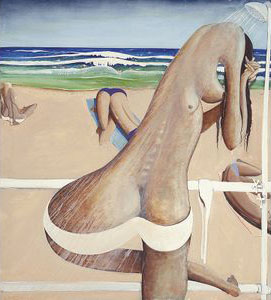 |
Washing the Salt off 1, 1985
Oil on canvas, signed and dated lower right: Brett Whiteley July 85,
inscribed lower left: at most Australian beaches/ showers are provided
right on the/ beach, for people who don't like the salty [sic] feeling..
stamped lower left, 167.5x152cm, Menzies, Australian & International
Fine Art, Sydney, Lot No. 42 |
$1,860,000 |
| |
|
|
|
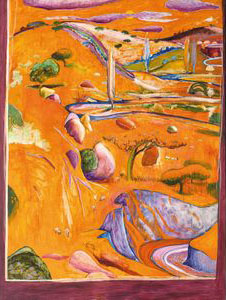 |
The Paddock - Late Afternoon, 1979
Oil on canvas, signed lower centre Brett Whiteley, 202x152cm, Est:
$1500,000-1,800,000, Menzies, Australian & International Fine Art &
Sculpture, Sydney, 28/03/2019, Lot No. 40 |
$1,840,908 |
| |
|
|
|
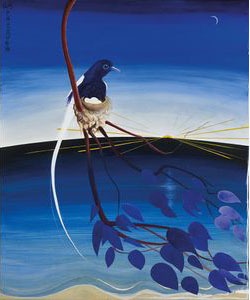 |
The Sunrise - Japanese: 'Good Morning!', 1988
Oil and collage on board with electric light, signed and dated lower
left brett whiteley 88, inscribed with calligraphy characters upper
left. sketch of beach scene on verso, 244 x 204.5 cm, , Menzies,
Australian & International Fine Art & Sculpture, Sydney, 19/11/2020, Lot
No. 33 |
$1,748,863 |
|
|
|
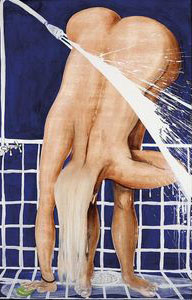 |
Arkie Under the Shower 1986-87
Oil on board, signed lower right: Brett Whiteley, signed, dated and
inscribed verso: 'arkie under the shower'/ 1986-87/ brett whiteley,
173x112cm, Deutscher~Menzies, Australian and International Fine Art,
Sydney, Lot No. 31 |
$1,680,000 |
| |
|
|
|
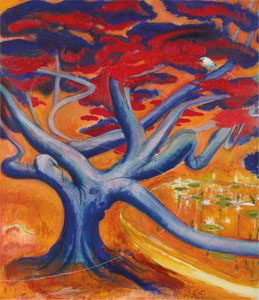 |
The Arrival – a Glimpse in the Botanical Gardens 1984
Oil, collage and charcoal on canvas, signed 'Brett Whiteley' lower
right; signed, dated and inscribed '“The arrival – a glimpse in the
Botanical Gardens” / 1984 / Brett Whiteley' verso, 106x90.6cm, Smith &
Singer, Masterpiece Auction, Sydney, 13/10/2020, Lot No. 1 |
$1,626,135 |
| |
|
|
|
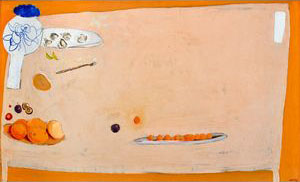 |
The Orange Table 1977-1978
Synthetic polymer paint, oil, tempera, charcoal and oyster shells on
plywood, signed and dated 'Brett Whiteley / 78' lower right, dated and
inscribed 'The Orange Table'(Sketch)/1977-78' verso, 124x205cm,
Sotheby's, Important Australian Art, Sydney, 20/11/2019, Lot No. 30
|
$1,586,000 |
|
|
|
|
|
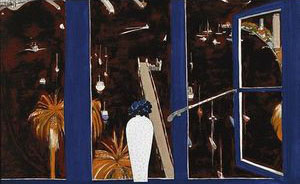 |
View from the Sitting Room Window,
Lavender Bay, 1991
Oil, mixed media and collage on board, signed and dated lower centre:
Brett Whiteley 91, 122x198cm, Deutscher~Menzies, Fine Australian &
International Art, Sydney, Lot No. 33 |
$1,500,000 |
| |
|
|
|
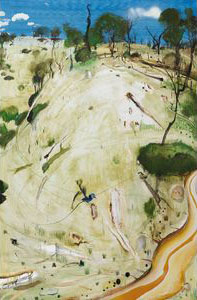 |
The Meeting 1981
Oil and collage on composition board, signed dated 'Brett Whiteley /
4/81' lower centre, 183x120cm, Sotheby's, Important Australian & New
Zealand Art (lots 1-98) | Important Australian Art from The J.G.L.
Collection (lots 99-137), Sydney, 16/05/2018, Lot No. 36 |
$1,464,000 |
|
|
|
|
|
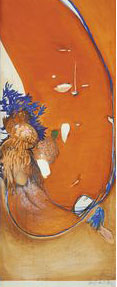 |
Little Orange (Sunset) 1974
Oil and mixed media on board, signed lower right, brett whiteley, 205.5
x 76 cm, Menzies, Australian and International Fine Art, Melbourne, Lot
No. 27 |
$1,380,000 |
| |
|
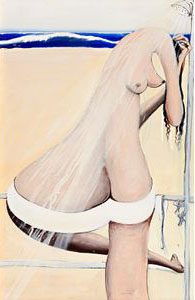 |
Washing the Salt off III, 1985
Oil on canvas on composition board, signed, dated and inscribed with
title verso: Brett Whiteley / 'Washing the salt off 3' / 1985, 92x61cm,
Deutscher and Hackett, Important Australian & International Fine Art,
Sydney, Lot No. 17 |
$1,220,000 |
| |
|
|
|
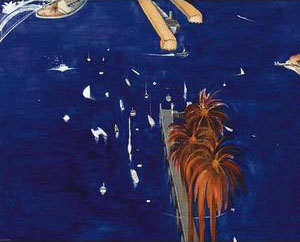 |
Lavender Bay at Dusk 1984
Oil on board, signed lower left: Brett Whiteley, signed, dated and
inscribed verso: Brett Whiteley/ 84/ 'Lavender Bay at Dusk',
122x152.5cm, Deutscher~Menzies, Sydney June Fine Art Auction, Sydney,
Lot No. 21 |
$1,175,750 |
| |
|
|
|
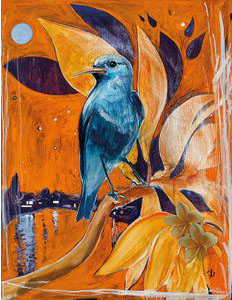 |
Shao 1979
Oil and collage on board, signed 'Brett Whiteley' lower right, inscribed
'No. 13 'Shao'' verso, 100.6 x 78.4 cm, Est: $850,000-950,000,
Sotheby's, Important Australian Art, Sydney, 21/11/2017, Lot No. 20
|
$1,159,000 |
|
|
|
|
|
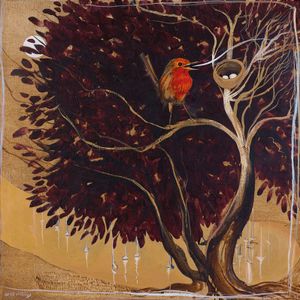 |
The Robin and the Moon 1981
Oil on canvas, signed 'Brett Whiteley' lower left, dated '81' lower
right, signed, dated and inscribed 'Brett Whiteley 'The robin and the
moon' '81' verso (frame), 86.5x86.5cm, Sotheby's, Important Australian
Art, Sydney, Lot No. 8 |
$1,098,000 |
| |
|
|
|
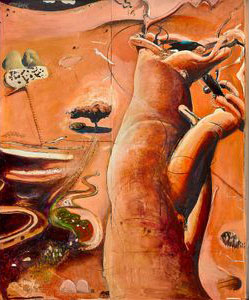 |
The Drought Crow: Sloping Up on the Olgas 1 (Up Front and Outback)
1984-1985
Oil, tempera, nails and photographs on plywood, signed and inscribed
'the drought from the land and the air' / brett whiteley (walking +
using a chopper)' lower left, dated and inscribed 'Sloping Up / On The
Olgas' I / 1984-85 (With Crow)' verso, 124 x 104 cm, Sotheby's,
Important Australian Art, Sydney, Lot No. 21 |
$1,024,800 |
| |
|
|
|
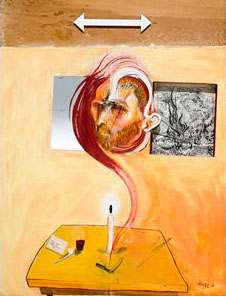 |
Vincent, 1968
Oil,
ink,
mirror and razor on board, signed and dated lower right: Brett 68
inscribed upper left: The departure of Gauguin from Arles,
221.5x167.5cm, Deutscher and Hackett, Australian & International Fine
Art, Melbourne, 29/08/2007, Lot No. 10 |
$1,020,000 |
| |
|
|
|
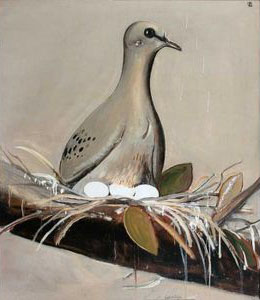 |
Rain
Oil on composition board, signed and inscribed with title lower right,
107x92cm, Sotheby's, Important Australian Art, Sydney, Lot No. 15
|
$996,000 |
| |
|
|
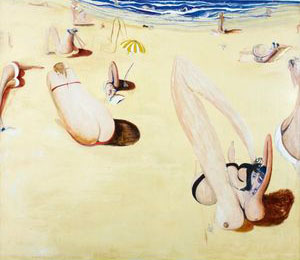 |
Balmoral
Oil and collage on canvas, signed dated 1975-78 lower left; signed and
dated 1975-78 on reverse; bears artist's name and title label on
reverse, 180x204cm, Sotheby's, Important Australian Art, Melbourne, Lot
No. 23
|
$990,000 |
|
|
|
|
|
Works on paper
-
watercolor, ink and mixed media
|
Price Excl. GST |
|
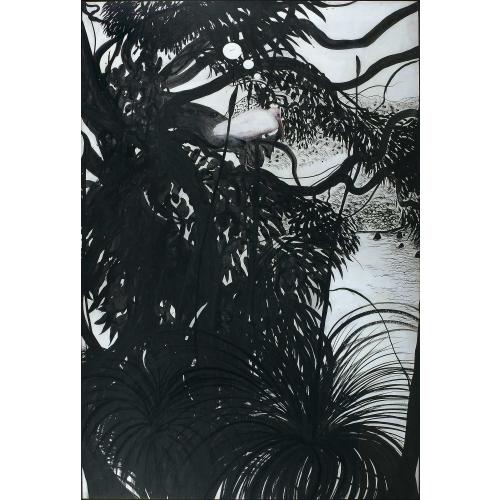 |
Everything,
Ink, gouache on paper
and collage
on board, signed, dated 1970, inscribed on the reverse
183x122cm
Sotheby's, Important Australian Art Sydney, Lot No.
69 |
$300,000 |
| |
|
|
|
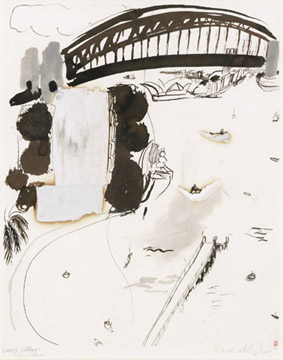 |
Harry's Building - Sydney Harbour, 1976
Etching, ink and oil on paper,
signed lower right with artist's monogram,
signed dated lower right, inscribed lower left harry's building/ Sydney
Harbour
60 x 48 cm Est: $50,000-70,000
86
x 64.5 cm (sheet size)
Menzies, Important Australian & International Art, Sydney, 01/12/2021,
Lot No. 38
|
$115,364 |
|
|
|
|
|
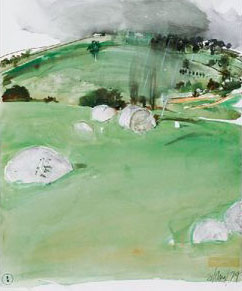 |
Approaching Storm, 1979
watercolor and gouache on paper on card, stamped lower left artist's
monogram, dated lower right 21/Aug/79
52 x 41cm
Menzies, Australian and International Fine Art,
Melbourne, 10/08/2017, Lot No. 32 |
$165,682 |
For more information subscribe to
http://www.aasd.com.au/ |
|
|
|
Galeria Aniela specialize in
museum-quality works of
art
of impeccable
provenance |
|
|
Brett
Whiteley Biography
(1939-1992)
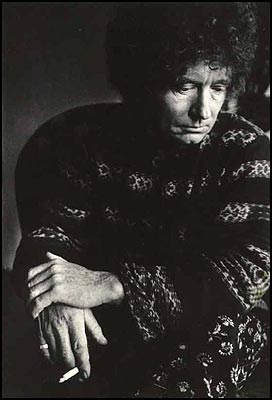 Brett Whiteley
AO
(7 April 1939 –15 June 1992)
Australian artist
is one of
the most famous Australian painters of the
twentieth century. Brett Whiteley
AO
(7 April 1939 –15 June 1992)
Australian artist
is one of
the most famous Australian painters of the
twentieth century.
Whiteley
original works on paper
sell
from few hundred thousand to under one hundred
thousand dollars.
ABC net story: Whiteley paintings
sells for record price


Brett Whiteley
is famous for
semi-surreal landscape-gardens and nudes,
created paintings, drawings and sculpture.
Whiteley's topics also included
portraits, still-life's, birds and abstracts.
Brett Whiteley
was inspired by singers like Bob Dylan and lived the lifestyle of a rock star.
He married Wendy who was his "Muse".
Whiteley is known
for his skill as a great draughtsman, had many
shows in his career, and travelled extensively
around the world. Brett Whiteley is represented
in all Australian National galleries.
He
is one of the most important and
best loved
Australian
artists,
Whiteley painting sells
for record price,
his
original paintings have sold for many millions
dollars.
Famous Works: The Soup Kitchen 1958, Red
Painting 1960, Alchemy 1972-73, Self Portrait
the Studio 1976, The Jacaranda Tree (Sydney
Harbour) 1977.
Brett Whiteley
is the most famous for
semi-surreal landscapes, gardens with views of
Sydney and nudes.
Whiteley's topics also included
portraits, still lifes, birds and abstracts. The
Sydney based
artist created paintings, drawings and
sculpture. Brett Whiteley was inspired by
singers like Bob Dylan and lived the lifestyle
of a rock star. He was married to the beautiful
Wendy Whiteley who was his "Muse" for a number
of years though he lived fast and hard. Whiteley
searched for a muse in drugs, just as many rock
stars had done before him, but ultimately it was
this lifestyle that shortened his life and
career.
Awards
1961 Dyason Bequest, AGNSW
1961 International Prix at the 2nd Bienalle,
Paris
1964 International Drawing Prize, Darmstadt,
Germany
1964 Perth Festival Art Prize, Australia
1975 Sir William Anglis Memorial Prize,
Melbourne
1976 Archibald Prize for 'Self Portrait in the
Studio'
1976 Sulman Prize for 'Interior with Time Past'
1977 Wynne Prize for 'The Jacaranda Tree'
1978 Wynne Prize for 'Summer at Carcoar'
1978 Sulman Prize for 'Yellow Nude'
1978 Archibald Prize for 'Art, Life and the
Other Thing'
1984 Wynne Prize for 'South Coast After the
Rain'
1991 Awarded the Order of Australia (OA)
Educated at
The Scots
School, Bathurst
and
The Scots
College,
Bellevue
Hill, Brett Whiteley
started drawing very early in
life. While a teenager, he
painted on weekends at
Bathurst
and Sydney with such works as
The Soup Kitchen (1958). In
1960, Whiteley left Australia on
a Travelling Art Scholarship
(judged by Sir
Russell
Drysdale at the
Art
Gallery of New South Wales).
One of the works he submitted to
win the scholarship was
Sofala, which he had painted
in 1956; it was done in images
which were slightly abstracted
in brownish colours. After
winning the scholarship he
travelled around Europe,
visiting
Italy,
France
and
England.
He arrived in London at a time
when many Australian artists
were becoming popular in
England. During this period,
there was a fascination with
Australian art there, and
Australian artists were looked
on favourably by the English
public. Australian artists
Arthur
Boyd,
Sidney
Nolan and Russell
Drysdale had become well known
and were exhibiting in London,
as well as many other Australian
artists who were also there.
After meeting the director of
the
Whitechapel Gallery,
he was included in the group
show 'Survey of Recent
Australian Painting' where his
Untitled Red painting was
bought by the
Tate
Gallery. This made
him the youngest artist ever to
have been bought by the Tate,
and it was this fact which
helped him to have even more
success, such as when he won the
first prize for Australia at the
Biennale
de la Jeunesse in
Paris.
During the next few years he had
much contact with artists in
London and in travels to other
parts of the world, and it was
these friendships and contacts
which helped him to become an
accepted artist.
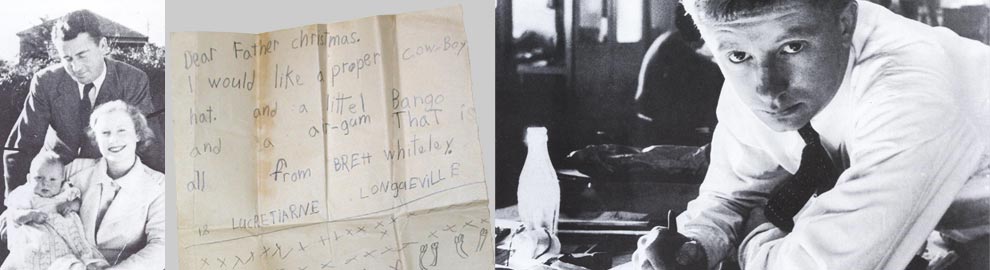
I n 1960, aged 21, Whiteley left
Australia on a
Travelling Art Scholarship (judged by
Sir Russell Drysdale at the
Art Gallery of New South Wales), and by
1961 had settled in London where
his work was shown at the
Whitechapel and Marlborough galleries.
In London he met many other
painters, including fellow
Australians,
Arthur Boyd and John Passmore.
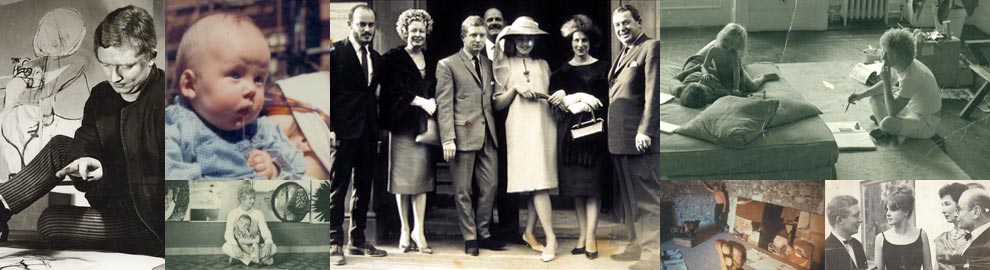
In 1962, he married
Wendy Julius
and their only child, daughter
Arkie Whiteley,
was born in London in 1964. While in London,
Whiteley painted works in several different
series: bathing, the zoo and the Christies. His
paintings during these years were influenced by
the modernist British art of the sixties -
particularly the works of
William Scott
and
Roger Hilton
- and were of brownish abstract forms. It was
these abstracted works which established him as
an artist, right at the time when many other
Australian artists were exhibiting in London. He
painted Woman in Bath as part of a series
of works he was doing of bathroom pictures. It
has primarily black on one side and an image of
his wife Wendy in a bathtub from behind. Another
in the series was a more abstracted Woman in
the Bath II, which owed a debt to his yellow
and red abstract paintings of the early sixties.
 In 1964, In 1964,
while in London,
Whiteley was fascinated by the murderer
John Christie,
who had committed murders in the area near where
Whiteley was staying at Ladbroke Grove. He
painted a series of paintings based on these
events, including Head of Christie.
Whiteley's intention was to portray the violence
of the events, but not to go too far in showing
something which people would not want to see.
During this time, Whiteley painted works based
on the animals at the London Zoo, such as Two
Indonesian Giraffes, which he found
sometimes difficult because of how much the
animals would move. As he said: "To draw
animals, one has to work at white heat because
they move so much, and partly because it is
sometimes painful to feel what one guesses the
animal 'feels' from inside." (Whiteley 1979: 1)
Whiteley also made images of the beach, such as
in his yellowish painting and collage work
The Beach II, which he painted on a brief
visit to Australia before his return to London
and his winning of a fellowship to America.
Whiteley appears as a
character in the book Falling Towards England
by
Clive James
under the name Dibbs Buckley. Wendy appears as
"Delish."
When
in 1967 Whiteley won a
Harkness Fellowship Scholarship to
study and work in New York he met other artists and musicians while he
lived at the
Hotel Chelsea. His first impression of
New York was shown in the painting First Sensation of New York City,
which showed streets with fast moving cars, street signs, hot dog
vendors, and tall buildings. One way that America influenced him is the
scale of his works. He was very much influenced by the
peace movement at the time and came to
believe that if he painted one huge painting which would advocate peace,
then the Americans would withdraw their troops from
Vietnam. Still fairly young, Whiteley
was idealistic and caught up in the great peace movements of the 1960s,
with the protests against America's involvement in the war in Vietnam.
The work was called The American Dream, it was an enormous work
that used painting and collage and anything else he could find to put on
the 18 wooden panels. It took up a great deal of his time and effort,
taking up about a year of working on the piece full time. It started
with a peaceful dreamlike serene ocean scene on one side, that worked
its way to destruction and chaos in a mass of lighting, red colours and
explosions on the other side. It was his comment on the direction the
world would be headed and his response to a seemingly pointless war
which could end in a nuclear holocaust. Many of the ideas from the work
may have come from his experiences with
alcohol,
marijuana and other drugs. He believed
that many of his ideas have come from these experiences, and he often
used drugs as a way of bringing the ideas from his subconscious. He
sometimes took more than his body could handle, and had to be admitted
to hospital for alcohol poisoning twice. Around him at the Hotel
Chelsea, other artists and musicians took
heroin, which Whiteley did not take at
that time. The painting which was finally produced was made of many
different elements, using collage, photography and even flashing lights,
with a total length of nearly 22 meters. However Marlborough-Gerson, his
gallery, refused to show this work which he had been working on for
about a year, and he was so distraught that he decided to leave New
York, and he 'fled' to
Fiji.
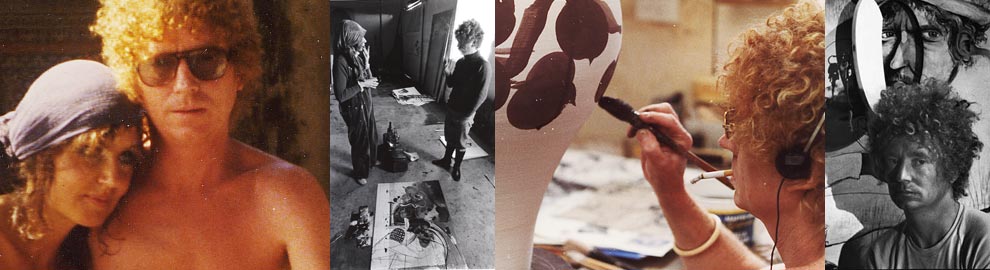
Whiteley
was awarded the Wynne Prize again in 1984, and the
following year purchased an old
T-shirt factory in Surry Hills,
Sydney and converted it into a
studio. Further
renovations followed and in later years the downstairs gallery area was
repainted and now houses changing
exhibitions. In
1991 he was awarded the Order of Australia (General Division). In the
last years of his life Whiteley travelled far and wide, taking in
England, Bali, Tokyo, and spending two months in Paris in an apartment
on Rue de Tournon. On 15 June 1992 he was found dead from a heroin
overdose in a motel room in Thirroul on the NSW coast. The coroner's
verdict was 'death due to self-administered substances'. He was 53 years
old.
In the
Queen's Birthday Honours of 1991, Brett
Whiteley was appointed an Officer (AO) of the
Order of
Australia. On 15 June 1992, aged
53, he was found dead from a heroin overdose in a motel room in
Thirroul,
north of
Wollongong.
The coroner's verdict was 'death due to self-administered substances'.
In 1999, Brett's mother Beryl Whiteley founded the
Brett Whiteley
Travelling Art Scholarship in
memory of her son.
Also in 1999, Whiteley's painting The Jacaranda Tree (1977), which had won the Wynne Prize, sold for $1,982,000, a record for a modern Australian painter.
In 2007 his painting The Olgas sold for an
Australian record of $3.5 million. On 7 May 2007, Opera House, (which
took Whiteley a decade to paint, and which he exchanged with
Qantas
for a period of free air travel) sold for $2.8 million, in Sydney.
Brett Whiteley
is one of
Australia's most
revered artists. His
lyrical
expressionism and
lack of inhibition
placed him at the
forefront of
Australia's
avant-garde art
movement. He won
many prizes and
awards and his work
hangs in numerous
galleries, including
the
National Gallery of Australia
in Canberra, the
Tate Gallery in
London and the
Museum of Modern Art
in New York.
RETURN TOP
|
|
|
|

Galeria Aniela
provides an independent professional service
and experienced
guidance representing clients best interest in the art
market.
We welcome the opportunity to speak with you, please feel free to
contact us
to discuss ways in which Galeria Aniela can assist you now and in
the future.
Whether you are a first-time buyer, an enthusiastic collector or an
astute investor, our people focused approach ensures an enjoyable
and rewarding experience.
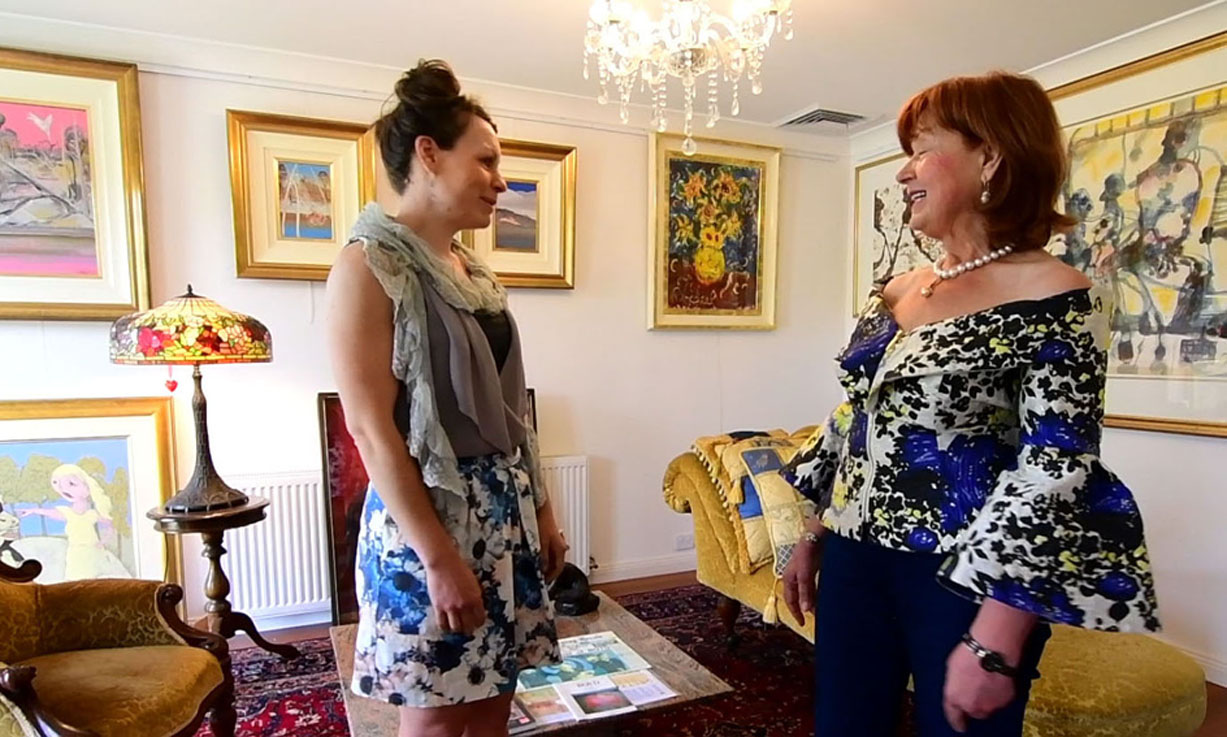
video | Galeria Aniela Fine Art broker
Combining a wide network of resources with
expertise in Australian fine art, we
assist clients in all aspects of acquisitions of fine art objects,
shipping worldwide,
ensuring impeccable
provenance
and
quality,
helping save
time and
money.
Testimonials
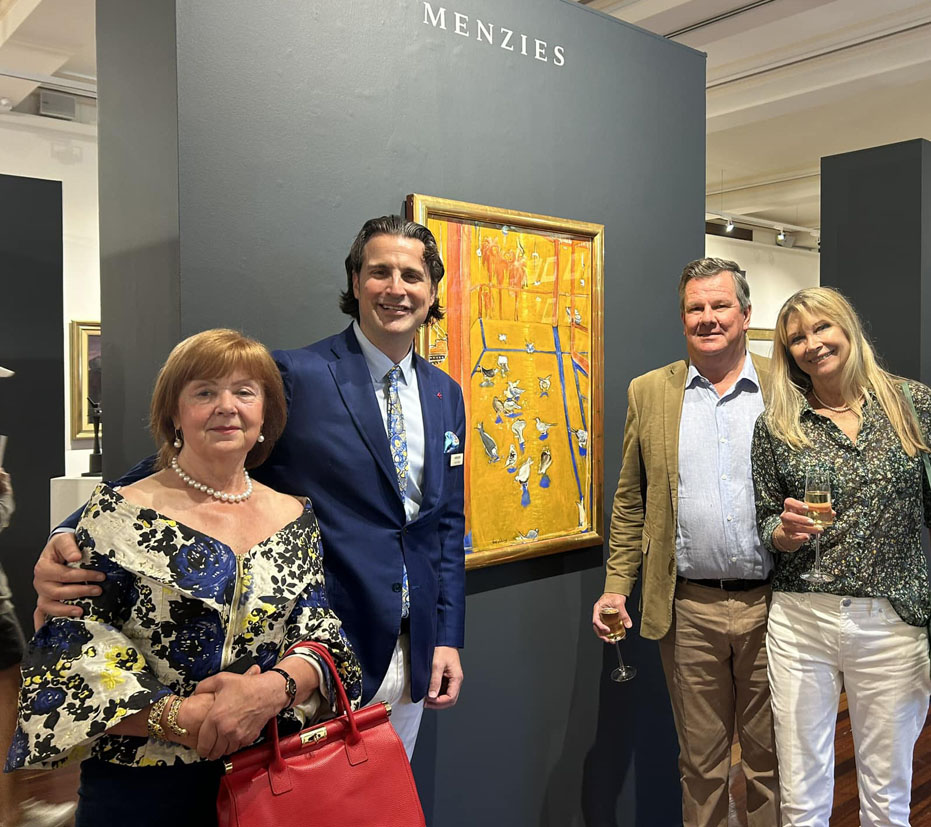
Founded in 1994, Galeria Aniela exhibited world-class artists
and received celebrities including
Sir David
Attenborough, Cameron
O’Reilly
and
Hon Bob Hawke,
Australian Prime Minister.
Galeria Aniela
built
a
strong
standing
in Australia and internationally.
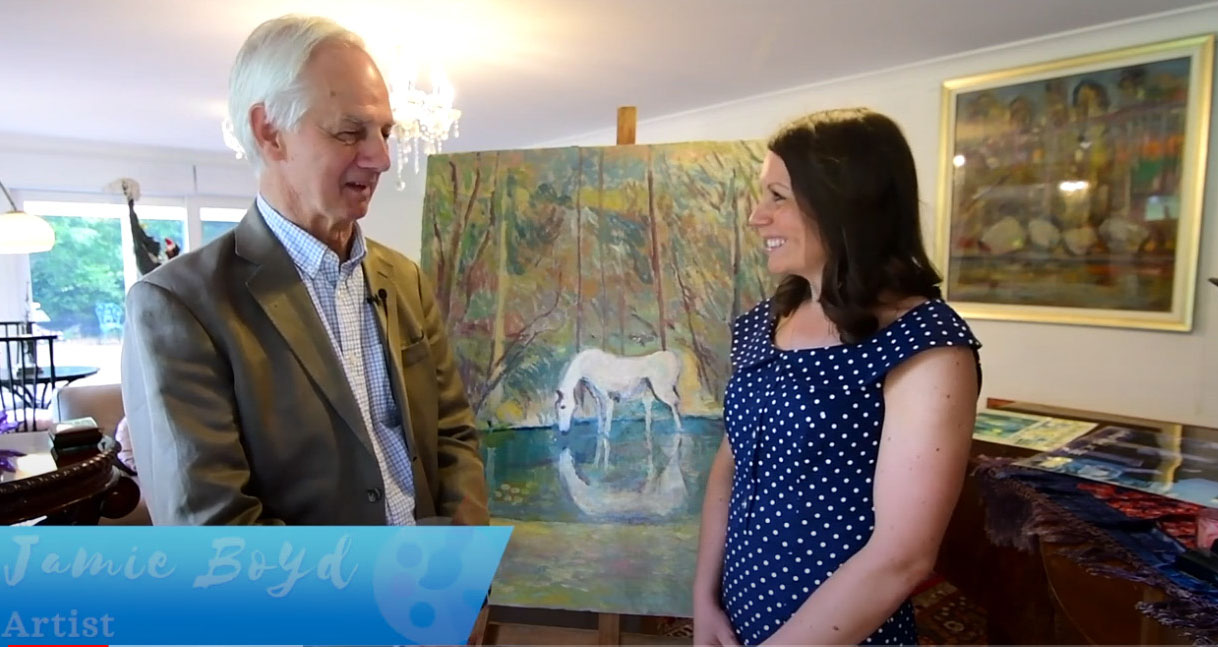
Video |Jamie Boyd, the Boyd family most
important LIVING artist
The
BOYD family
exhibition
in Galeria Aniela
coup the
front page
Sydney Morning Herald,
Australian National NEWS| ABC TV
and
Sunday Afternoon |ABC TV.
John Perceval Retrospective won
the Australian National NEWS |ABC TV and
Charles Blackman Retrospective conquer
Australian
Art Scream |SBS TV.
Works of art live for generations, constantly reborn in the minds of
the beholders to bring new meanings, new dreams, new ways of seeing
and experiencing the world. Be part of this magic world of amazing
fine art from the ocean of tranquillity to
concur
the heart, mind and soul.
When you purchase Art from
Galeria Aniela,
you make a valuable contribution to our mission of helping artists
to make a living with their creations and together we make a
difference.
|
|
|
|
|