top
Galeria
Aniela
 World’s Local Fine Art World’s Local Fine Art
 HOME HOME |
|
Galeria Aniela specializes in selling ART of
impeccable
provenance
and
quality.
Shipping Worldwide
friendly service
|
|
|
|
European artists
Facsimile
|
|
If You
Love beautiful Art, The Art You
Want Is At Galeria
Aniela
|
|
.jpg) |
Artist: Salvador
Dali
(1904-1989)
Title:
Young woman in the window
Título:
Mujer joven en la ventana
Titre:
Jeune femme à la
fenêtre)
MLD
07.- Dali.
Muchacha de espaldas.
Centro de Arte Reina Sofia. MUSEUM LINE. Printed
Spain. D. L. : M-233332-1993
Facsimile on Canvas
Signed n Plate
Measurement :
28 cm x 19
cm
Provenance:
Figures, the Foundation Gala-Salvador Dali
Price
Enquire
|
|
|
|
.jpg) |
Artist: Salvador
Dali
(1904-1989)
Title:
Young woman
in the chair
Título:
Mujer joven en la silla
Titre:
Jeune femme sur la chaise
MLD 06.- Dali.
Muchacha de espaldas.
Centro de Arte Reina Sofia. MUSEUM LINE. Printed
Spain. D.L.: M-233331-1993
Medium:
Facsimile on Canvas Signed n Plate
Measurement :
28 cm x 19
cm
Provenance: Figures, the Foundation Gala-Salvador Dali
Price (unframed) :
Enquire
|
|
|
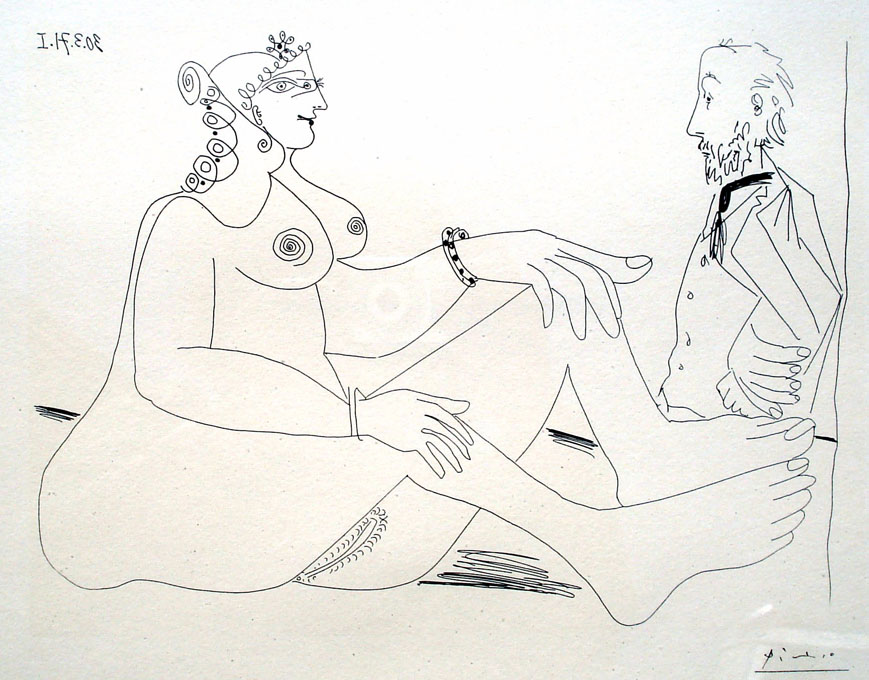 |
Pablo Picasso (1881-1973)
Reproduction
Picasso Vollard Suite
Mujer y retrato de barbudo.
Hombre de perfil.
Woman and bearded man in
profile
facsimile on Paper
Paper Size: 30 x 24 cm
Framed Size: 56 x 61 cm
Provenance:
Museum Picasso of
Barcelona Shop
Print Reproduction
PICASSO'S VOLLARD SUITE
Price:
Enquire |
|
|
|
 |
Pablo Picasso (1881-1973)
Reproduction Vollard Suite
Sculptor and Model
Reproduction
Print
Facsimile on paper
Unsigned
Paper Size: 30 x 24 cm
Framed Size: 62 x 52 cm
Provenance:
Museum Picasso of
Barcelona Shop
Print Reproduction
PICASSO'S VOLLARD SUITE
Price:
SOLD
|
|
|
|
|
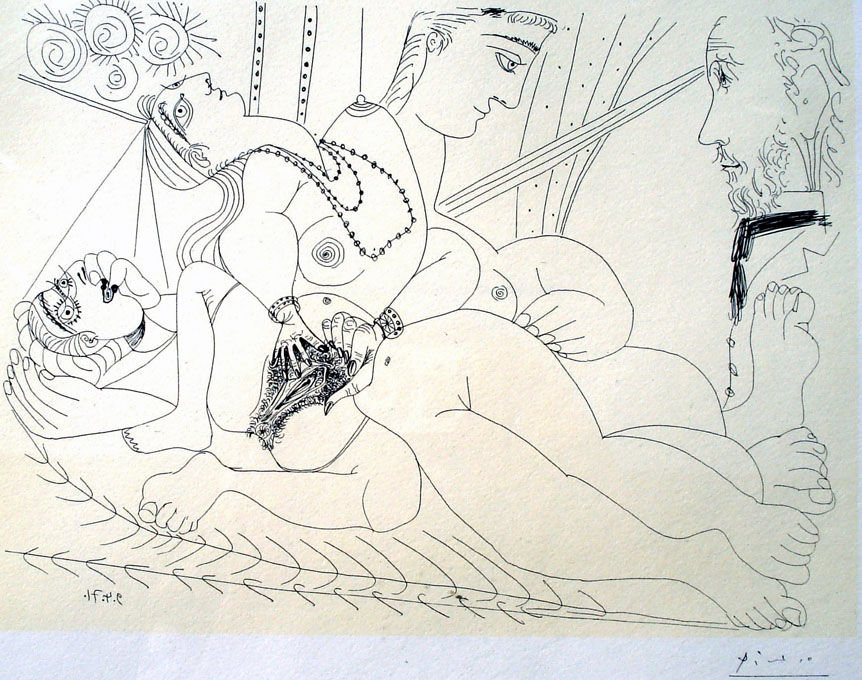 |
Pablo Picasso (1881-1973)
Erotic series (1971)
Casa Tellier.
Grupo de chicas y
hombre
mirando.
Tellier House.
Group of girls and man looking
Paper Size: 30 x 24 cm
Framed Size: 56 x 61 cm
Provenance:
Museu Picasso of
Barcelona Shop
Price:
SOLD |
|
|
|
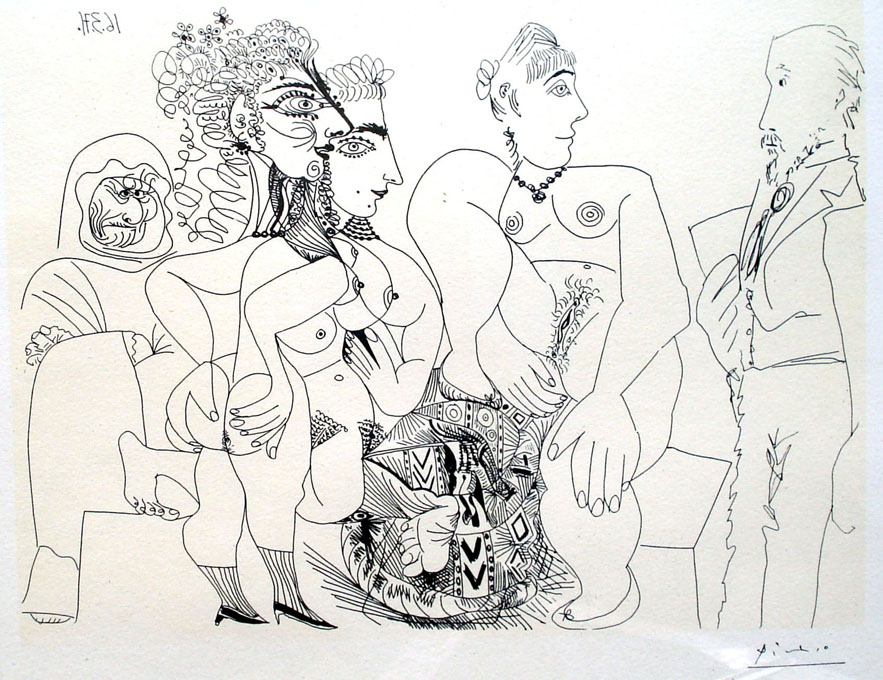 |
Pablo Picasso (1881-1973)
Erotic series (1971)
facsimile on Paperl
Tres mujeres, au nhombre
mirando y an hombre barbudo de perfil.
Three Women, man watching and
bearded man in profile
Paper Size: 30 x 24 cm
Framed Size: 56 x 61 cm
Provenance:
Museu Picasso of
Barcelona Shop
Price: SOLD |
|
|
|
|
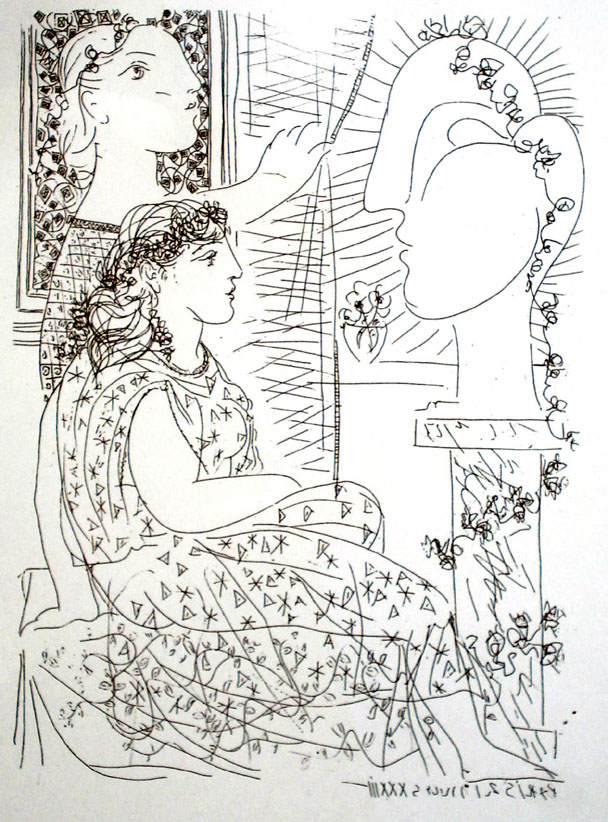
Pablo Picasso (1881-1973)
DE LA Suite Vollard de Picasso
Reproductionde
facsimile on Paper
Paper Size: 30 x 24 cm
Framed Size: 62 x 52 cm
Provenance:
Museu Picasso of
Barcelona Shop
Price:
SOLD |
|
|
|
Sculpture Bronzes
Facsimile |
|
|
|
.jpg) |
After Auguste
Rodin (1840-1917)
Girl Portrait
Bronze
facsimile
Signed in Plate
Measurement:
32 x 32 cm
Price:
Enquire
Auguste
Rodin
(1840-1917)
exhibited many of
freestanding
sculptures.
During
the 1880s, Rodin was
gaining notoriety and his work became more and more
sought after, among fashionable French society
people.
|
|
|
|
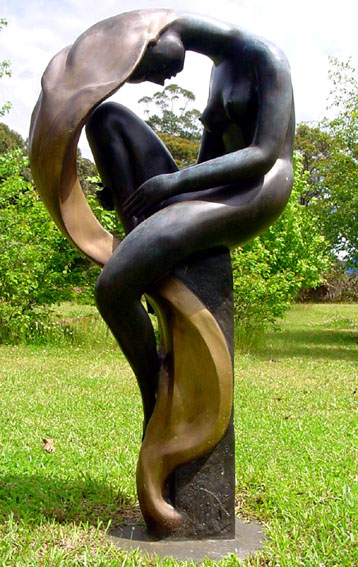 |
After
Antonio de Francisci
(1887-1964)
Girl
with Wind Blown
Hair
" To
capture the look that he wanted, the vigor and
vibrancy of his model youth,
de Francisci
open his studio window to let the wind blow through
her hair".
Bronze
facsimile
Signed in Plate
Measurement:
life size
Price:
Enquire
De Francisci
1887-1964)
an
Italian-American
sculptor
was
famous for the
designed of
coins and medals
of United States, the
Peace
Dollar,
was first minted in 1921.
Anthony
de Francisci -
Wikipedia
|
|
|
.jpg) |
After Isidore-Jules
Bonheur (1827-1901)
Jockey à Cheval
Bronze
facsimile
Signed
in Plate
Size:
51 cm high x 52 cm length
Price:
Enquire
Isidore Jules Bonheur (1827-1901)
was
a
distinguished
French
Animalière
sculptor
known for
artistic realism,
he won Gold Medal at Paris Expo Universelle 1889.
Exhibited Salon in Paris,
The Royal Academy in London. Bonheur's were
a well known family artists,
Isidore was
brother of
flamboyant elder sister
Rosa Bonheur
and brother-in-law to
François Auguste Hippolyte Peyrol the founder. |
|
|
.jpg) .jpg) |
After
Edgar Degas
(1834-1917)
The Little Dancer
Aged
Fourteen
Bronze
facsimile
Signed in Plate
Height 90 cm
Price:
SOLD
Enquire
Original
'Little Dancer
Aged 14' is in the
National Gallery of Art
&
The
Metropolitan Museum of Art.
After Degas's
death,
foundry owner Adrien Hébrard, concluded that 74
of the waxes could be cast in bronze.
Edgar
Degas (1834-1917)
Small
Dancer Aged 14
Between 1921 and 1931, model between 1865 and 1881
Bronze statue patinated in various colours, tulle
tutu, pink satin ribbon in the hair, wooden base
H. 98; W.
35.2; D. 24.5 cm
Paris
Musée d'Orsay.
|
|
|
Facsimile
 Reproduction
Facsimile should be enjoyed for just what it is - a beautiful object
giving as much joy as the original piece only for a fraction of the price.
What is Facsimile?
A
Facsimile is a reproduction.
A Facsimile
differs from the original item,
even though the attempts are made to replicate the
source as accurately as possible in terms of scale, color,
condition, and other material qualities it
is not identical to the original item.
Why
Facsimiles are produced?
Facsimiles are produced after
the artist passed away, to continue promoting the artist.
Facsimiles serve educational purposes for scholars, researches, museums,
archives, and for
media preservation
and
also
conservation
additionally for
commercial
purposes in order to
generate additional
income and cash
flow (apart from entry tickets)
for Museums
or Trusts to continue promoting the artist.
Facsimiles are sold commercially. On very rare occasions
Facsimiles
may be produced in limited
editions
and sometimes
accompanied by a commentary,
typically 2,000 copies may
be produced however
for some artists like Dali there would be a much higher number.
Cost
of
Facsimiles
Paper
facsimiles are
inexpensive however,
bronze sculpture
facsimile are
costly due to
cost of the bronze the process of casting
a
Bronze
process
that involves a highly specialized
fine art bronze foundry -
create
Ceramic Forms and Rubber
for each item that withstand hot bronze to
cast
a bronze sculpture.
Bronze
Facsimile
A
facsimile in bronze of Seneca and Nero
Making bronzes:
The original
sculpture is made in clay or plaster an is not for sale.
From a “clay form” a
wax is
taken, the negative of the clay. To
produce a bronze the foundry makes a special
ceramic forms.
The hot wax is purred into the
ceramic forms and sand is deposited inside the wax, then hot bronze is
purred into the ceramic form. As the wax melts, hot bronze replaces the
wax that is why a the method is called a “wax lost method”.
The 'patina'
colorization of a sculpture:
The patina “colorization” is made
in the
foundry by applying chemicals.
Bronze Casting
Fusion Cast has revolutionized working in bronze by developing a
Patented "cold casting" process. Bronze is combined with
high density urethane (HDU) at the molecular level to create
durable signs and plaques that are indistinguishable from
their traditional metal counterparts in look and feel. But
the Fusion Cast sign or plaque comes with several
advantages:
-
It uses less metal resulting in cost savings. See
Economical
-
It's much lighter making it easier to transport and
install. See
Versatile
-
Design options are limitless and are not "shoehorned"
into pre-existing moulds. See
Artwork Preparation
-
The process is environmentally friendly with no toxic
waste. See
Eco-friendly
Fusion Cast has become a viable alternative to traditional bronze
plaques and can be used in any setting. The result is a
tough sign that won't crack, warp, stain or chip in the most
extreme weather conditions. Each sign comes with written
warranties on craftsmanship and substrate making them ideal
for a variety of applications.
Bronze was discovered in the Bronze Age (thousands of years ago).
In the art world, bronze is known as a metal alloy used in
statues. It implies prestige, and timelessness that is not
found in other metals. The process of making bronze combines copper and tin is undertaken
in a foundry where the two alloys are combined under great
heat. Molten bronze can then be poured into a mould and
shaped to any design. Once the mould is broken and the
bronze allowed cooling, a perfect facsimile of the object is
left behind. Additional polishing or burnishing to remove
any imperfections is undertaken and the piece is then ready
for display. The demand for bronze has made it a rather expensive material
especially given its weight. Anyone who has ever picked up
even a small statue made from bronze has marveled at how
heavy it is. As such, shipping, handling and installation of
bronze statues and plaques must be undertaken with great
care often accompanied by great expense.
Courtesy:
Bronze
Plaques | Bronze
Memorial Plaques | Plaque
Bronze
If you are considering a project where the prestige of a bronze
plaque is called for but don't need the weight or the
expense, give Fusion-Cast a call.
|
|
|
|
About
BRONZE Facsimiles
are expensive to cast, they should be
enjoyed as beautiful objects giving JOY yet can be purchased for
a fraction of
the original
historical
limited edition Bronzes
prices.
BRONZE Facsimiles
are made
to
slightly differ from the
original,
historical limited edition bronzes.
What is
Facsimile?
Facsimile from
Latin
fac simile (make alike) is a reproduction of a unique item.
A
Facsimile
is a
reproduction of
an item of historical value, it
can be
a
bronze
or other
item like a
art print,
book,
manuscript
or
map.
Cost of producing Bronze
Facsimiles
When Facsimiles
are
produced?
Facsimiles are produced
after a
famous
artist passed away.
Signature in Plate
Why
Facsimiles are produced?
-
Facsimiles are produced to
generate
income
to
supplement
the
cash flow
of
the artists' Museum or Trusts
and to continue promoting the artist.
-
Facsimiles are also produced for
educational purposes by scholars to research and by museums
and archives for
media preservation
and
conservation.
-
Most Facsimiles are sold
commercially and occasionally may be produced in
limited editions,
sometimes accompanied by a
commentary,
typically 2,000 copies
but for some artists like Dali it would be even much higher
number.
When limited editions are
done?
Limited editions are
produced by the artist,
intentionally
made to differ from the original.
A limited
edition is hand signed and numbered by the artist.
Making a
Bronze Casting
Bronzes are produces by
casting using the "lost-wax" process.
The
earliest “lost-wax” castings date almost 7,000 years.
-
A
wax
mold
must be made
from
the
"original form" that often is made in clay or plaster.
Surface
replication of the "original form" can be achieved with a
polyurethane mold compound or a high-quality silicon rubber.
-
The
rubber mixture is applied (several coats) directly to the
surface of the "original form".
A mold most generally consists of three to five coats of
rubber (applied over the course of several days).
-
Once
the final coat of rubber has dried, a firm outer "jacket" is
made to retain the shape of the flexible rubber mold for
pouring the wax replica. This “jacket” is usually made out
of plaster, Hydrocal, resin, or epoxy, and is called the
“mother mold”.
-
Then the "jacket" is removed, and the rubber is cut away
from the “original form”, what is called a parting line
(simply the division line for the mold). The SCULPTURE has
now gone from a positive form to a negative form.
-
If the SCULPTURE is large or complex, it will be divided
into smaller pieces, and each piece will require an
individual mold. The pieces will be rejoined later, after
the SCULPTURE is cast in bronze, to make the complete
SCULPTURE whole again.
-
With the “mother mold” complete, positive forms can now be
generated by pouring a wax replica. Pouring a wax is usually
done in four stages or coats. The first coat is applied by
heating the wax to a temperature of approximately 220
degrees Fahrenheit. While the wax is quite hot, the mold is
rotated about, in an attempt to coat the entire internal
surface of the mold with the melted liquid wax, which is
poured into the “mother mold” through a hole. The second
coat of wax is applied slightly cooler, at around 200
degrees. The final two coats go on at approximately 180 to
185 degrees. A completed wax is approximately 1/4” thick, or
just slightly thinner. When the wax cools and the mold is
removed, a wax positive of the SCULPTURE emerges. Follow by
procedure of repairing all of the imperfections that were
created during the pouring process of the wax to maintain
the original details within the mold.
-
The finished wax is a positive replica of the "original
form". The ceramic shell process requires a series of
dipping the wax positive into a mixture called slurry to
create a hard shell. When the ceramic shell is complete, it
is placed in a high pressure sealed oven, known as an
autoclave. High temperatures (1500 to 1800 degrees
Fahrenheit) and pressure force the wax from the shell and
the wax melts out, thus becoming "lost". This is where the
name “Lost-Wax Process” has been derived.
-
When the ceramic shell is empty of wax, it is then re-fired
and made ready to have the molten bronze poured into it.
-
Solid blocks of bronze, meanwhile, are heated to a
temperature of approximately 2250 degrees Fahrenheit so that
liquid bronze is created. The liquid bronze is stirred and
prepared for the pour.
Bronze
is an alloy of 95% copper, 4% silicon and 1% manganese with
traces of other elements such as iron. -
When the molten bronze is ready, the foundry workers very
carefully lift the crucible, containing the liquid bronze,
out of its heating furnace. The workers must wear protective
face shields, clothing, gloves, and boots.
-
Moving quickly and precisely, the foundry workers pour the
liquid bronze into each awaiting ceramic shell. When the
ceramic shells are full with the poured bronze, they are
then left to cool for several hours. The negative spaces
within the ceramic shells have now become positive bronze
castings.
-
Once the bronze and ceramic shell has cooled, the ceramic
shell is broken off to separate the metal bronze from the
shell. This is done with hammers, tools, power tools, and
sand blasters.
-
Then the process of finishing begins making the
metal back to the appearance of the original. This process
usually involves a fair amount of welding with a high
frequency welder.
-
When the final piece is all welded together and chased to
perfection, the bronze is next sand-blasted (or
bead-blasted) to make it very smooth and shiny. Using a
sand-blast cabinet is the most convenient way to sand-blast
a SCULPTURE.
-
After the SCULPTURE is sand-blasted, the Patinazation is the
next stage.
The "patina" is the color of the bronze.
The 'patina'
colorization of a SCULPTURE: The patina “colorization” is
made in the foundry by applying chemicals.
"Patinazation" the process of chemical reaction between
bronze, acidic chemicals, and high temperatures oxidize the
surface of the metals. Certain chemicals will produce
certain predictable colors when they are sprayed on the
bronze and then heated up.
-
The patina process begins by heating the surface of the
bronze to a temperature of approximately 450 to 475 degrees
Fahrenheit. The surface will have a nice golden appearance
when it is ready. A wide variety of techniques can then be
used for chemical application, the most common being done
with natural bristle brushes. Chemicals can also be applied
with spatter guns, spray bottles, and airbrushes.
-
The outdoor atmosphere is more corrosive to a patina as it
carries a higher content of manmade pollutants, and metal
protectant is recommended for any SCULPTUREs placed
outdoors.
After the completion of all of the above steps, a unique bronze
SCULPTURE will have been produced and can now be sold.
Find more about bronze
SCULPTURE
here
Bronze was discovered in the
Bronze Age (thousands of years ago). In the art world, bronze is
known as a metal alloy used in statues. It implies prestige, and
timelessness that is not found in other metals. The process of
making bronze combines copper and tin is undertaken in a foundry
where the two alloys are combined under great heat. Molten
bronze can then be poured into a mould and shaped to any design.
Once the mould is broken and the bronze allowed cooling, a
perfect facsimile of the object is left behind. Additional
polishing or burnishing to remove any imperfections is
undertaken and the piece is then ready for display. The demand
for bronze has made it a rather expensive material especially
given its weight. Anyone who has ever picked up even a small
statue made from bronze has marveled at how heavy it is. As
such, shipping, handling and installation of bronze statues and
plaques must be undertaken with great care often accompanied by
great expense. |
|
|
|
|
|
Founded in 1994, Galeria Aniela won the trust of some of the most important
artists from the post
WWII until today. Exhibited and hosted world-class artists,
and
received eminent celebrities
such as Sir David
Attenborough, Cameron
O’Reilly
and
Hon Bob Hawke,
Australian Prime Minister, Galeria Aniela
built
a
strong
standing
in Australia and internationally.
Galeria Aniela provides an independent professional service
and experienced guidance
representing clients best interest in the art market. We offer friendly
service
that others are unable to match.
Whether you are a first-time buyer, an astute investor or enthusiastic
collector, our people focused approach ensures an enjoyable and rewarding
experience.
We welcome the opportunity to speak with you, please feel free to
contact us
to discuss ways in which Galeria Aniela can assist you now and in the future.
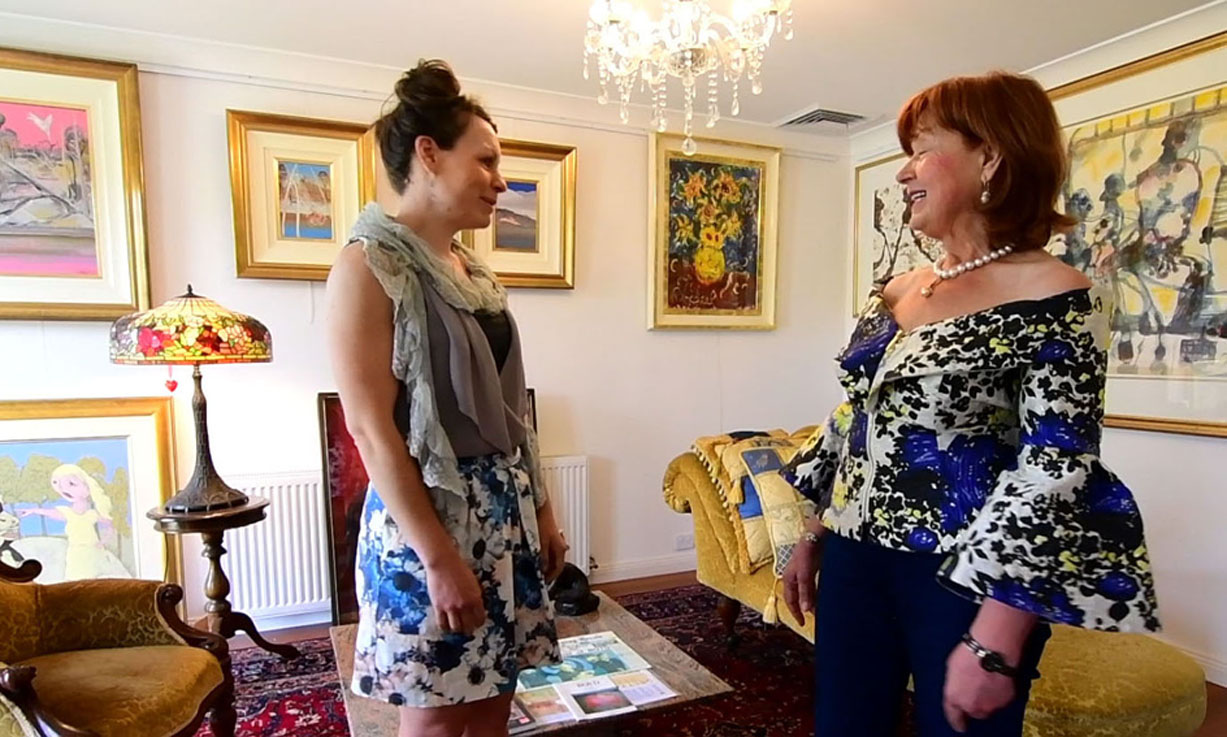
video Galeria Aniela Fine Art broker
(2023)
Combining a wide network of resources with expertise
in the Australian and Global art market from the point of the
quality and
investment value, we assist
clients in all aspects of dealing of fine art objects,
shipping worldwide, ensuring
impeccable provenance and
quality, helping
save time and money.
Testimonials
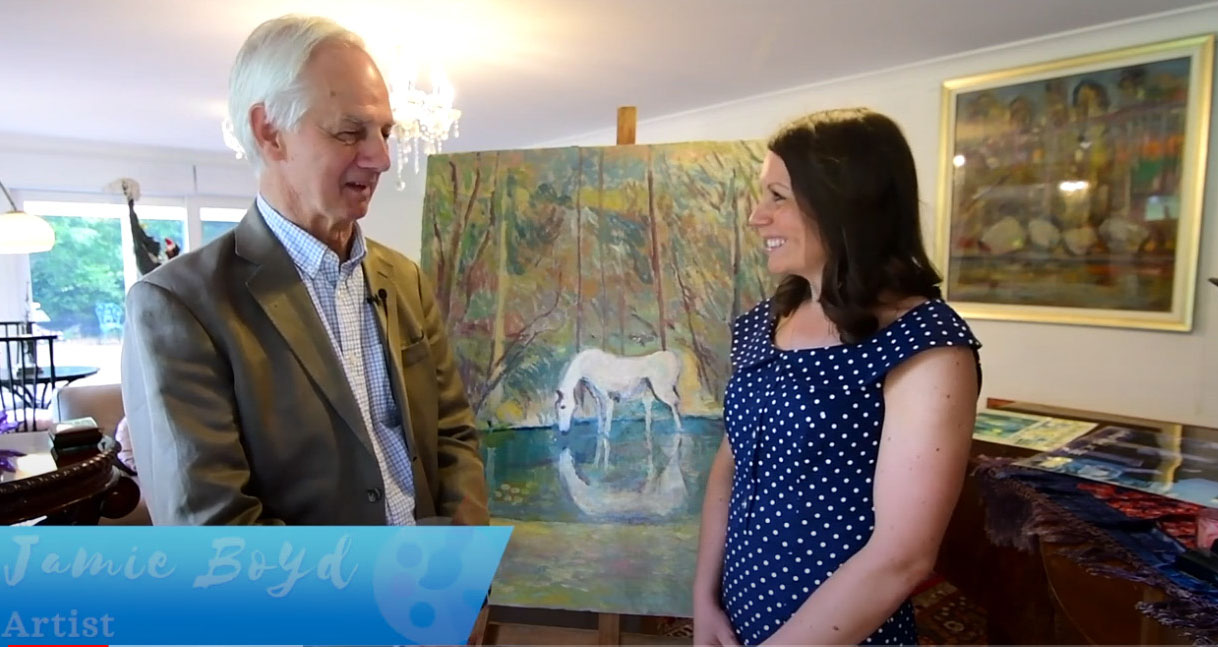
Video Jamie Boyd, the Boyd family most important LIVING
artist
The
BOYD family
exhibition
in Galeria Aniela coup the
front page
Sydney Morning Herald,
Australian National NEWS ABC TV
and
Sunday Afternoon ABC TV.
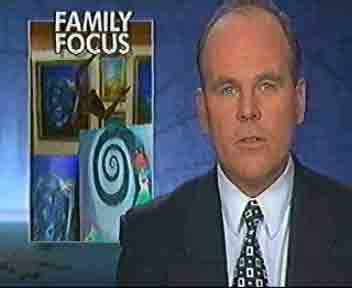
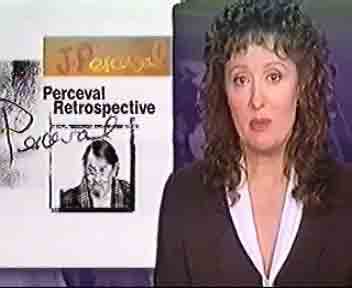
John Perceval Retrospective won
the Australian
National NEWS ABC TV and
Charles Blackman Retrospective conquer
Australian
Art Scream
SBS TV.
|
|
|
Fine Art is one of the most enjoyable and viable
investments,
essential
to wellbeing
|
Contact
Copyright
Disclaimer
|
|